Heat Pump Installation for Utah Homes: 2026 Guide
August 30th, 2026
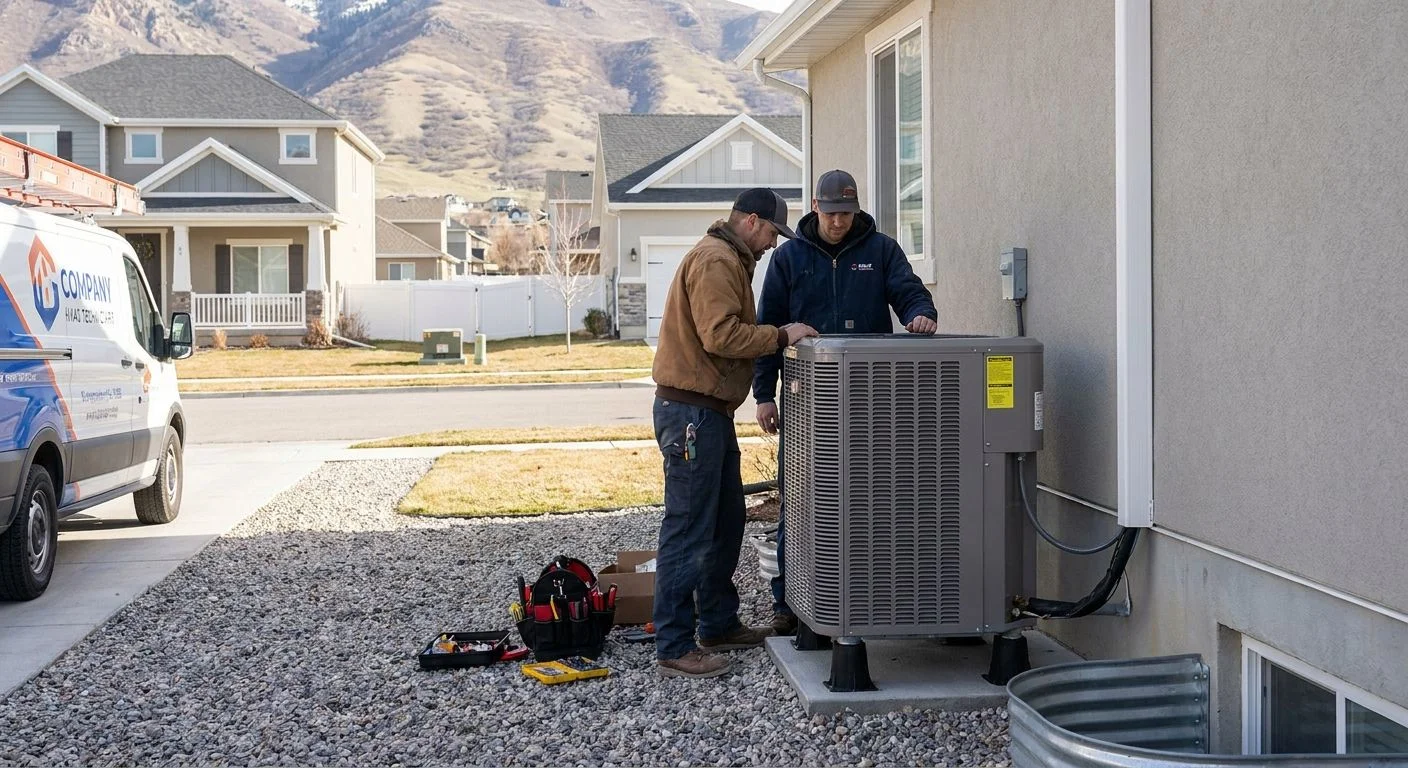
Heat pump installation for Utah homeowners chasing lower energy bills replaces separate furnace-and-AC setups with one system that heats and cools, cutting winter fuel costs and adding air conditioning capacity many older homes never had. Northern Utah's dry, high-elevation climate demands a different sizing and equipment choice than a heat pump install in Phoenix or Seattle, so the decisions below are calibrated for the Wasatch Front, not a national average.
- Heat pump installation for Utah homes needs a cold-climate rated unit — standard models lose efficiency below 20-25°F.
- Ductless mini-splits fit additions and zoned rooms without ductwork, but need one indoor head per zone.
- Dual-fuel setups pair a heat pump with a gas furnace backup for sub-zero Wasatch Front mornings.
- Check your electrical panel capacity before quoting — undersized panels stall installs mid-project in 2026.
- Get at least three licensed contractor bids; sizing errors, not equipment failure, cause most heat pump callbacks.
Why heat pump installation matters for Utah homeowners
Northern Utah swings from single-digit January mornings along the Wasatch Front to summer afternoons past 95°F, so a system built to only heat or only cool leaves the other season underserved. Heat pump installation for Utah homes solves that with one unit that runs both directions, using electricity to move heat instead of burning gas to create it.
That efficiency math changes at elevation. Homes in Park City, Alta, or the upper Cottonwood canyons see colder overnight lows than the Salt Lake valley floor, and a heat pump sized off valley-floor weather data will underheat a mountain home. The comparison in best home HVAC systems for Utah homes breaks down where heat pumps outperform furnace-only setups and where they don't.
Calculate your home's actual heating and cooling load
Skip the online BTU-per-square-foot shortcuts. A Manual J load calculation accounts for insulation grade, window count and orientation, ceiling height, and air leakage — the same variables a licensed installer uses before quoting equipment size.
- Measure conditioned square footage room by room, not just total lot size
- Note insulation R-value in the attic and exterior walls if known
- Count windows by type (single-pane, double-pane, low-E) and orientation
- Record ceiling height for rooms with vaulted or open-to-below layouts
- Use your local design temperature, not a statewide average, if your home sits above 5,000 feet
Check your electrical panel capacity before you commit
Heat pumps run almost entirely on electricity, and the outdoor compressor unit alone can draw 20-40 amps depending on size. A panel already near capacity from a range, EV charger, or hot tub circuit may need an upgrade before the heat pump goes in.
- Pull your panel's rated amperage (100A, 150A, 200A) off the main breaker label
- Add up existing circuit loads for major appliances
- Check for open breaker slots versus a full panel
- Ask an electrician whether a load calculation shows headroom for the new unit
The same panel-capacity checks used before electrical panel upgrades for EV charger installation apply here — both additions draw significant continuous current, and skipping this step is the most common reason heat pump installs stall mid-project.
Choose between a ducted heat pump and a ductless mini-split
Homes with existing, well-sealed ductwork usually keep a ducted system for even distribution through every room. Additions, converted garages, and finished basements without ducts are a better fit for ductless mini-split systems, which mount a compact indoor head per zone and skip duct runs entirely.
- Ducted: better for whole-home consistency, hides equipment inside walls and attics
- Ductless: faster install in additions, no ductwork required, but visible indoor units per room
- Ducted: existing duct leaks reduce efficiency gains from the new heat pump
- Ductless: each zone runs independently, useful for rooms with different heating needs
Pick a cold-climate rated heat pump, not a standard one
Standard air-source heat pumps lose meaningful capacity once outdoor temperatures drop below 20-25°F. Cold-climate rated units, a category that expanded through 2026 model lines, hold rated output at much lower temperatures and are the safer default for anywhere above the Salt Lake valley floor.
- Check the manufacturer's rated capacity at 5°F and 17°F, not just the 47°F nameplate rating
- Look for a variable-speed compressor, which holds efficiency better in cold snaps than single-speed units
- Confirm the unit has an active defrost cycle rated for Utah's freeze-thaw winter pattern
- Ask for the HSPF2 rating, which reflects heating efficiency more accurately than older HSPF figures
Decide whether you need a dual-fuel backup
A dual-fuel setup pairs the heat pump with your existing gas furnace, switching to gas automatically once outdoor temperatures drop below a set point. It costs more to run two systems but guarantees heat during the coldest nights of the year without oversizing the heat pump for a handful of extreme days.
- Keep the furnace if it's under 10-12 years old and still passing inspection
- Set the switchover point with your installer based on your specific heat pump's rated cold-weather output
- Skip dual-fuel only if you're comfortable relying on the heat pump's electric resistance backup coils during extreme cold
Get quotes, verify licensing, and schedule around permits
Utah requires permits for heat pump installation for Utah homes, and inspection timing depends on your city's permit office as much as the contractor's schedule.
- Get at least three bids that each include a load calculation, not just an equipment quote
- Verify the contractor's Utah HVAC license and ask for proof of insurance
- Confirm who pulls the permit and schedules the inspection
- Ask whether the quote includes electrical work or if that's a separate trade
- Schedule installation in shoulder-season months when possible — spring and fall have more open contractor calendars than peak summer or winter
Get a heat pump installation quote
Licensed HVAC techs cover load calculations, panel checks, and permits across Northern Utah.
Comparing heat pump options for Utah homes
| Option | Best for | Key limitation |
|---|---|---|
| Standard air-source heat pump | Moderate valley-floor winters with existing ductwork | Efficiency drops sharply below 20-25°F |
| Cold-climate rated heat pump | Wasatch Front winters and higher-elevation homes | Higher equipment cost than standard models |
| Ductless mini-split | Additions, basements, and rooms without ducts | One indoor head needed per zone |
| Dual-fuel (heat pump + gas furnace) | Homeowners wanting efficiency with guaranteed cold-weather backup | Runs and maintains two separate systems |
A cold-climate rated heat pump is the safer default for any Utah home above the Salt Lake valley floor — a standard unit will underperform on the coldest mornings of a typical winter.
Common mistakes Utah homeowners make with heat pump installation
- Sizing off Salt Lake City weather data for a mountain home. Park City and Cottonwood Canyon homes see colder design temperatures than the valley floor, and equipment sized for the wrong microclimate underheats on the coldest days.
- Skipping the electrical panel check. A heat pump install that stalls mid-project over panel capacity costs more in rescheduled labor than a pre-install electrical assessment.
- Choosing a standard heat pump to save money upfront. The efficiency loss below 20-25°F erases the savings within a few winters at higher elevation.
- Ignoring dry winter humidity. Utah's winter air runs dry enough that heat pump heating alone can leave a home uncomfortably arid without separate humidity control.
- Skipping zoning in multi-story homes. A single-zone heat pump in a two- or three-story house often overheats the main floor while the upper level stays cold.
FAQ
What’s the best heat pump for Utah’s cold winters?
A cold-climate rated air-source heat pump is the best fit for most Utah homes in 2026, since it holds rated heating output at 5°F and 17°F instead of losing capacity like standard models. Homes above the Salt Lake valley floor, including Park City and the Cottonwood canyons, benefit most from this rating.
Is heat pump installation for Utah homes cheaper than a new furnace?
Running costs depend on local electricity and gas rates, which vary by utility provider and season. A licensed HVAC contractor can run a side-by-side operating cost comparison for your specific home before you commit to either system.
Do heat pumps work below freezing in Utah?
Cold-climate rated heat pumps are designed to keep heating below freezing, with published capacity ratings down to 5°F and lower on many 2026 model lines. Standard, non-cold-climate units lose meaningful heating capacity once temperatures drop below 20-25°F.
How long does heat pump installation take?
A straightforward swap of existing ductwork and electrical usually takes one to two days once permits are in hand. Installs that require an electrical panel upgrade or new ductwork take longer and depend on the local permit office’s inspection schedule.
Do I need a backup furnace with a heat pump in Utah?
Not always, but a dual-fuel setup that keeps your existing gas furnace as backup guarantees heat during the coldest nights without oversizing the heat pump. Homeowners comfortable relying on electric resistance backup coils inside the heat pump can skip the dual-fuel furnace.
Can a heat pump replace both my furnace and AC?
Yes — a properly sized heat pump heats in winter and cools in summer from the same outdoor unit, which is the main appeal for Utah homes juggling both a furnace and a separate AC system. Sizing and cold-climate rating both matter more than with a heating-only or cooling-only system.
How much electrical capacity does a heat pump need?
Outdoor heat pump compressors commonly draw 20-40 amps depending on unit size, so a panel already near full load needs a capacity check before installation. An electrician can confirm headroom with a load calculation in under an hour.
Is a ductless mini-split better than a ducted heat pump for additions?
For additions without existing ductwork, a ductless mini-split is usually the faster and less invasive install since it skips duct runs entirely. Homes with intact, well-sealed ductwork already in place generally get more even distribution from a ducted system instead.
One last thing
Cold-climate heat pump technology reached rated output as low as -15°F on several 2026 model lines, a threshold that covers all but the rarest Wasatch Front cold snaps. That single spec is why the "heat pumps don't work in cold climates" objection is outdated for most Utah zip codes — the equipment category, not the geography, was the limiting factor.
Related guides