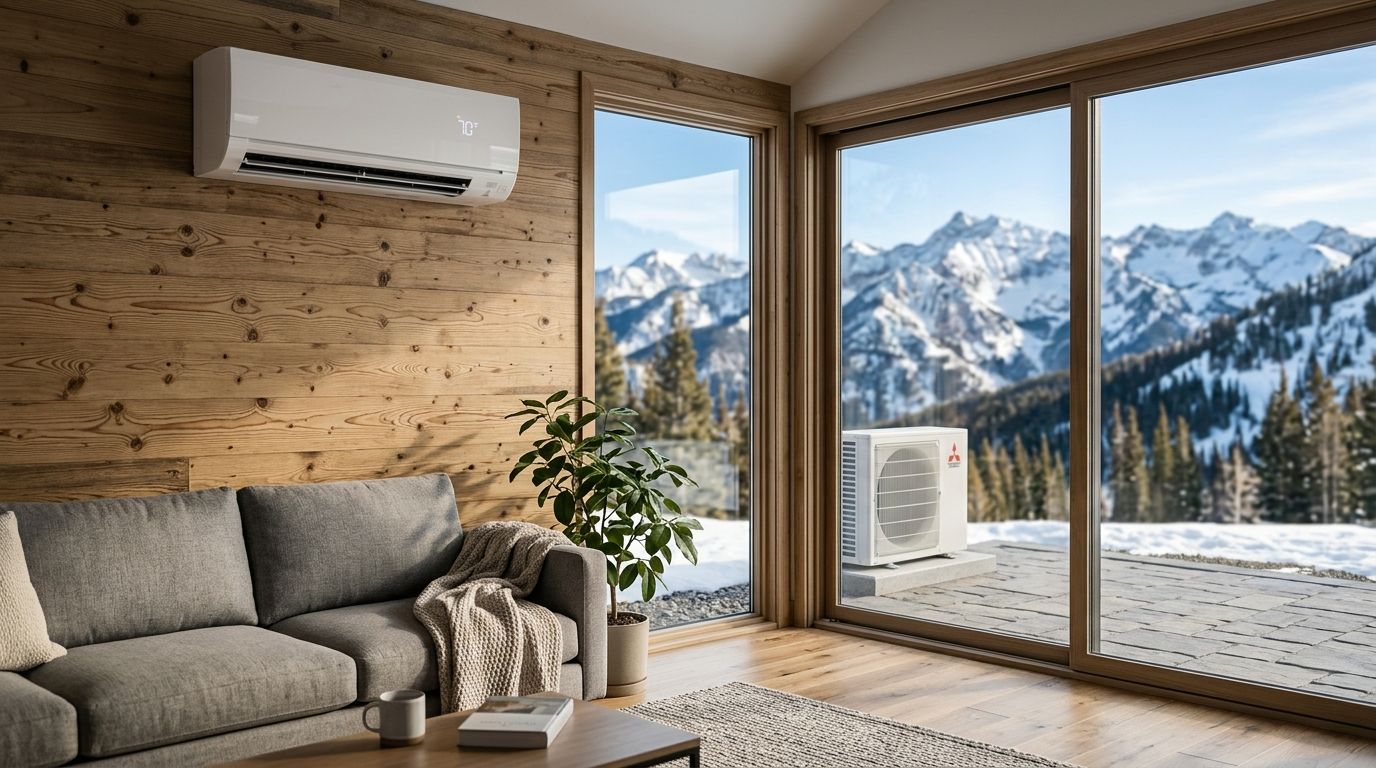
Best Ductless Mini-Split Systems for Utah Homes 2026
September 9th, 2026
Ductless mini-split systems solve the exact problem Utah's climate creates: rooms that never get warm or cool no matter what the central system does, additions with no ductwork, and basements that need heat without a full furnace retrofit. Mitsubishi Electric Hyper-Heat wins best overall for Utah's cold winters, Daikin Aurora wins best for whisper-quiet bedrooms and offices, and Gree Sapphire/Flexx wins best budget option for a single-zone install.
- Mitsubishi Electric Hyper-Heat is the best ductless mini-split system for Utah’s sub-zero winter mornings.
- Daikin Aurora runs quiet enough for bedrooms and home offices without a dedicated duct run.
- Fujitsu Halcyon handles multi-zone additions better than single-zone-only competitors.
- Gree Sapphire/Flexx is the budget pick for one-room installs like a garage or bonus room.
- Every system on this list still needs a licensed HVAC technician for correct line-set sizing and refrigerant charge.
Why this matters
A mini-split installed for a Sandy or Provo home addition has to survive January mornings that dip well below freezing at elevation, not just a mild coastal winter. Buying the wrong system means a compressor that locks out below 5°F and leaves you running electric baseboard as backup, which defeats the point of installing a heat pump in the first place.
The systems below get compared on cold-weather output, noise level, zone flexibility, and how well they fit a Northern Utah retrofit — not on marketing claims. If you're weighing a ductless mini-split system for a home addition against running new ductwork, the answer usually comes down to which brand on this list fits your layout.
What makes the best ductless mini-split system
- Cold-climate heating output — how the compressor performs below 15°F, since Wasatch Front and bench-area homes see real sub-zero mornings
- Sound level in occupied rooms — indoor unit decibel rating matters more in a bedroom or office than a garage
- Zone flexibility — single-zone-only condensers versus multi-zone units that run 2-8 indoor heads off one outdoor unit
- Install footprint — outdoor unit size and line-set routing options for retrofits with limited exterior wall space
- Parts and warranty support — whether a licensed installer in Utah can source parts and service the unit locally
- Efficiency rating — SEER2 and HSPF2 numbers that translate into a lower winter electric bill
Ductless mini-split systems at a glance
| System | Best for | Standout feature | Key limitation |
|---|---|---|---|
| Mitsubishi Electric Hyper-Heat | Cold Utah winters | Rated heating output well below freezing | Higher equipment cost than standard heat-pump models |
| Daikin Aurora | Whisper-quiet rooms | Low indoor decibel rating | Fewer multi-zone configurations than Fujitsu |
| Fujitsu Halcyon | Multi-zone additions | Runs up to 8 indoor heads per outdoor unit | Longer install time for full-zone setups |
| LG Art Cool / Multi F | Compact bonus rooms | Slim indoor unit profile | Less cold-climate heating headroom |
| Gree Sapphire/Flexx | Budget single-zone | Lower equipment cost | Shorter cold-weather performance range |
1. Mitsubishi Electric Hyper-Heat: best ductless mini-split for Utah's cold winters
Mitsubishi Electric's Hyper-Heat line is built specifically for climates where the compressor can't afford to shut down when the temperature drops. The published low-temperature heating rating on Hyper-Heat models is one of the reasons installers across Salt Lake, Davis, and Utah County reach for this brand first for additions with no duct access.
Mitsubishi Electric Hyper-Heat pros:
- Heating output holds up in sub-zero morning temperatures
- Wide range of indoor unit styles (wall, ceiling cassette, floor)
- Long track record with Utah HVAC installers, so parts are easy to source
Mitsubishi Electric Hyper-Heat cons:
- Equipment cost runs higher than standard heat-pump mini-splits
- Multi-zone configurations need careful line-set planning on longer runs
Mitsubishi Electric Hyper-Heat pricing: varies by zone count and indoor unit style — get a quote sized to your square footage rather than assuming a flat number.
A heat pump installation built around a Hyper-Heat outdoor unit is the safest bet for a bonus room or basement that needs to hold temperature through a January cold snap.
Best for: homeowners adding heat to a room with no backup furnace access.
Verdict: Buy if cold-weather reliability is the priority.
2. Daikin Aurora: best ductless mini-split for whisper-quiet rooms
Daikin's Aurora series targets the same cold-climate use case as Mitsubishi but leans harder into indoor sound level. For a home office or bedroom addition where a compressor cycling on shouldn't be audible over a conversation, Aurora's indoor unit runs noticeably quieter than most single-zone competitors.
Daikin Aurora pros:
- Low indoor decibel rating even at higher fan speeds
- Solid cold-weather heating performance for a non-Hyper-Heat-branded system
- Compact outdoor unit footprint for tight side-yard installs
Daikin Aurora cons:
- Multi-zone options are more limited than Fujitsu's lineup
- Fewer installers in Utah stock Daikin parts compared to Mitsubishi
Daikin Aurora pricing: ask an installer to quote single-zone versus multi-zone configurations separately — they price very differently.
Best for: a home office, nursery, or bedroom addition where noise is the deciding factor.
Verdict: Buy for quiet single-room installs.
3. Fujitsu Halcyon: best ductless mini-split for multi-zone additions
Fujitsu's Halcyon line is built around running multiple indoor heads off one outdoor condenser, which makes it the practical pick when a home addition needs heat and cooling in more than one room. Where Mitsubishi and Daikin lean single-zone, Halcyon systems scale up to eight zones on some outdoor models.
Fujitsu Halcyon pros:
- Handles multi-room additions without multiple outdoor units
- Wide indoor unit selection, including compact wall units and ducted mini-air handlers
- Good fit for finishing an entire basement in one project
Fujitsu Halcyon cons:
- Full multi-zone installs take longer to line-set and commission
- Cold-weather heating output trails Mitsubishi Hyper-Heat at the lowest temperatures
Fujitsu Halcyon pricing: multi-zone quotes scale with head count — a 3-zone basement finish costs meaningfully more than a single-zone bedroom addition.
Homeowners finishing a two- or three-story addition often end up comparing Halcyon against a zoned HVAC system tied into the existing furnace — both solve the same comfort problem from different directions.
Best for: additions or basement finishes needing heat and cooling in 2+ rooms.
Verdict: Buy when zone count matters more than raw cold-weather output.
4. LG Art Cool / Multi F: best ductless mini-split for compact bonus rooms
LG's Art Cool and Multi F lines target rooms where the indoor unit itself needs to disappear — a converted garage, a small office over a detached structure, or a bonus room with limited wall space. The indoor unit profile is slimmer than most competitors, which matters more than most buyers expect until they're staring at a wall-mount in a 10×10 room.
LG Art Cool / Multi F pros:
- Slim indoor unit design fits tight wall spaces
- Multi F outdoor units support a handful of zones for smaller additions
- Competitive cooling performance for summer use
LG Art Cool / Multi F cons:
- Cold-climate heating headroom is thinner than Mitsubishi or Daikin
- Fewer Utah installers carry LG parts on-hand compared to the top two brands
LG Art Cool / Multi F pricing: single-zone units price lower than multi-zone Multi F setups — confirm which configuration a quote covers.
Best for: a converted garage or small bonus room where the indoor unit's size is the constraint.
Verdict: Hold unless winter heating performance in the space is a secondary concern.
5. Gree Sapphire/Flexx: best ductless mini-split on a budget
Gree's Sapphire and Flexx lines are the value option in this category — a single-zone system that covers a garage, workshop, or one added room without the equipment cost of the premium brands above. The tradeoff is a narrower cold-weather performance window, so it fits a supplemental-heat role better than a primary heat source in an unheated space.
Gree Sapphire/Flexx pros:
- Lower equipment cost than Mitsubishi, Daikin, or Fujitsu
- Simple single-zone install for a workshop or garage
- Adequate cooling performance for Utah summers
Gree Sapphire/Flexx cons:
- Cold-weather heating output drops off sooner than Hyper-Heat or Aurora systems
- Best treated as supplemental heat, not a standalone winter solution in an unheated room
Gree Sapphire/Flexx pricing: the lowest equipment cost on this list, but confirm installed pricing with a licensed technician before comparing against the other four brands.
Best for: a garage or workshop where summer cooling matters more than winter heating.
Verdict: Buy for budget-conscious single-zone jobs; skip it as a primary heat source in an unheated addition.
Get a mini-split sized for your room
A licensed technician can size the right zone count and brand for your addition.
How this list was ranked
Each system was weighed against the six criteria above, with cold-climate heating output and sound level carrying the most weight for Utah's climate. Multi-zone flexibility mattered most for additions and basement finishes, while equipment footprint and parts availability separated the brands installers can actually service quickly in Northern Utah.
Which ductless mini-split system should you choose?
If cold-weather reliability is the deciding factor, Mitsubishi Electric Hyper-Heat is the default pick for 2026 — it's the only system on this list built specifically to keep heating output steady well below freezing. If quiet operation in a bedroom or office matters more than raw cold-weather output, Daikin Aurora is the better fit. Anyone finishing a multi-room addition should start with Fujitsu Halcyon instead, and anyone working with a tight budget on a single garage or workshop zone should look at Gree Sapphire/Flexx first.
None of these systems perform to spec without correct sizing, a properly charged line set, and a compressor location that accounts for Utah's winter airflow. Compare that against a full best home HVAC systems for Utah homes breakdown if you're still deciding between ductless and a central system upgrade.
FAQ
What is the best ductless mini-split system for Utah winters?
Mitsubishi Electric Hyper-Heat is the best ductless mini-split system for Utah in 2026 because its compressor is rated to keep producing heat well below freezing, unlike standard heat-pump mini-splits that lose output or lock out in sub-zero temperatures.
Is Daikin better than Mitsubishi for mini-splits?
Daikin Aurora runs quieter indoors than Mitsubishi Hyper-Heat, but Mitsubishi holds an edge on cold-weather heating output, so the better choice depends on whether noise or winter performance matters more for your room.
How much does a ductless mini-split system cost to install in 2026?
Installed cost depends on zone count, indoor unit style, and line-set length, so get a quote sized to your specific room or addition rather than relying on a flat number.
Can one mini-split system heat and cool multiple rooms?
Yes — multi-zone systems like Fujitsu Halcyon and LG Multi F run several indoor units off one outdoor condenser, with some Fujitsu configurations supporting up to 8 zones.
Do ductless mini-splits work as a primary heat source in Utah?
Cold-climate models like Mitsubishi Hyper-Heat and Daikin Aurora work as a primary heat source through Utah winters, while budget single-zone systems like Gree Sapphire/Flexx perform better as supplemental heat.
What’s the quietest ductless mini-split brand?
Daikin Aurora has the lowest indoor decibel rating among the systems compared here, making it the better pick for bedrooms and home offices.
How many zones can a ductless mini-split system support?
Multi-zone outdoor units on brands like Fujitsu Halcyon support up to 8 indoor zones, while single-zone systems like Gree Sapphire/Flexx run one indoor unit per outdoor condenser.
Is a ductless mini-split cheaper than adding new ductwork?
A ductless mini-split typically avoids the labor cost of running new ductwork through finished walls, which is why it’s the common choice for additions and basement finishes without existing duct access.
One last thing
The biggest mistake homeowners make on a mini-split purchase isn't picking the wrong brand — it's undersizing the outdoor unit for the room's actual heat loss, especially in additions with single-pane windows or minimal insulation. A system that's technically rated for sub-zero heating still underperforms if it's sized for a 200-square-foot room that's actually losing heat like a 350-square-foot one.
Related guides
- Ductless mini-split systems for home additions
- Heat pump installation for energy-efficient Utah homes
- Zoned HVAC systems for multi-story Utah homes
- Best home HVAC systems for Utah homes
- Best air conditioners for Utah homes