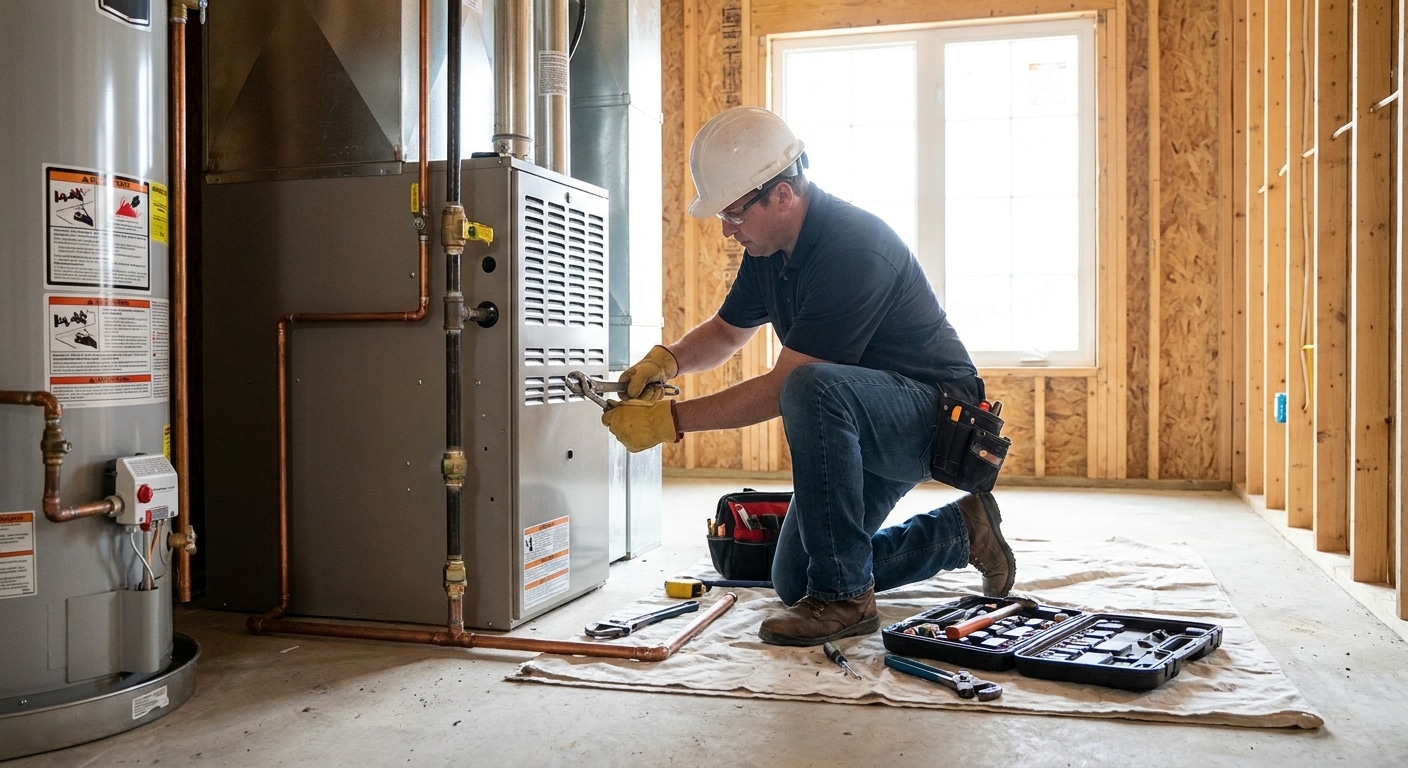
Gas Line Repair Installation for Renovations: 2026 Guide
August 9th, 2026
Adding a gas range, tankless water heater, fireplace insert, or backyard fire pit during a home renovation means running or rerouting gas line — and in Northern Utah that work has to clear inspection before anyone fires up the appliance. This guide breaks down what a licensed gas line repair installation job should cover in 2026, which renovation projects trigger a permit, and which shortcuts turn a remodel into a safety callback.
- Any gas line repair installation tied to a kitchen or basement remodel in Northern Utah needs a licensed contractor and a passed inspection in 2026.
- Range and cooktop lines run 65,000-80,000 BTU; tankless water heaters often need 150,000+ BTU and a bigger line size.
- A pressure test holding 10 psi for 10 minutes is standard before any gas appliance connects – skipping it means skipping safety.
- Extending a line for a fireplace insert or tankless heater is a Buy when a licensed crew pulls the permit; DIY black pipe threading is a Skip.
- Reusing old flex connectors during a renovation is the most common code violation inspectors flag in 2026.
Why this matters
Gas line work sits behind drywall and under floors, which is exactly why renovations get it wrong. Once the kitchen is closed up, an undersized line or a failed pressure test means reopening a wall you just finished. The crews at Expert Services handle gas line repair installation alongside plumbing, HVAC, and electrical work across Northern Utah, which matters most when a renovation touches three trades at once — a new range, a bigger water heater, and updated wiring, all pulling from the same gas meter.
Who this is for
This guide is for homeowners in the middle of (or planning) a kitchen remodel, basement finish, or whole-house renovation in Northern Utah that adds or moves a gas-fed appliance. If your project involves a gas range, a tankless water heater swap, a fireplace insert, or a standby generator, the line sizing and permit rules below apply to you directly. It's not written for routine appliance replacement with no line changes — that's a simpler repair, not a renovation-scale job.
What to look for in gas line repair installation for renovations
State and local gas fitter licensing
Utah requires a licensed plumber or gas fitter for work past the meter, not a general contractor or handyman. Ask for the license number before work starts — this is the single biggest factor in whether your renovation passes final inspection.
Permit and inspection handling
Any new gas line, line extension, or line relocation needs a permit in most Northern Utah jurisdictions, even a short run for a fireplace insert. A contractor who pulls the permit and schedules the inspection themselves saves you from being the one chasing paperwork mid-renovation.
Pressure testing before appliance hookup
A standard test holds 10 psi for 10 minutes with zero drop before any appliance connects. Skipping this step is the fastest way to fail a final inspection, and it's the step DIY jobs and unlicensed crews skip most often.
BTU sizing for the actual appliance load
A gas range needs 65,000-80,000 BTU, but a tankless water heater can need 150,000-199,000 BTU, and a standby generator can push past 250,000 BTU. Check the best home HVAC systems for Utah homes guide if your renovation also touches furnace or boiler sizing — gas furnaces add to the same load calculation.
Line material suited to the run
Black pipe is threaded steel, standard for exposed or mechanical-room runs. CSST (corrugated stainless tubing) snakes through finished walls faster during a remodel but needs bonding per code. A licensed installer picks based on the run, not preference.
Common gas line renovation projects
Kitchen range and cooktop conversion — the most requested job. Gas ranges draw 65,000-80,000 BTU and need at least a 1/2-inch line. If the wall is already open for a remodel, this is a straightforward add for a licensed crew. Buy.
Tankless water heater gas line upsizing — the one that trips up most remodels. Tankless units commonly need 150,000-199,000 BTU input, which usually means upsizing from a 1/2-inch line to 3/4-inch or 1-inch. Undersized lines are the top reason tankless water heater installation for new construction projects underperform once Utah's cold snap months hit. Buy the tankless swap, but get the line resized first — don't assume the old line carries the new load.
Gas fireplace insert line — the basement finish add-on. Most direct-vent inserts run 20,000-40,000 BTU, a small line, but the access work through finished walls is the hard part. Buy for a licensed crew, provided the permit clears before drywall closes it up.
Whole-home standby generator hookup — the project everyone underestimates. A 20kW-range generator can need 250,000+ BTU capacity, which sometimes means a full meter upsize with the gas utility, not just a longer line. Consider — get a combustion load calculation done before stacking a range, water heater, and generator on one meter.
DIY black pipe threading or reused flex connectors — the shortcut that fails inspection. Reused connectors and untested joints are the most common reason Northern Utah renovation permits get flagged in 2026. A failed pressure test means reopening the wall you just closed. Skip.
Get your renovation gas line scoped
Licensed sizing, permitting, and pressure testing for Northern Utah remodels.
What to avoid
- Hiring anyone without a gas-specific license for line work past the meter — a general handyman isn't legally allowed to do this in most of Utah, and unlicensed work fails inspection.
- Skipping the permit because it's "just a short line" — inspectors check every gas line extension specifically because carbon monoxide and explosion risk don't scale down with pipe length.
- Assuming the existing line has capacity for a second or third appliance without a load calculation. Stacking a range, tankless heater, and fireplace on one undersized line is a top reason renovated homes fail final inspection.
Verdict comparison
| Project | BTU range | Permit needed | Verdict |
|---|---|---|---|
| Range/cooktop swap | 65,000-80,000 BTU | Yes | Buy |
| Tankless water heater upsize | 150,000-199,000 BTU | Yes | Buy |
| Gas fireplace insert | 20,000-40,000 BTU | Yes | Buy |
| Standby generator hookup | 250,000+ BTU | Yes, often meter upsize | Consider |
| DIY reused connectors | N/A | Fails inspection | Skip |
FAQ
What does gas line repair installation cost during a home renovation?
Cost depends on line length, BTU capacity needed, and whether the gas utility requires a meter upsize. Get a scoped quote once you know which appliances the renovation is adding before budgeting the line item.
Do I need a permit for gas line work in Utah?
Yes, most Northern Utah jurisdictions require a permit and inspection for any new or altered gas line, even a short extension for a fireplace insert. Skipping the permit risks a failed sale inspection later.
Can I run my own gas line during a renovation?
Not legally past the meter in most of Utah. State code requires a licensed plumber or gas fitter, and DIY work typically fails the pressure test inspectors run before signoff.
What size gas line do I need for a tankless water heater?
Most tankless units need 150,000 to 199,000 BTU input, which usually means upsizing from a 1/2-inch to a 3/4-inch or 1-inch line. Check the unit’s spec plate before assuming the existing line works.
Is a gas line pressure test required after repair or installation?
Yes, the standard test holds 10 psi for 10 minutes with no drop before any appliance connects. This is what an inspector checks before final signoff in 2026.
Can one gas meter handle a range, tankless water heater, and fireplace in the same renovation?
Sometimes, but stacking three appliances on one meter often requires a load calculation and can trigger a meter upsize with the utility. Don’t assume the existing meter covers a full renovation without checking first.
What’s the difference between black pipe and CSST for gas renovations?
Black pipe is threaded steel, standard for exposed mechanical runs. CSST is corrugated stainless tubing that snakes through finished walls faster during remodels but needs bonding per code.
How long does gas line installation take during a remodel?
A short extension for a single appliance is usually a same-day job once the permit is issued. A full reroute during a kitchen gut takes longer and lines up with the rest of the renovation schedule.
One last thing
Utah's cold snaps push gas demand higher every winter, and a line that tests fine in October can show pressure drop by January. If the renovation adds a tankless water heater or a generator on top of the existing range and furnace, size the line for winter demand in 2026, not for a warm-weather test day — that's the detail that separates a renovation that passes inspection from one that gets a January service call.
Related guides
- Best home HVAC systems for Utah homes
- Signs you need a water heater replacement, not a repair
- Emergency plumber in Salt Lake City