How to Fix a Jammed Garbage Disposal (2026 Guide)
September 4th, 2026
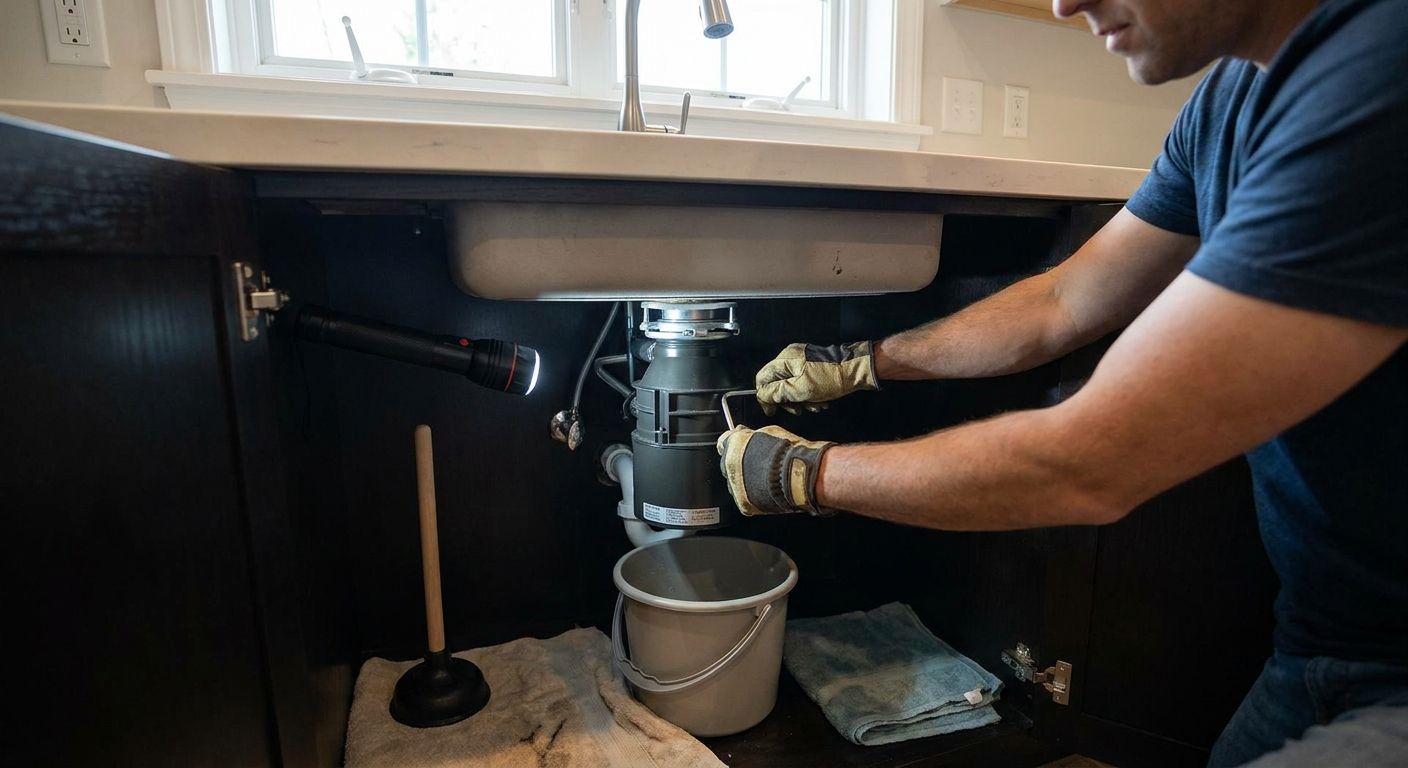
A jammed garbage disposal resets in under 10 minutes by cutting power, freeing the flywheel with an Allen wrench, and pressing the red reset button underneath the unit; a leaking disposal gets fixed by resealing the sink flange on top or replacing the discharge gasket underneath, depending on where the water actually shows up. The catch most people miss: mashing the reset button before the jam is cleared just trips the breaker again or cooks the motor windings, turning a 10-minute fix into a full unit replacement.
- A jammed disposal resets in under 10 minutes with a 1/4-inch Allen wrench and the red reset button.
- Leaks at the sink flange need fresh plumber’s putty; leaks at the discharge pipe need a new fiber gasket.
- Never put a hand or fingers into the disposal chamber, even with the power fully cut.
- A disposal that jams weekly or leaks from the housing seam itself is past repair in 2026 – replace it.
Why this matters
A disposal that hums but won't spin is usually a 10-minute fix, not a call to a plumber – but only if you clear the jam correctly and in order. Skip the power-cutoff step or force the reset button before the flywheel is free, and you risk a shock hazard or a burned-out motor that turns a free repair into a paid replacement.
A disposal that's leaking is a different animal entirely. Water pooling under the sink cabinet in 2026 almost always traces to one of two spots – the flange seal where the unit meets the sink basin, or the gasket where it connects to the drain line – and each has its own fix. If the leak is coming from the housing itself, no amount of resealing helps; a plumber handling garbage disposal installation for kitchen remodels swaps the unit rather than chasing a leak that keeps coming back.
How do you fix a jammed garbage disposal?
The fix is mechanical, not electrical – you're freeing a stuck flywheel, not rewiring anything. Follow these steps in order:
- Cut the power. Flip the wall switch off and unplug the unit under the sink, or shut the breaker if it's hardwired.
- Find the hex socket. Every residential disposal has a hexagonal hole in the bottom-center of the housing built for exactly this problem.
- Insert a 1/4-inch Allen wrench and crank it back and forth until the flywheel spins freely in both directions.
- Check for the obstruction with tongs or pliers – never fingers – and pull out whatever jammed it: a fork tine, a fruit pit, a shard of glass.
- Restore power and press the red reset button on the bottom of the unit. It only engages once the flywheel turns freely.
- Run cold water and flip the switch. If the motor spins clean with no grinding, the jam is cleared.
If the flywheel won't budge at all even with the wrench, or the motor hums but the reset button won't stay engaged, the bearing has likely seized – that's a replacement, not a repair.
Garbage disposal jammed: fix it in 6 steps
The steps above cover 2026's most common jam – food debris or a foreign object lodged against the impeller blades. Fibrous vegetables (celery, corn husks) and starchy peels (potato, onion) are the repeat offenders because they wrap around the flywheel instead of shredding cleanly. If the same disposal jams more than once a month on ordinary kitchen scraps, the impeller blades are likely worn down and no longer cutting – that's a mechanical wear issue an Allen wrench won't solve twice.
Garbage disposal leaking from the bottom: gasket fix
Water dripping from underneath the unit, at the point where it meets the drain pipe or dishwasher hose, points to a worn discharge gasket or a loose mounting bolt. Here's the fix:
- Shut off power and the water supply, and place a bucket under the connection.
- Loosen the mounting ring or clamp holding the discharge tube to the disposal.
- Pull the old fiber gasket and inspect it for cracking or flattening.
- Seat a new gasket, reconnect the tube, and hand-tighten the ring before finishing with a wrench a quarter-turn past snug.
- Run water for two minutes and check the connection dry before closing the cabinet.
A gasket this cheap and this quick to swap makes DIY the right call here – verdict: fix it yourself if the leak is isolated to this one joint.
Garbage disposal leaking from the top: flange fix
If the water is coming from where the disposal meets the underside of the sink basin, the plumber's putty seal at the flange has dried out and cracked. This is the more involved of the two leaks because the unit has to come down:
- Disconnect power, then support the disposal from below and unlock it from the mounting assembly.
- Remove the old, hardened putty ring from around the sink drain opening.
- Roll a fresh rope of plumber's putty and press it evenly around the flange.
- Reseat the flange, reattach the mounting assembly, and rehang the disposal.
- Let the putty set for the time listed on the tube before running water.
This is also the moment homeowners often decide to upgrade rather than reseal, especially mid-remodel – a fresh flange seal on a unit that's already eight years old is a short-term patch, not a fix.
Homeowners tackling this during a broader kitchen update often ask about sequencing – when you're already planning a kitchen renovation, the disposal, the sink flange, and the dishwasher air gap all get touched at once, so it rarely makes sense to reseal an aging unit in isolation. If the flange work is happening anyway, pair it with a check of the shut-off valve under the sink while it's already disconnected.
Why garbage disposals jam or leak
A handful of root causes explain most 2026 service calls for this exact complaint:
- Fibrous or starchy food – celery strings, potato peels, and onion skins wrap the flywheel instead of shredding.
- Foreign objects – silverware, bottle caps, and produce stickers slip in during dish rinsing.
- Dried-out plumber's putty – the flange seal cracks after years of heat and moisture cycling.
- A corroded discharge gasket – the fiber seal at the drain connection hardens and starts weeping.
- A shared circuit overload – a disposal wired on the same breaker as a dishwasher trips before the reset button ever gets a chance to engage.
- Age – most household units run 8 to 12 years before internal corrosion causes leaks the seals can't fix.
Why does my garbage disposal hum but not spin?
A humming disposal means the motor is getting power but the flywheel is physically jammed or the motor bearing has seized. Cut power first, then use the Allen wrench method above on the hex socket before trying the reset button – forcing the switch while it's still jammed just trips the breaker again.
Is it safe to reset a garbage disposal myself?
Yes, resetting a garbage disposal yourself is safe as long as the power is cut before you reach anywhere near the chamber. The reset button only works once the obstruction is physically cleared, so pressing it repeatedly on a still-jammed unit risks tripping the breaker or damaging the motor.
How long does a garbage disposal last before it needs replacing?
A garbage disposal lasts 8 to 12 years on average before internal corrosion and worn bearings make repairs unreliable. If the same unit is jamming monthly, leaking from the housing seam itself, or tripping the reset button on light use, replacement is cheaper long-term than repeated seal and gasket fixes.
Need a plumber to look at it?
Book a disposal repair or replacement anywhere in Northern Utah.
FAQ
How do I fix a jammed garbage disposal?
Cut power, insert a 1/4-inch Allen wrench into the hex socket on the bottom of the unit, and crank until the flywheel spins freely, then press the red reset button. Skipping the power cutoff or forcing the reset button before the jam clears risks shock or motor damage.
Why is my garbage disposal leaking from the bottom?
A disposal leaking from the bottom usually has a worn discharge gasket or a loose mounting ring at the drain pipe connection. Replacing the fiber gasket and re-tightening the ring past snug fixes this in most cases.
Why is my garbage disposal leaking from the top?
A leak from the top means the plumber’s putty seal at the sink flange has dried and cracked. The disposal has to come down to reseal the flange with fresh putty, which takes longer than the bottom-gasket fix.
Can I use chemical drain cleaner on a jammed disposal?
No – chemical drain cleaner doesn’t clear a mechanical jam and can damage the disposal’s internal seals. Free the flywheel manually with an Allen wrench instead.
What should never go down a garbage disposal?
Fibrous vegetables like celery and corn husks, starchy peels, grease, and bones are the most common causes of jams and premature wear. These wrap the flywheel or dull the impeller blades instead of shredding cleanly.
How much does it cost to replace a garbage disposal?
Cost depends on unit size, horsepower, and installation complexity, so get a current quote before assuming a number. A licensed plumber can evaluate whether repair or replacement makes sense for a specific unit’s age and condition.
Is a leaking garbage disposal dangerous?
A leaking disposal isn’t an electrical hazard by itself, but water pooling near the unit’s wiring or outlet becomes one. Cut power at the switch immediately if standing water is anywhere near the electrical connection.
How often should a garbage disposal be replaced?
Most household disposals need replacing every 8 to 12 years as internal corrosion and worn bearings make seals and gaskets unreliable. Frequent jams or repeat leaks on the same unit are the clearest signs it’s time.
One last thing
The reset button is the single most misused feature on any disposal – it's a safety cutoff, not a fix, and it only holds once the actual jam is cleared. If it keeps popping within seconds of resetting it, stop pressing it and check the flywheel again; that pattern almost always means something is still lodged against the impeller, not a bad button.
Related guides
- How to fix a leaking shut-off valve under a sink
- Faucet repair for leaking kitchen sinks
- Kitchen sink air gap installation for dishwashers
- How to shut off your home's main water valve in an emergency