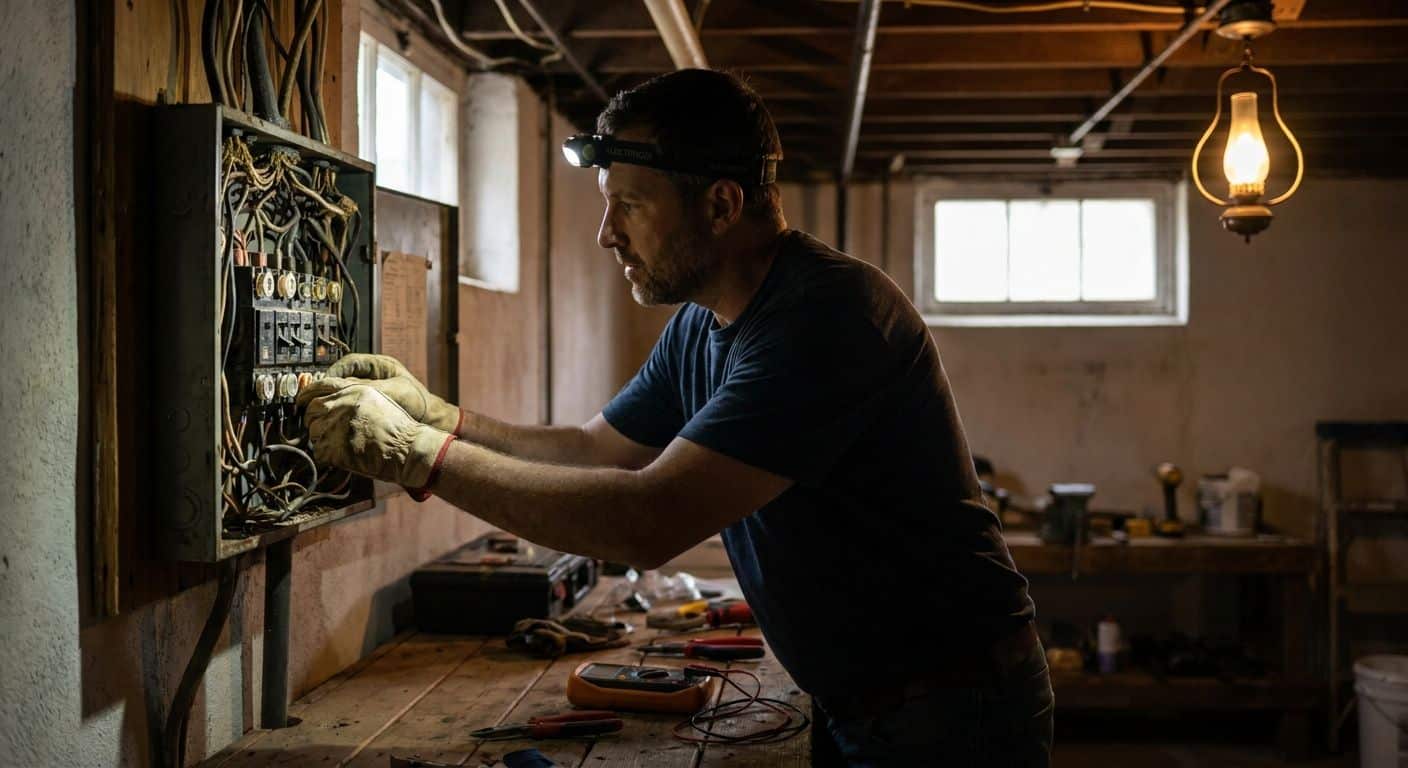
Flickering Lights Repair for Older Wiring: 2026 Fix
August 20th, 2026
Flickering lights in an older home usually aren't a bulb problem — they're a wiring, panel, or connection problem that gets worse every year the system ages. This guide breaks down what causes flickering in pre-1980s electrical systems and which fix actually solves it.
- Loose neutral connections cause most flickering lights repair calls in homes wired before 1980 — Buy the diagnostic first.
- Aluminum wiring installed between 1965 and 1973 is a known fire risk and needs rewiring, not a patch — Buy full rewiring.
- 60-amp fuse panels can’t carry modern loads; upgrading to 100-amp or 200-amp service stops flicker tied to appliance cycling — Buy.
- Whole-house surge protection helps electronics but does nothing for undersized wiring — Consider, don’t rely on it alone.
- DIY dimmer swaps on old cloth-insulated circuits are a Skip until a licensed electrician checks the panel.
Why This Matters
Flickering lights are a symptom, not a diagnosis. In a home built before 1980, the same flicker can point to a loose neutral, an undersized panel, or aluminum branch wiring that's oxidized at the connections — and only one of those is a five-minute fix. Electrical rewiring for older Utah homes covers what full-system replacement looks like when the wiring itself is the problem, not just a switch or fixture.
Guessing wrong here isn't just annoying — it's a fire risk. Aluminum wiring installed widely between 1965 and 1973 expands and contracts differently than copper, which loosens connections over time and shows up first as flicker before it shows up as heat damage. A flickering fixture on a 1968 ranch home means something different than the same flicker in a 2015 build, and treating them the same way wastes money or misses a hazard.
Who This Is For
This is for owners of homes built before roughly 1985 — the era of 60-amp fuse panels, aluminum branch circuits, and knob-and-tube remnants still hiding in walls. If your panel still uses screw-in fuses, your outlets are two-prong without ground, or you've had an electrician mention "aluminum" during any past visit, this guide is written for your exact situation. Homes built after 2000 with copper wiring and 200-amp service rarely need anything beyond a loose-connection check.
What To Look For In Flickering Lights Repair For Older Electrical Systems
Wiring type and age
Knob-and-tube, cloth-insulated copper, and aluminum branch wiring behave differently under load, and each has a different failure pattern. Aluminum is the one that specifically causes flicker at the connection points as it oxidizes, so identifying wiring type before any repair changes what tool the electrician reaches for.
Panel capacity
A 60-amp fuse panel that was fine for a 1968 kitchen can't handle a 2026 home with a microwave, two TVs, a window AC unit, and a space heater on the same circuit. Voltage sags under that load, and sagging voltage is what makes lights dim or flicker when something else turns on. How to know if you need an electrical panel upgrade lays out the exact signs that push a home from repair territory into upgrade territory.
Neutral and ground connections
A loose neutral wire at the panel or a splice can cause flicker that seems random — worse on windy days when the house shifts slightly, worse in winter when metal contracts. This is the cheapest fix on the list when it's the actual cause, and the most commonly missed one in a rushed inspection.
Shared circuits with high-draw appliances
If lights dim every time the furnace blower, well pump, or AC compressor kicks on, that circuit is carrying more than it should. This is a wiring design problem from decades ago, not a bulb or fixture issue, and no amount of LED swapping fixes it.
Dimmer and LED compatibility
Older dimmer switches were built for incandescent loads and choke on modern LED bulbs, producing a flicker that looks electrical but is actually a mismatch between the dimmer's minimum load rating and the LED's low wattage draw. Swapping to a dimmer rated for LED loads solves this in about 20 minutes, no panel work required.
Grounding and GFCI status
Ungrounded circuits and missing GFCI protection don't directly cause flicker, but they're a reliable marker of a system that hasn't been touched since the original build — which means everything else on this list is more likely to be present too.
The Fixes That Actually Work
The quick fix — loose connection tightening. This addresses flicker localized to one room or one circuit and traces back to a single loose neutral or breaker connection. It's the cheapest repair on this list and often solves 100% of the reported symptom in one visit. Buy — always rule this out first before assuming a bigger problem.
The systemic fix — panel upgrade. A jump from a 60-amp fuse panel to 100-amp or 200-amp breaker service eliminates flicker caused by voltage sag under modern loads. Homes with panels older than 40 years almost always show measurable improvement after this swap. Buy if your panel predates 1985 or still uses fuses — see how to know if you need an electrical panel upgrade for the specific warning signs.
The full fix — complete rewiring. When aluminum branch wiring or knob-and-tube is confirmed, tightening connections is a temporary patch, not a repair. Full rewiring addresses every oxidized connection at once instead of chasing flicker room by room for years. Buy for any home confirmed to have aluminum wiring from the 1965-1973 window.
The protective layer — whole-house surge protection. This doesn't fix flicker caused by wiring or panel issues, but it does protect the electronics and appliances that are more sensitive to the voltage fluctuations an aging system produces. Consider as a pair with a panel upgrade — see whole-house surge protection for smart home devices for how it layers with panel work.
The emergency call — licensed electrician diagnosis. When flicker is intermittent, widespread, or paired with warm outlets or a burning smell, this stops being a project and becomes a same-day call. Buy immediately in that scenario — how to choose an electrician for emergency repairs covers what to check before letting anyone into the panel.
“If dimming happens every time an appliance kicks on, the wiring is undersized for the load, not the bulb.”
Get your wiring diagnosed
Licensed Expert Services electricians trace flicker to its actual cause across Northern Utah.
What To Avoid
- Swapping bulb brands as the first move. LED bulbs get blamed constantly, but if flicker happens across multiple fixtures on different bulb brands, the bulb was never the cause.
- "Flicker-fix" dimmer kits without checking wiring first. These can mask a loose-connection problem for months while the underlying issue keeps degrading.
- Patching aluminum wiring connection by connection. Pigtailing a few outlets might quiet the flicker temporarily, but aluminum wiring installed in the 1965-1973 window keeps oxidizing everywhere else it wasn't touched.
Verdict Comparison Table
| Fix | Best For | Typical Scope | Verdict |
|---|---|---|---|
| Loose connection tightening | Single-room, intermittent flicker | One visit | Buy |
| Panel upgrade (60A to 100-200A) | Panels older than 40 years, fuse boxes | 1 day | Buy |
| Full rewiring | Confirmed aluminum or knob-and-tube wiring | Multi-day project | Buy |
| Whole-house surge protection | Homes with smart devices and sensitive electronics | Half day, paired with panel work | Consider |
| Emergency electrician call | Warm outlets, burning smell, widespread flicker | Same day | Buy immediately |
FAQ
What’s the best flickering lights repair for a house built before 1970?
Start with a loose-connection check, then confirm wiring type — homes from this era often have aluminum branch wiring that needs full rewiring rather than a patch. A licensed electrician can confirm wiring type in one visit.
Is a panel upgrade better than rewiring for flickering lights?
It depends on the cause: a panel upgrade fixes flicker from voltage sag under modern loads, while rewiring fixes flicker from degraded aluminum or knob-and-tube connections. Many older homes in Northern Utah need both.
How much does flickering lights repair cost in 2026?
Cost depends entirely on the cause — a loose connection is the cheapest fix on the list, while full rewiring is the most involved. A diagnostic visit determines which category the repair falls into before any work starts.
Can flickering lights mean a fire hazard?
Yes, especially with aluminum wiring from the 1965-1973 era or a loose neutral connection at the panel, both of which generate heat at the connection point over time. Warm outlets or a burning smell alongside flicker means the call becomes an emergency, not a scheduled repair.
Why do lights flicker only when an appliance turns on?
This points to a shared circuit carrying more load than it was designed for, common in homes with panels from before 1985. The fix is usually a panel upgrade or a dedicated circuit for the high-draw appliance, not anything at the light fixture.
Do LED bulbs cause more flickering in old homes?
LED bulbs can flicker with dimmers built for incandescent loads because the minimum load ratings don’t match, but this only affects dimmed fixtures, not whole rooms. Widespread flicker across multiple fixture types points to wiring, not bulbs.
Is DIY flickering lights repair safe for older systems?
Bulb swaps and dimmer replacements are safe DIY tasks, but panel work and wiring diagnosis on systems with aluminum or knob-and-tube wiring should go to a licensed electrician. Opening an old panel without knowing what’s inside risks shock and fire.
How do I know if my home has aluminum wiring?
Homes built between 1965 and 1973 are the most likely candidates, and an electrician can confirm it by checking wire coloring and markings at outlets or the panel. If confirmed, plan for rewiring rather than repeated spot repairs.
One Last Thing
The flicker that gets ignored longest is the one that only happens "sometimes" — no pattern, no obvious trigger, gone by the time anyone looks at it. That intermittent pattern is exactly what a loose neutral connection produces, because it only shows symptoms when the house shifts slightly from temperature or vibration. It's also the cheapest fix on this entire list, which is the frustrating part: the flicker that seems hardest to diagnose is often the fastest one to solve once someone actually checks the connection.
Related Guides