GOT A CRAZY WATER BILL? THIS ONE PROBLEM IS LIKELY WHY:
Everybody needs water in their home, but first it has to get there. How does it work?
A water pipe is sized for the house by the city, and the builder. The pipe is ran from the city to a device that has a valve to turn the water off, and counts how many gallons of water is used in the home. This device is called a Water Meter. Here in Utah County and Salt Lake County, these meters are typically buried in the front yard and covered with a bronze lid, marked “WATER METER.” A pipe is then run from the meter to the inside of the house. Once it goes into the house, another shut-off valve is installed. This allows easy access for the homeowner to turn off the water.
Now, this begs another question. Who owns what? The answer is actually simple. Anything past the water meter is owned by the homeowner. The meter and anything towards to road is owned by the city.
Now for the big question. “Why do I have a high water bill?” If you are not noticing any issues on the inside of the house like toilets running, leaking water lines, etc, the most common issue is that the water main has a leak in it. You know, that pipe running from the meter to the inside of the house? That one. If there is a leak in that water line, your water bill will go up pretty quickly.
GOT A CRAZY WATER BILL? THIS ONE PROBLEM IS LIKELY WHY:
Call your local city, and have them check. What they will do it turn off the water on the inside of your house, and see if the meter is still counting up. If it is, water is escaping the pipe between the shut-off valve inside, and the water meter. This is normally a pretty quick diagnostic for the city, but we’re left with another large question, and that is:
HOW DO I FIX THIS?
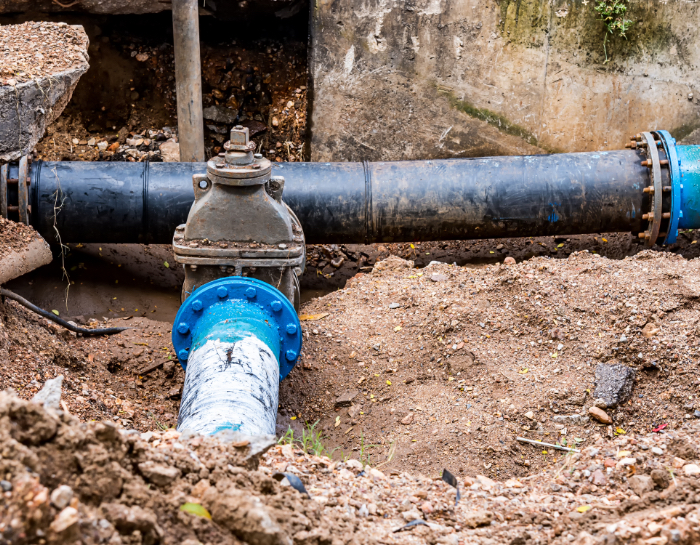
The repair process can be either very simple or very complex. It’s one of the two, and very rarely in the middle. If the main water line is located in your front yard under the grass, it is typically easy to figure out where the issue is. The dirt will be soft, and wet. It can also be sunk down, or the grass will have an unusual growth pattern. The plumbers will excavate to the main water line, and make a replacement of the waterline with new PEX piping
(For more information on the different types of piping, check out this quick article.)
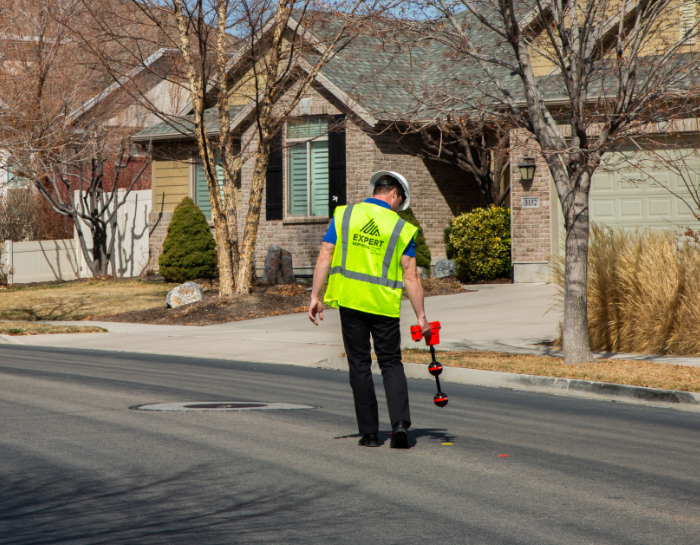
If the water line is underneath pavement or concrete, a leak detection service is needed. This involves the use of cutting-edge technology to locate the exact area that is leaking. That way, the amount of pavement or concrete removal is minimized, saving you time, and money. The specialist will use acoustic locating equipment, which permits the specialist to listen to several feet into the ground, and find the general vicinity of the leak. Another method is charging the pipe full of a scented gas and using a special gas detector. This will lead the detector to exactly where the gas is rising out of, thus locating the issue. The plumber will then excavate that area, while only removing the sections of paving that are necessary for the repair.
Here at Expert Plumbing, we offer leak detection to all of Utah and Salt Lake County, including the Provo, and Wasatch area. We also can do all Water Main repair, stop and waste repair, and water meter installation. Feel free to call us at 801-224-8118, or you can book online to get an Expert opinion.
Main Water Line Repair FAQs
Discolored water, a sudden drop in pressure when you turn on multiple fixtures, or the sound of running water when nothing's turned on are red flags, too. Older galvanized or cast iron lines are especially prone to this kind of failure as they age, so if your home or building is a few decades old, it's worth having the line checked even without obvious symptoms yet.
Traditional excavation still makes sense in certain situations, and we'll walk you through which approach fits your specific line, soil, and layout before we start. Either way, our goal is to fix the problem with as little disruption to your property as we can manage.
For most residential repairs, the shutoff window is brief, typically just a few hours during the final connection. We'll give you a realistic timeline upfront.
We also coordinate directly with city officials when a repair affects service lines or requires permits, so nothing catches you off guard mid-project.
We offer upfront pricing and virtual estimates so you know what you're working with before any work begins. If we discover unexpected conditions once we're underground, we'll walk you through the options before moving forward.