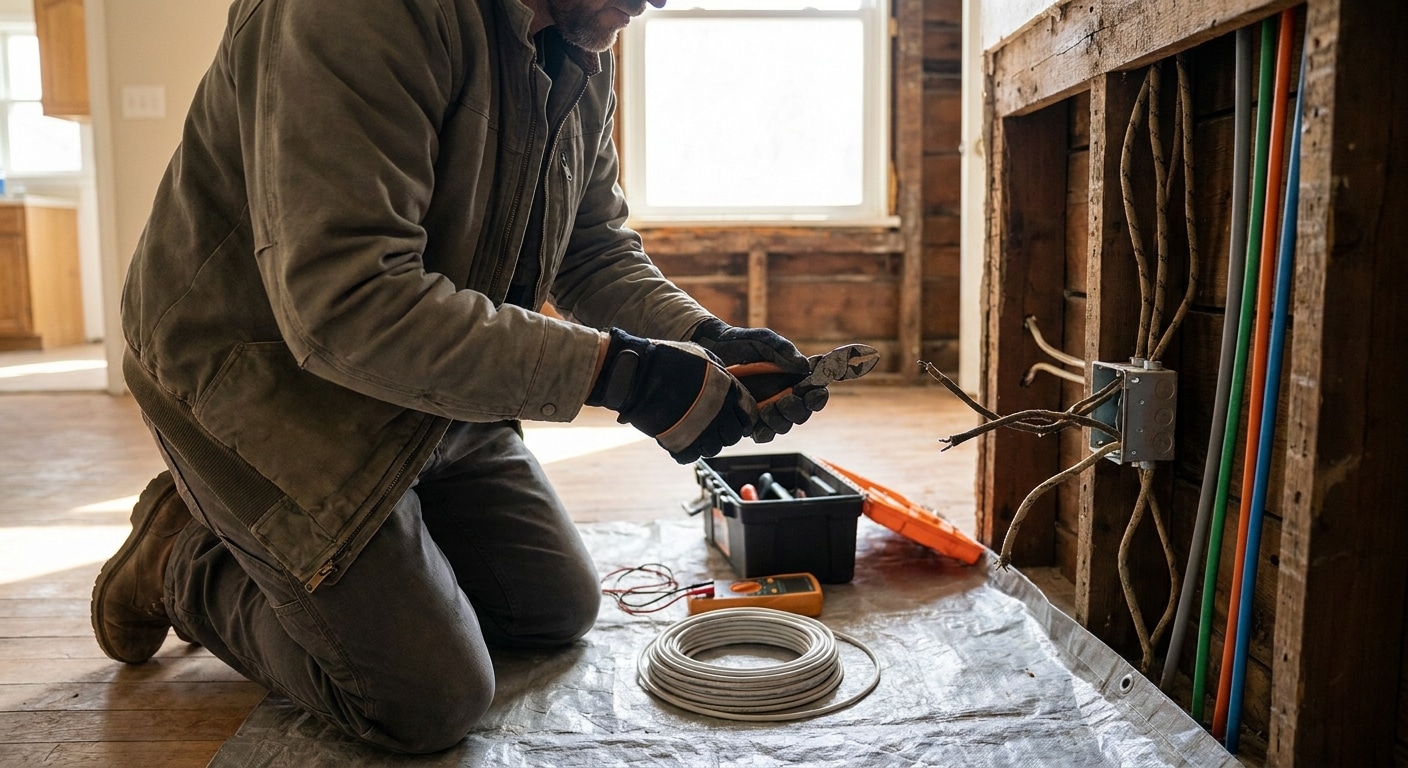
Electrical Rewiring for Older Homes in Utah: 2026 Guide
August 13th, 2026
If your Utah home was built before 1970, the wiring behind those walls was designed for a world without EV chargers, mini split heat pumps, or a kitchen full of 1500-watt appliances running at once — this guide breaks down what electrical rewiring for older homes actually requires, what it costs in scope (not guesswork), and which upgrades matter most for Northern Utah's housing stock.
- Homes with 60-100 amp panels built before 1970 need a full evaluation before adding EV chargers or central AC in 2026.
- Aluminum branch wiring installed through roughly 1965 is a fire risk at outlets and switches, not just at the panel.
- A 200-amp panel upgrade is the baseline for modern Utah homes running HVAC, an EV charger, and standard appliances together.
- Knob-and-tube removal is non-negotiable if you’re insuring the home or finishing an attic in 2026.
- Partial rewires targeting kitchens and bathrooms cost less but leave the rest of the house on old circuits.
Why this matters
Older Utah housing stock in Salt Lake City, Sugar House, Ogden, and Provo's historic districts still runs on wiring systems that predate three-prong outlets in half the rooms. A 60-amp or 100-amp panel that handled a 1958 kitchen can't safely carry a modern range, a heat pump, and a Level 2 EV charger at the same time.
Insurance carriers have gotten stricter about this in 2026 — several won't write or renew a policy on a home with active knob-and-tube wiring or ungrounded aluminum branch circuits. That turns rewiring from a nice-to-have into a closing condition on refinances and home sales.
The licensed electricians at Expert Services see the same pattern across Northern Utah: homeowners find out their wiring is outdated only after a home inspection flags it, an insurer denies coverage, or a breaker starts tripping the first week the AC runs hard.
Who this is for
This guide is for owners of homes built before 1978 in Northern Utah who are dealing with flickering lights, warm outlet covers, a panel that still uses screw-in fuses, or a home inspection report that flagged aluminum wiring or knob-and-tube. It's also for anyone planning an EV charger, a mini split addition, or a kitchen remodel who needs to know if the existing electrical service can handle the new load before signing a contract.
What to look for in electrical rewiring for older homes
Panel amperage and capacity
A 60-amp or 100-amp panel was standard through the 1960s and simply wasn't sized for today's appliance load. Running a heat pump, an electric range, and an EV charger off a 100-amp service means constant tripped breakers and, in worst cases, overheated panel components. Anything under 150 amps in a 2026 home with modern HVAC and EV plans is a candidate for replacement.
Wiring material and age
Knob-and-tube wiring, common through the 1940s, has no ground and degrades where insulation touches insulation or attic material. Aluminum branch wiring, common into the mid-1960s, expands and contracts at outlets and switches in a way copper doesn't, loosening connections over years and creating heat at the exact point you can't see it. Cloth-insulated copper from the 1950s and 60s is safer than either but still brittle enough to crack when disturbed during a remodel.
Grounding and AFCI/GFCI protection
Ungrounded circuits mean surge protectors and modern electronics don't work as intended, and they mean a fault has nowhere to go but through whatever's plugged in — including a person. Arc-fault and ground-fault protection at the panel level is code-required in most new circuits today and closes gaps that didn't exist when the home was built.
Permit and inspection compliance with Utah code
Any rewiring project touching the panel or adding circuits needs a permit and inspection under Utah's adopted electrical code. Skipping this isn't just a legal risk — it means no documented proof of safe work when you sell the house or file an insurance claim.
Load planning for EV chargers and modern HVAC
A Level 2 EV charger alone can draw 30-50 amps continuously. Add a heat pump or ductless mini split and you're often past what a 100-amp service can spare. Planning the rewire around future loads, not just current ones, avoids a second project two years later.
Electrician licensing and experience with older housing stock
A general handyman license doesn't cover panel work or whole-house rewiring in Utah. Look for a licensed electrician who has specifically worked in pre-1970 housing stock and can identify knob-and-tube, aluminum, and cloth-copper on sight, not just from a textbook.
Top rewiring approaches for older Utah homes
1. Whole-panel upgrade to 200 amps — the baseline fix. If your panel is under 150 amps and you're adding an EV charger or HVAC equipment, this is where every project starts. A panel upgrade for EV charger installation typically also resets your grounding and gives you room for future circuits. Verdict: Schedule now if your panel is 100 amps or less.
2. Full knob-and-tube removal — the non-negotiable pick for homes built before 1950. Insurance carriers increasingly won't cover active knob-and-tube in 2026, and the wiring's rubber insulation is decades past its rated life. Verdict: Schedule now regardless of budget timeline — this is a safety issue, not a cosmetic one.
3. Room-by-room partial rewire — the budget-conscious pick for homes with sound copper elsewhere but outdated kitchens and bathrooms. This targets GFCI protection and dedicated appliance circuits without touching every wall in the house. Verdict: Consider if your panel and main circuits already passed inspection.
4. EV-and-HVAC-ready circuit package — the forward-looking pick, especially paired with HVAC work. Homes getting a heat pump or furnace swap alongside electrical work often need the same panel capacity conversation twice; doing both together, similar to the planning covered in furnace repair for older homes with outdated systems, saves a second round of drywall repair. Verdict: Buy if a major HVAC replacement is already on the calendar.
5. Aluminum wiring pigtailing — the interim fix, not the permanent one. Pigtailing splices copper connectors onto aluminum wire ends at outlets and switches to reduce the expansion-contraction risk without a full rewire. It buys time but doesn't solve the underlying issue. Verdict: Consider only as a stopgap before a full rewire, never as the final answer.
What to avoid
- DIY panel or circuit work. Utah code requires a licensed electrician and a permit for panel work — DIY jobs void insurance claims and often fail inspection on resale.
- Hiring based on price alone for panel swaps. A panel upgrade that skips proper grounding or undersizes for future EV and HVAC loads means paying for the same work twice.
- Ignoring the cooling system's electrical needs. Rewiring crews that don't size a dedicated circuit for the AC or heat pump set homeowners up for tripped breakers the first hot week of the year — cooling systems in older homes draw more amperage than the original 1960s panel was ever built to handle, and that circuit needs sizing before the drywall goes back up. Skipping this step is one of the most common callbacks electricians see on older-home projects.
If you're weighing whether to fix wiring now or wait, a request an estimate conversation with a licensed electrician costs nothing and gives you an actual amperage number instead of a guess based on the home's age.
Verdict comparison
| Approach | Best For | Scope | Verdict |
|---|---|---|---|
| 200-amp panel upgrade | Homes under 150 amps adding EV/HVAC | Whole panel | Schedule now |
| Knob-and-tube removal | Pre-1950 homes with original wiring | Whole house | Schedule now |
| Partial rewire | Sound copper, outdated kitchen/bath | Targeted rooms | Consider |
| EV/HVAC-ready circuits | Homes planning heat pump + charger | Panel + dedicated circuits | Buy |
| Aluminum pigtailing | Interim fix before full rewire | Outlets/switches | Consider (stopgap) |
FAQ
How much does electrical rewiring cost for an older home in Utah?
Cost depends on square footage, panel size, and whether the project is a full rewire or a partial one targeting specific rooms — get a scoped estimate rather than relying on a per-square-foot average, since knob-and-tube and aluminum wiring jobs vary widely in labor time.
Is knob-and-tube wiring dangerous?
Yes — knob-and-tube wiring has no ground wire and its original insulation is decades past its rated lifespan, making it a fire risk especially where it’s been covered by insulation added after installation. Most insurers in 2026 require its removal for coverage.
Can I keep aluminum wiring if I just add new outlets?
You can retrofit aluminum branch circuits with copper pigtail connectors at outlets and switches, but this is a stopgap, not a permanent fix. A licensed electrician should evaluate whether a full rewire makes more sense before you add new load to an aluminum circuit.
Do I need a permit to rewire my house in Utah?
Yes, any work touching your electrical panel or adding new circuits requires a permit and inspection under Utah’s adopted electrical code. Skipping the permit means no documented proof of safe work for insurance or resale.
What size panel do I need for an EV charger?
Most homes need at least a 200-amp panel to run a Level 2 EV charger alongside existing HVAC and appliance loads. A panel under 150 amps in a home also running central air or a heat pump is usually the first thing to upgrade.
How long does a whole-house rewire take?
Timeline depends on square footage and whether walls need to be opened, but whole-house rewiring in an occupied home typically runs longer than new construction wiring because of drywall repair and working around existing finishes.
Will rewiring my house lower my insurance costs?
Removing knob-and-tube or ungrounded aluminum wiring often makes a home eligible for coverage it couldn’t get before, and some insurers offer better rates once outdated wiring is replaced with a grounded, permitted system.
One last thing
Most homeowners assume a working outlet means safe wiring behind it — aluminum branch wiring from the mid-1960s can run for decades looking completely normal until one connection loosens at a switch and starts generating heat inside a wall you can't see. If your home was built before 1970 and you've never had the panel and branch wiring inspected, that's the gap worth closing before you plan any 2026 remodel or EV purchase.
Related guides