Drain Cleaning Cast Iron Pipes: 2026 Buyer’s Verdict
August 8th, 2026
Cast iron pipes hold up for 50 to 80 years before they turn into paper-thin scale traps, and most homes in Northern Utah built before 1975 still have them buried under the slab. Drain cleaning cast iron pipes the wrong way accelerates that failure instead of fixing it.
- Camera inspection before any cleaning is non-negotiable for cast iron pipes over 40 years old — Buy.
- Motorized cabling at low RPM is the safest routine drain cleaning method for cast iron — Buy.
- Hydro jetting above 3,000 PSI risks blowing through scaled cast iron walls — Consider only with a pressure-rated nozzle.
- Liquid chemical drain cleaners corrode cast iron faster than they clear clogs — Skip.
- Pipe descaling or lining pays off once scale buildup exceeds 25% of pipe diameter — Buy for homes over 50 years old.
Who this is for
This guide is for homeowners in Salt Lake City, Ogden, Provo, or anywhere in Northern Utah with a house built before the mid-1970s, back when cast iron was the standard for main lines and vertical stacks. If your drains gurgle, back up on the lowest floor first, or you've never had a camera scope run through the system, this applies to you. It's also for landlords managing older rental stock where a bad clog turns into an emergency call at the worst possible time — Expert Services handles that exact scenario across the Wasatch Front.
What to look for in drain cleaning for cast iron pipes
Camera inspection before any tool touches the pipe
Cast iron scales unevenly on the inside, and a technician who skips the camera is guessing at wall thickness. A five-minute scope run in 2026 costs far less than a collapsed line discovered mid-cleaning. Ask for footage or stills before any cabling starts.
Cable and auger RPM control
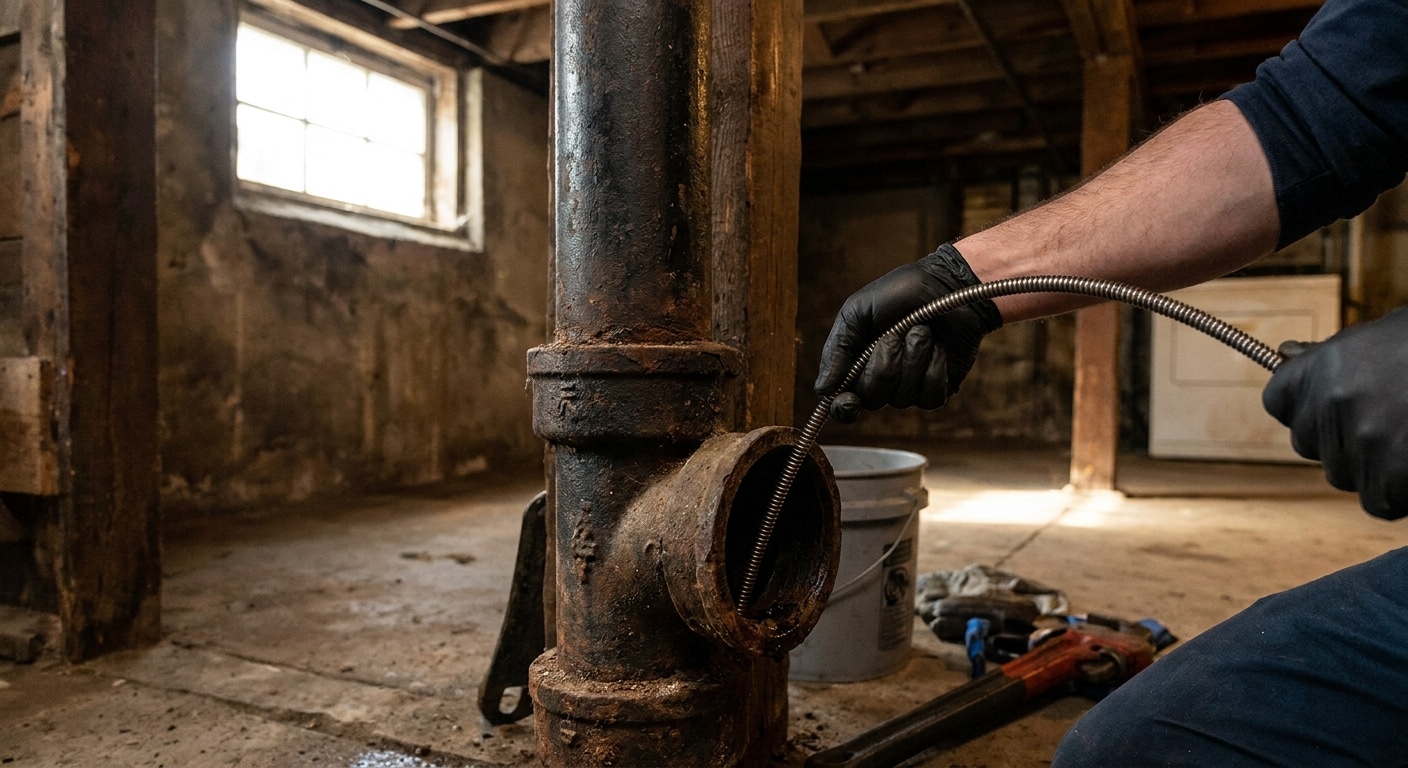
High-speed rigid augers chew through modern PVC without issue but can gouge already-thin cast iron walls. Look for a technician who runs cable at controlled, lower RPM and uses a cutting head sized to the pipe's actual diameter, not a generic 4-inch head jammed into a scaled-down 3-inch opening.
Hydro jetting pressure rating
Jetting is the most effective way to strip grease and scale, but pressure above 3,500 PSI on compromised cast iron can perforate the pipe wall. A 2026-appropriate approach starts low, checks resistance, and steps up only after the camera confirms wall integrity.
Descaling versus replacement threshold
Once interior scale eats more than a quarter of the pipe's diameter, cleaning becomes a temporary fix, not a solution. Ask the technician for a percentage estimate, not a vague "it's rough in there."
Experience specific to cast iron, not just drains in general
A plumber who works mostly on newer PVC and PEX systems can still misjudge cast iron. Ask directly how many cast iron jobs they've handled in the last year — a specific number, not "plenty."
Root intrusion at joint transitions
Cast iron sections joined to clay tile or early PVC are common failure points for root intrusion. Cleaning that ignores these transition joints leaves the actual problem untouched.
Top picks for cast iron drain cleaning
Camera inspection and diagnostic scope — the mandatory first step. A standard sewer camera run covers 100 to 150 feet of line in a single pass and flags scale, cracks, and offset joints before any cleaning tool goes in. This isn't optional for pipe over 40 years old. Buy.
Motorized cabling at controlled RPM — the safe workhorse. A properly sized cutting head clears root masses and grease clogs without stressing pipe walls, and it's the method most cast iron systems can handle repeatedly over years. Expect a standard service call to run under two hours for a single-line clog. Buy.
Low-pressure hydro jetting, 1,500 to 3,000 PSI — the calculated risk. This clears heavier scale buildup that cabling alone won't touch, but only after camera confirmation of wall thickness. Anything jetted above 3,500 PSI on cast iron without that confirmation is a gamble. Consider, with a camera check first.
Enzyme or bio-based maintenance treatments — the upkeep pick, not the fix. These slow organic buildup between full cleanings and won't damage pipe walls, but they do nothing for scale or root intrusion already present. Consider as a maintenance step, never as a standalone cleaning method.
Full pipe descaling or epoxy lining — the long-term fix. Once scale exceeds that 25% diameter threshold, mechanical descaling followed by lining restores flow without a full excavation. It costs more upfront than a single cleaning call but resets the clock on a line that would otherwise need replacement within a few years. Buy for any Northern Utah home over 50 years old showing recurring backups.
Get your cast iron line scoped
A camera inspection tells you what your drain cleaning actually needs.
What to avoid
- Liquid chemical drain cleaners. Sodium hydroxide and sulfuric acid formulas corrode cast iron interiors faster than they clear the clog, and they mask a problem that will resurface within weeks.
- Uninspected high-pressure jetting. A technician who jets first and scopes later on a 60-year-old cast iron main is skipping the one step that prevents a blowout.
- DIY rigid augers rented from a hardware store. These are sized for generic residential PVC, not scaled-down cast iron openings, and an aggressive cutting head can puncture a wall that's already down to a fraction of its original thickness. This is the same category of mistake that turns a routine clog into the kind of situation covered in emergency plumbing for burst pipes in winter — except with sewage instead of freeze damage.
Why this matters
Cast iron drain lines in Northern Utah are aging out at the same time regional freeze-thaw cycles stress every joint in the system. A cleaning method that's fine for a 10-year-old PVC line can crack a 70-year-old cast iron one, and the repair bill jumps from a service call to trenching. Landlords managing older properties feel this hardest — a single bad clog during a lease turnover becomes a full emergency, which is exactly the pattern covered in emergency plumbing for rental property landlords.
Verdict comparison
| Method | Best for | Risk to cast iron | 2026 verdict |
|---|---|---|---|
| Camera inspection | Every job, first step | None | Buy |
| Motorized cabling | Routine clogs, root masses | Low, if RPM controlled | Buy |
| Hydro jetting (1,500-3,000 PSI) | Heavy grease and scale | Moderate without camera check | Consider |
| Chemical drain cleaners | Nothing on cast iron | High | Skip |
| Descaling and lining | Recurring backups, homes 50+ years | Low, resets pipe life | Buy |
FAQ
Is drain cleaning safe for cast iron pipes?
Drain cleaning is safe for cast iron pipes when the method matches the pipe’s condition — motorized cabling at controlled RPM and low-pressure hydro jetting after a camera check are both low-risk. High-pressure jetting or chemical cleaners without inspection can crack or corrode weakened cast iron.
How often should cast iron drains be cleaned?
Most cast iron main lines in Northern Utah homes need cleaning every 18 to 24 months, though homes with mature trees near the line often need it annually due to root intrusion. A camera inspection during each cleaning tracks how fast scale is building.
Can hydro jetting damage cast iron pipes?
Hydro jetting above roughly 3,500 PSI can perforate cast iron pipe walls that have already lost significant thickness to internal scale. Staying at 1,500 to 3,000 PSI after a camera confirms wall condition keeps the risk low.
What’s the difference between drain cleaning and pipe descaling?
Drain cleaning clears an active clog and restores flow for one incident, while descaling mechanically strips built-up interior scale across the whole line to extend its usable life. Homes with cast iron over 50 years old usually need descaling eventually, not just repeated cleanings.
Should I use chemical drain cleaners on cast iron pipes?
No — chemical drain cleaners corrode cast iron pipe walls over repeated use and speed up the exact failure you’re trying to prevent. Motorized cabling or low-pressure jetting clears the same clogs without that damage.
How much does cast iron drain cleaning cost in 2026?
A standard cabling service call runs less than a full descaling job, while camera inspection is typically bundled into the visit or billed as a smaller add-on. Costs vary by line length and access difficulty, so a direct quote is more reliable than a flat estimate.
How do I know if my house still has cast iron pipes?
Homes built before the mid-1970s in Northern Utah commonly used cast iron for main lines and vertical stacks, and a magnet test on exposed basement pipe (cast iron is magnetic, PVC and copper are not) confirms it quickly. A camera inspection also identifies pipe material along the full run.
What’s the best drain cleaning method for old cast iron pipes?
Motorized cabling at controlled RPM combined with a prior camera inspection is the safest and most effective drain cleaning method for old cast iron pipes. Low-pressure hydro jetting is a strong second option once wall thickness is confirmed.
One last thing
The single biggest predictor of cast iron pipe failure isn't age — it's whether anyone has ever run a camera through the line. Homes with a documented inspection history in 2026 catch scale buildup and root intrusion years before a collapse forces an emergency dig, while homes with zero inspection history tend to find out the hard way, usually during a holiday when every plumber in Northern Utah is already booked.
Related guides