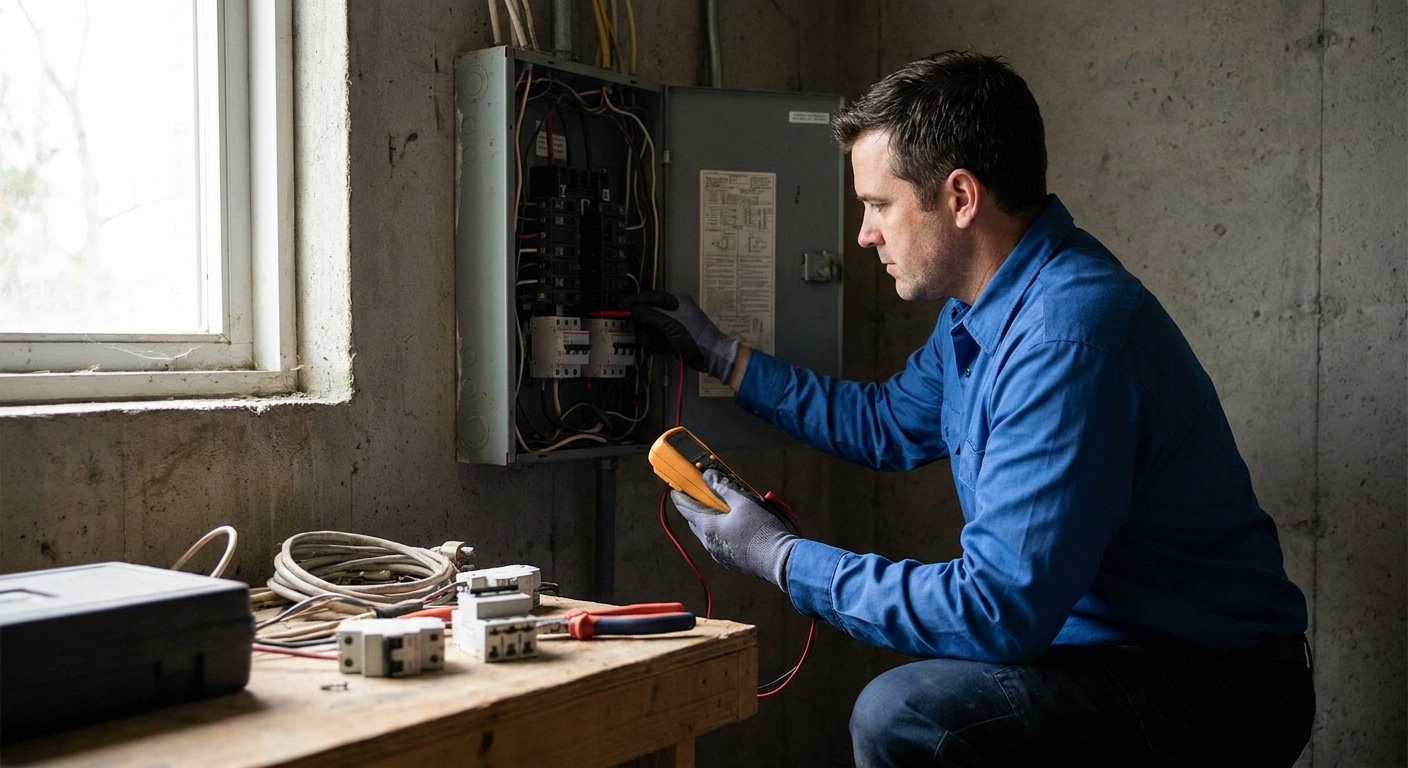
Need an Electrical Panel Upgrade? Signs to Check in 2026
August 14th, 2026
An electrical panel upgrade becomes necessary the moment your home's power demand outgrows what the panel was built to deliver — and in 2026, that gap shows up as tripped breakers, flickering lights, and insurance headaches more often than most Utah homeowners expect.
- A panel rated below 100 amps cannot safely run modern HVAC, EV chargers, and kitchen appliances together — upgrade to 200 amps.
- Frequent breaker trips, warm panel covers, or a Federal Pacific/Zinsco brand name mean replace now, not later.
- Adding an EV charger or whole-home generator almost always requires a panel upgrade first — plan for both in 2026.
- A licensed electrician in Northern Utah typically completes a 200-amp panel swap in one working day.
Why this matters
A panel that cannot keep up does not just annoy you with tripped breakers — it is a fire risk. The National Fire Protection Association has linked electrical failures to thousands of home fires every year, and outdated or overloaded panels are a recurring cause. If your home was built before 1990, there is a real chance the panel was not sized for the appliance load a typical 2026 household runs: central air, an EV charger, a tankless water heater, and a kitchen full of high-draw appliances.
Older Utah neighborhoods along the Wasatch Front are full of homes with 60-amp or 100-amp panels that were adequate in 1975 and are not adequate now. If you are already dealing with wiring old enough to predate GFCI protection, the panel is usually part of a bigger picture — electrical rewiring for older Utah homes often gets bundled with a panel swap for exactly this reason.
What you'll need
- A clear view of your panel's amperage rating (stamped on the inside of the door or on the main breaker)
- A list of every major appliance and system in the house: HVAC, water heater, range, dryer, EV charger, generator hookup
- 15-20 minutes to check for warning signs (details below)
- A phone or camera to document anything unusual — burn marks, rust, buzzing sounds
- A licensed electrician's inspection if you find two or more red flags
The steps
1. Check your panel's amperage rating
Open the panel door and look for the amperage stamped on the main breaker or the panel label — it is usually 60, 100, 150, or 200 amps. A 100-amp panel was standard through the 1980s and can still run a modest household, but it strains fast once you add central air, an electric range, and an EV charger in the same home. Expected outcome: you know your baseline in under two minutes. Common mistake: assuming panel size from the breaker count alone — a 40-slot panel is not automatically 200 amps.
2. Count your major electrical loads
List every appliance pulling significant current: central AC (15-30 amps), electric dryer (30 amps), electric range (40-50 amps), water heater (30 amps), and an EV charger (40-60 amps for Level 2). Add them up against your panel rating. This step catches the math problem before it becomes a tripped-breaker problem. Common mistake: forgetting seasonal loads like window AC units or holiday lighting that push you over the edge only part of the year.
3. Watch for tripped breakers and warm panel covers
A breaker that trips more than once a month under normal use is telling you the circuit — or the whole panel — is overloaded. Touch the panel cover (carefully, with the door closed) after heavy appliance use; warm to the touch is not normal and means excess resistance somewhere in the system. Expected outcome: you have identified whether the problem is one circuit or the whole panel. Common mistake: resetting the breaker repeatedly instead of calling someone once it happens more than twice in a week.
4. Identify your panel's brand and age
Federal Pacific Electric (FPE) and Zinsco panels, both discontinued decades ago, have documented failure rates where breakers do not trip during an overload — the exact opposite of what a breaker is for. If your panel carries either name, treat it as an upgrade priority regardless of any other symptom. Expected outcome: a brand check that takes 30 seconds and can outweigh every other factor on this list. Common mistake: assuming an old panel is fine because it has never failed — FPE and Zinsco failures are often silent until they are not.
5. Check for flickering or dimming lights during appliance use
Lights that dim when the AC kicks on or the dryer starts are a voltage drop signal, usually meaning the panel or its main feed is undersized for your combined load. Expected outcome: you have connected a symptom you had noticed for months to an actual cause. Common mistake: blaming the bulbs or the appliance instead of the panel feeding both.
6. Factor in planned additions — EV chargers, generators, additions
If 2026 plans include a Level 2 EV charger, a whole-home generator, or a room addition with its own HVAC zone, run the amperage math now rather than after the purchase. A 40-60 amp EV charger circuit alone can push a 100-amp panel past its safe limit. Panel work for electrical panel upgrade for EV charger installation is one of the most common combined jobs electricians run in Northern Utah right now. Expected outcome: one upgrade instead of two separate jobs six months apart.
7. Get a load calculation from a licensed electrician
A proper load calculation weighs your square footage, HVAC tonnage, and appliance list against code requirements — it is the only way to know your actual headroom instead of guessing. Ask for the number in amps, not a vague "you're fine" or "you need an upgrade." Expected outcome: a documented number you can act on immediately or file away. Common mistake: skipping this and guessing based on breaker trip frequency alone, which misses slow-building overload.
Not sure if your panel is enough?
Get a load calculation and straight answer from a licensed electrician.
Troubleshooting
- Breaker trips but the panel is not warm: likely a single overloaded circuit, not the whole panel — check what is plugged into that circuit before assuming you need a full upgrade.
- Buzzing or crackling sound from the panel: stop using appliances on that circuit immediately and call an electrician same-day — this is an active arcing risk, not a wait-and-see issue.
- GFCI outlets keep tripping in the kitchen or bathroom: this is sometimes a wiring issue rather than a panel issue — see GFCI outlet installation for kitchens and bathrooms before assuming the panel is the culprit.
- Panel has open slots but still trips often: open slots do not mean spare capacity — the main breaker amperage, not slot count, sets your ceiling.
- Home inspector flagged the panel during a sale: FPE, Zinsco, and any panel over 40 years old commonly get flagged; get a second opinion from a licensed electrician before negotiating repairs.
- Lights flicker only in one part of the house: this points to a single circuit or connection problem, not necessarily the main panel — isolate before you spend money on a full upgrade.
Tools and resources
- Panel amperage label (inside the panel door) — your starting reference point
- A written appliance and load list, updated whenever you add a major appliance
- Electrical rewiring for older Utah homes — for homes where the panel is not the only aging component
- A licensed electrician's load calculation — the only reliable final answer
What to do next
If you have checked two or more boxes above — an old panel brand, frequent trips, planned EV charging, or a warm panel cover — book a load calculation before you add another appliance to the circuit. Expert Services handles panel upgrades and load calculations across Northern Utah, and a same-day inspection usually gives you a clear number instead of a guess.
FAQ
How do I know if I need an electrical panel upgrade?
You likely need an upgrade if your panel is rated below 100 amps, breakers trip more than once a month, or the panel is a Federal Pacific or Zinsco brand. A licensed electrician’s load calculation gives you the definitive answer in 2026.
What is the average cost of an electrical panel upgrade in 2026?
Cost depends on amperage, panel brand, and whether the main service line also needs upgrading — get a quote based on your specific home rather than a national average.
Is a 100-amp panel enough for a house in 2026?
A 100-amp panel can handle a modest home without an EV charger or electric range, but it is tight for a full modern household. Homes adding EV charging or central air upgrades usually need 150-200 amps.
Do I need a bigger panel for an EV charger?
Most Level 2 EV chargers draw 40-60 amps, which pushes many existing 100-amp panels past safe capacity. A load calculation before installation tells you whether an upgrade is required.
How long does an electrical panel upgrade take?
A standard 200-amp panel replacement typically takes one working day for a licensed electrician, though homes needing a service line upgrade as well may take longer.
Are Federal Pacific and Zinsco panels dangerous?
Both brands have documented cases of breakers failing to trip during overloads, which defeats the panel’s core safety function. If your home has either brand, treat replacement as a priority regardless of other symptoms.
Can I upgrade my panel myself?
No — panel upgrades involve the main service connection and require a licensed electrician and permit in nearly every Utah jurisdiction. DIY panel work is both a safety and code violation risk.
What are signs of an overloaded electrical panel?
Frequent breaker trips, lights dimming when appliances start, a warm panel cover, and buzzing sounds are the most common signs. Any two of these together warrant a same-day inspection.
One last thing
The detail most homeowners miss: panel slot count and panel amperage are not the same thing. A panel with eight open breaker slots can still be maxed out at 100 amps total — adding a new circuit into an open slot does not create capacity that is not there, it just spreads an existing overload across more breakers. The amperage stamped on the main breaker is the only number that matters.
Related guides
- Whole house surge protection for smart home devices
- Whole home generator installation for power outages