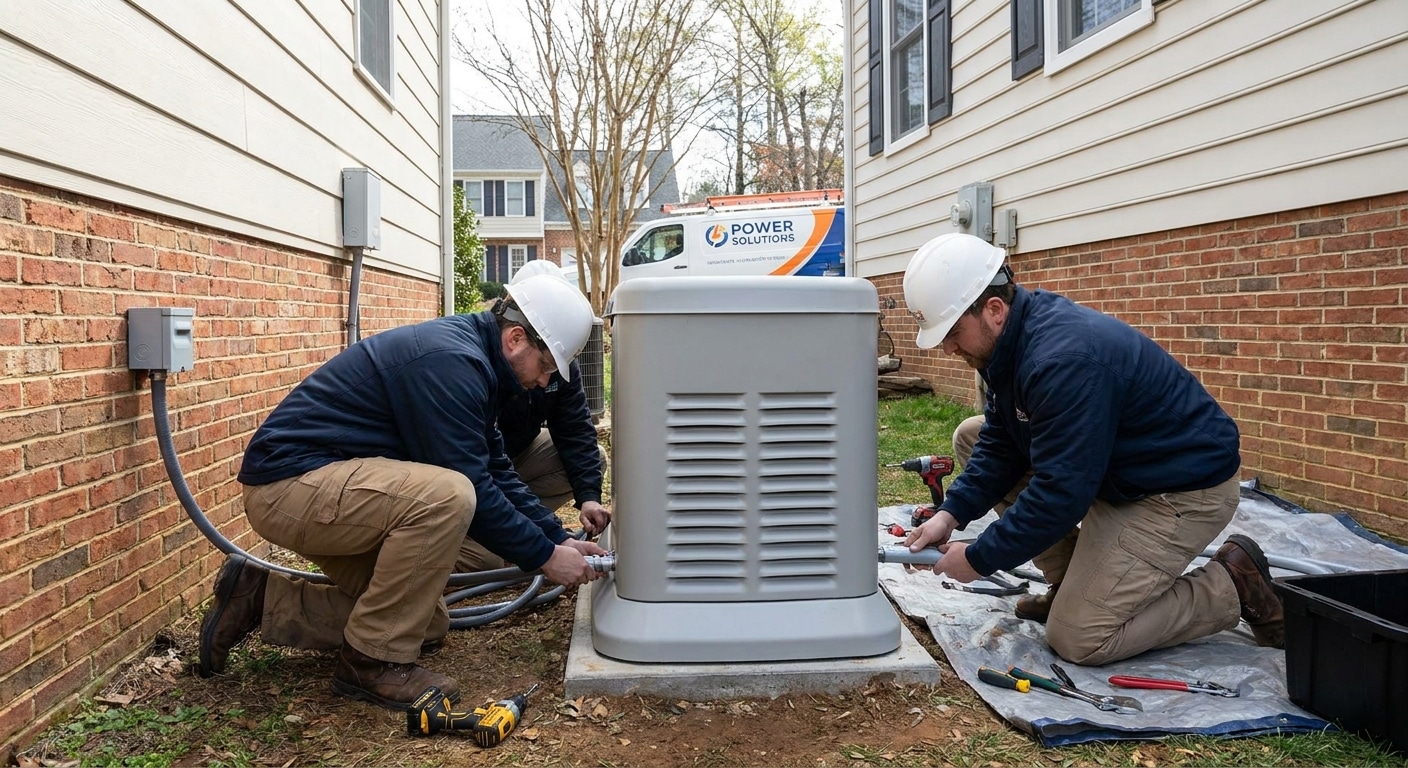
Whole Home Generator Installation: 2026 Buying Guide
August 13th, 2026
A whole-home generator installation keeps your furnace, well pump, sump pump, and refrigerator running when Rocky Mountain Power drops a line during a January windstorm — and in Northern Utah, that's not a hypothetical.
- A 22kW natural gas standby unit covers most Utah homes’ whole panel and is the pick for most homeowners in 2026.
- Whole home generator installation requires a licensed electrician for the transfer switch — DIY interconnects violate code and void insurance.
- 14kW essential-circuits units are the budget-safe choice; 48kW+ is for homes with shops, wells, or dual HVAC systems.
- Portable generator plus manual switch is a Skip for true whole-home coverage — it can’t carry HVAC and well pump loads together.
Why this matters
Utah's Wasatch Front sees ice storms, high-wind events along the benches, and summer grid strain from AC demand — all of which trip outages lasting anywhere from 20 minutes to two days. A furnace with no power means frozen pipes within hours in a Salt Lake City or Provo winter. A sump pump with no power means a flooded basement during spring runoff. Whole home generator installation isn't about comfort — it's about protecting the systems that fail first when the power does.
2026 utility data across the region shows outage frequency tied more to wind events on the west side of the valley and ice loading in the foothills than to summer heat, which changes how you should size and place a unit depending on where you live.
Who this is for
This guide is for Northern Utah homeowners who've already had one outage-related loss — a frozen pipe, a spoiled freezer, a flooded crawlspace — and want a permanent fix instead of a portable generator they have to haul out and refuel every four hours. It's also for anyone running a home office, medical equipment, or a well pump where even a short outage isn't an option.
What to look for in whole home generator installation for power outages
Automatic transfer switch compatibility
An automatic transfer switch (ATS) is what makes the system "whole-home" instead of a glorified extension cord — it senses the outage and switches your panel to generator power in under 10 seconds, no manual flipping required. Without an ATS rated for your panel's amperage, the generator can backfeed the grid and injure utility line workers, which is why licensed installation isn't optional here.
Fuel source availability
Most Utah installs run on natural gas because it's already piped to the house and never runs out mid-outage, unlike propane tanks that need refilling. If your home isn't on a gas line, propane is the fallback, but that adds a tank and a delivery schedule you have to manage.
Sizing to your actual electrical load
A generator sized for "the average home" often can't start your AC compressor and furnace blower at the same time — that's a startup surge problem, not a running-wattage problem. Sizing needs to account for your panel's amperage (100A, 150A, or 200A) and which circuits you actually want live during an outage.
Permitting and licensed electrical work
Every Utah municipality requires an electrical permit and inspection for a transfer switch tie-in, and skipping it is the single most common reason insurance denies a claim after a generator-related fire or backfeed incident. A licensed electrician pulls the permit, schedules the inspection, and signs off — a handyman install usually skips all three.
Placement and clearance code compliance
Code requires setback distance from windows, doors, and property lines — typically 5 feet minimum, more in some jurisdictions — because these units vent carbon monoxide and run hot. Placement mistakes are the top reason installs fail inspection on the first try.
Maintenance plan availability
A standby generator that hasn't run its self-test in six months is a generator that fails the night you need it. Look for an installer who offers scheduled maintenance, not just a one-time install and a handshake.
Get a whole-home generator quote
Licensed electricians size and install standby systems across Northern Utah.
Top picks by size tier
14kW essential-circuits unit — the safe pick. Covers furnace, well pump, refrigerator, and a handful of outlets, but not your AC compressor simultaneously with heat. Typical for homes on 100A or 150A service that just want the critical systems protected. Verdict: Buy if your goal is pipe and food safety, not full comfort.
22kW whole-panel unit — the popular pick. This is the size most Northern Utah homes land on because it runs the entire panel, including AC, at once — the number that comes up most often in 2026 installer quotes for a standard 200A home. It's the middle ground between cost and coverage. Verdict: Buy for most single-family homes.
48kW+ unit — the overkill pick for a reason. Built for homes with a detached shop, a well pump on a separate circuit, dual HVAC zones, or an EV charger that needs to keep charging during an outage — worth pairing with an electrical panel upgrade for EV charger installation if your panel is already maxed. Verdict: Consider only if your load profile actually needs it — most homes don't.
Portable generator with manual transfer switch — the budget alternative. Cheaper upfront, but it can't run continuously unattended and typically can't carry both HVAC and well pump loads at once. Fine as a stopgap, not a replacement for whole home generator installation. Verdict: Skip if you've had more than one multi-day outage in the past two years.
What to avoid
- Undersized units marketed as "whole home." A 10kW unit advertised for whole-home coverage often can't handle the surge of a well pump and AC starting together — check starting watts, not just running watts.
- Non-permitted installs. A cheaper quote that skips the permit isn't cheaper once an insurance claim gets denied after a fire or backfeed event.
- Placement too close to bedroom windows. Carbon monoxide venting near a window that gets opened at night is a real hazard, not a technicality — code minimums exist for this reason.
Verdict comparison
| Tier | Covers | Startup load handling | Verdict |
|---|---|---|---|
| 14kW essential | Furnace, well pump, fridge, select outlets | Sequential, not simultaneous | Buy for basics |
| 22kW whole-panel | Full panel including AC | Simultaneous HVAC + well pump | Buy for most homes |
| 48kW+ | Full home, shop, EV charger, dual HVAC | Simultaneous, high headroom | Consider if load justifies it |
| Portable + manual switch | Limited circuits, one at a time | Manual, no simultaneous coverage | Skip for whole-home use |
FAQ
How much does whole home generator installation cost in 2026?
Installed cost for a 22kW natural gas standby unit typically runs several thousand dollars once you include the transfer switch, permit, and electrical tie-in — get a site-specific quote since panel amperage and gas line distance both affect the number.
Do I need a permit for a whole home generator installation?
Yes, every Utah municipality requires an electrical permit and inspection for the transfer switch tie-in. Skipping it risks a denied insurance claim if anything goes wrong later.
What size generator do I need for a whole house?
Most 200A single-family homes in Northern Utah run on a 22kW unit that covers the full panel including AC. Homes with shops, wells, or EV chargers on separate loads often need 48kW or larger.
Is natural gas or propane better for a standby generator?
Natural gas is better if your home already has a gas line, since it never runs out mid-outage. Propane works but requires a tank and refill schedule.
Can a portable generator power a whole house?
A portable generator with a manual transfer switch can power select circuits one at a time, but it typically can’t run HVAC and a well pump simultaneously. It’s a stopgap, not a whole-home replacement.
How long does whole home generator installation take?
A standard install with an existing gas line and accessible panel usually takes one to two days, including the electrical tie-in and transfer switch wiring. Permit inspection scheduling can add time depending on the municipality.
Where can a whole home generator be placed?
Code requires minimum clearance from windows, doors, and property lines, typically 5 feet or more depending on jurisdiction. Placement too close to a bedroom window is a common reason installs fail first inspection.
Does a whole home generator protect against sump pump failure?
Yes, a properly sized standby unit keeps a sump pump running during an outage, which matters most during spring runoff or heavy rain when basement flooding risk is highest.
One last thing
The outages that cause the most damage in Northern Utah aren't the long ones — they're the ones that hit overnight in January when nobody's awake to notice the furnace stopped. A 22kW unit with an automatic transfer switch handles that scenario without you lifting a finger, which is the entire point of going whole-home instead of portable.
If a sump pump is part of your outage risk, pair the generator conversation with a look at sump pump installation for basement flood prevention — a generator without a functioning pump still floods the basement.
Related guides
- Electrical panel upgrade for EV charger installation
- Sump pump installation for basement flood prevention
- Emergency plumber for burst pipes in winter
- Best furnace for Utah winters