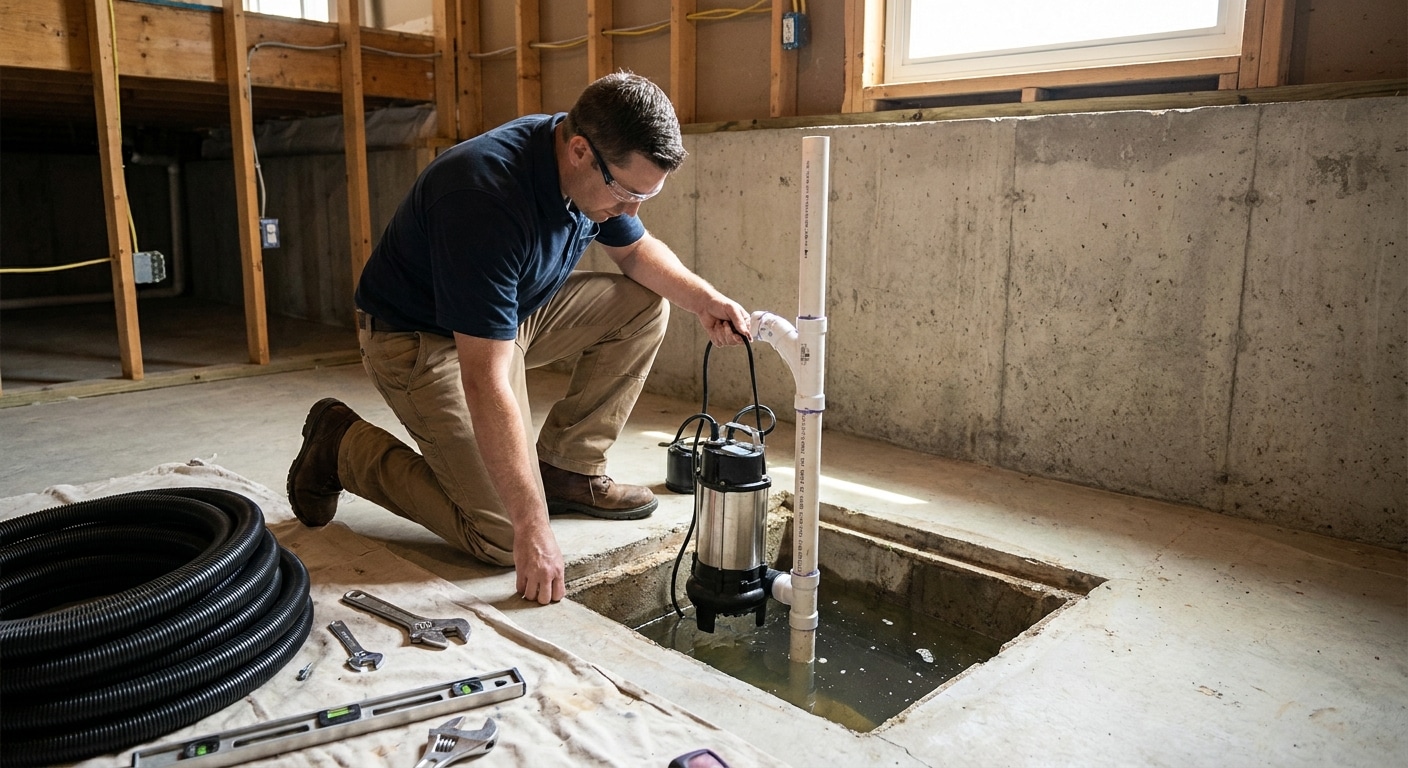
Sump Pump Installation 2026: What Utah Homes Need
August 10th, 2026
Basement flooding in Northern Utah spikes every spring when snowmelt saturates the water table faster than gravity drains can keep up, and a sump pump installation is the fix that stops water before it reaches a finished basement.
- Submersible pumps rated at 1/3 HP and 2,000+ GPH handle most Utah basements in 2026. Buy.
- Battery backup combo systems run 7 to 10 hours during power outages common in winter storms.
- Sump pump installation typically runs $650 to $1,800 installed in 2026, more with a backup system.
- Pedestal pumps cost less but struggle with high water tables. Consider only for shallow, dry basements.
Why this matters
Utah's Wasatch Front sits on clay-heavy soil that holds water long after spring runoff starts, and homes built before the 1990s often have no sump system at all. Once water finds a crack in the foundation, it doesn't stop at an inch — it keeps rising until the pump kicks in or the sump pit overflows. Licensed plumbers at Expert Services see the same pattern every March and April: basements that were dry for years flood the first heavy snowmelt after a wet winter.
A sump pump installation isn't optional insurance for homes with a documented water table problem. It's the mechanical difference between a wet floor and a five-figure remediation bill.
Who this is for
This guide is for Utah homeowners with a finished or semi-finished basement, an existing sump pit that's never had a pump installed, or a pump older than 8-10 years that's starting to short-cycle or run constantly. It's also for anyone buying an older home in Salt Lake, Davis, or Weber County where the seller can't confirm whether a sump system exists at all.
If your basement has never taken on water and sits above the water table on well-draining soil, you likely don't need this yet — a French drain and proper grading might be enough.
What to look for in sump pump installation
Pump capacity matched to your pit size
A pump rated too small for your sump pit runs constantly and burns out early; one rated too large short-cycles and wears the switch. Most residential basements need a 1/3 to 1/2 HP submersible pump moving 2,000 to 4,600 gallons per hour, depending on pit depth and inflow rate.
Backup power for outages
Utah's winter storms knock out power at the exact moment sump pumps work hardest. A battery backup system that runs 7 to 10 hours keeps the pump cycling through an outage instead of leaving the basement unprotected.
Switch type and float mechanism
Vertical float switches are compact and reliable in narrow pits; tethered floats need more clearance but last longer under heavy cycling. A stuck float is the single most common reason a pump fails to trigger during a flood event.
Check valve placement
A check valve on the discharge line stops water from flowing back into the pit after each cycle. Without one, the pump re-pumps the same water repeatedly, doubling wear and electricity draw.
Housing material
Cast iron pumps dissipate heat better and last longer under continuous duty; thermoplastic housings cost less but degrade faster in pumps that run daily. For homes with chronic water tables, cast iron pays for itself within a few seasons.
Alarm and remote monitoring
A high-water alarm or wifi-connected monitor alerts you before a failure becomes a flood, especially useful for rental properties or second homes where nobody's checking the basement weekly.
Get a sump pump installation quote
Licensed plumbers assess your pit, water table, and backup needs before quoting.
Top picks for basement flood prevention
Submersible primary pump — the workhorse pick. A 1/3 HP submersible moving roughly 2,300 GPH handles the majority of Utah basements without oversizing the motor. It sits fully in the pit, runs quieter than pedestal models, and is the standard first install for homes with no existing sump system. Buy.
Battery backup combo system — the storm-season pick. Pairing a primary pump with a battery backup unit that runs 7 to 10 hours covers you through the exact outages that follow heavy snow, the same conditions that cause burst pipes in winter. This is the upgrade most homeowners skip and regret. Buy.
Pedestal pump — the budget pick. Motor sits above the pit instead of submerged, which extends motor life but adds noise and typically caps capacity lower than submersible models. Fine for shallow pits with light, seasonal inflow. Consider.
Water-powered backup — the no-power pick. Runs off municipal water pressure instead of a battery, so it never needs charging or replacement cells, but it requires steady city water pressure and adds to your water bill during use. Good for homes with unreliable batteries or no easy battery access. Consider.
Smart, wifi-monitored pump — the away-from-home pick. Sends a phone alert on high water or pump failure, useful for landlords, vacation homes, or anyone who travels during Utah's wet months. The monitoring adds cost without adding pumping capacity, so it's a layer on top of a solid primary pump, not a replacement for one. Consider.
What to avoid
- An oversized pump for a small pit. Bigger isn't better — it short-cycles the switch and shortens pump life instead of pumping faster.
- A pump with no check valve on the discharge line. It looks installed correctly but silently doubles run time and speeds up wear.
- A DIY install with no dedicated discharge line routed away from the foundation. Discharging water six feet from the house just re-floods the same soil the pump is trying to clear. If you're buying an older home and don't know the drainage history, a sewer camera inspection before closing catches problems a sump pump alone won't fix.
Verdict comparison
| Pump Type | Capacity | Backup Power | Best For | Verdict |
|---|---|---|---|---|
| Submersible primary | ~2,300 GPH | None built-in | Most basements | Buy |
| Battery backup combo | ~2,300 GPH + backup | 7-10 hrs battery | Storm-prone areas | Buy |
| Pedestal | ~1,800-2,000 GPH | None built-in | Shallow, dry pits | Consider |
| Water-powered backup | Varies with pressure | Municipal water | No-battery households | Consider |
| Smart/monitored | ~2,300 GPH + alerts | Depends on model | Rentals, vacation homes | Consider |
FAQ
How much does sump pump installation cost in 2026?
Sump pump installation typically costs $650 to $1,800 installed in 2026, including the pit and discharge line. Adding a battery backup system pushes the total higher, usually by several hundred dollars.
What size sump pump do I need for my basement?
Most residential basements need a 1/3 to 1/2 HP submersible pump moving 2,000 to 4,600 gallons per hour. Pit depth, soil type, and how fast water enters the pit during snowmelt determine where in that range you land.
Is a battery backup sump pump worth it in Utah?
Yes, if your home has flooded during a power outage before, or if you live in an area with frequent winter storm outages. A backup that runs 7 to 10 hours keeps the pump working through the exact conditions that knock out power.
How long do sump pumps last?
Most submersible sump pumps last 8 to 10 years under normal cycling, less if the pump is undersized and running constantly. Cast iron housings tend to outlast thermoplastic models under heavy daily use.
Can I install a sump pump myself?
A handy homeowner can install a basic pedestal pump, but cutting a proper sump pit, routing a check valve, and running a discharge line away from the foundation is where DIY installs go wrong. Licensed installation avoids the callback for a pump that re-floods the same soil it’s draining.
Do I need a sump pump if my basement has never flooded?
Not necessarily. If your soil drains well and the basement has stayed dry through multiple wet springs, grading and gutters may be enough. Homes with clay-heavy soil or a documented high water table benefit from a pump even without a flood history yet.
What’s the difference between a submersible and pedestal sump pump?
A submersible pump sits fully inside the sump pit and runs quieter with generally higher capacity. A pedestal pump keeps the motor above the pit, which extends motor life and lowers cost but adds noise and usually caps capacity lower.
How often should a sump pump be tested?
Test the pump every three months by pouring water into the pit until the float triggers. Before spring snowmelt in 2026, test it at least once — that’s the season Utah basements flood most.
One last thing
Most sump pump failures aren't motor burnout — they're a stuck float switch or a failed check valve that quietly doubles cycle time for months before the pump finally gives out. Test the float by hand every few months instead of waiting for the alarm you didn't install.
Related guides