Sewer Camera Inspection Before Buying a Home – 2026 Guide
August 9th, 2026
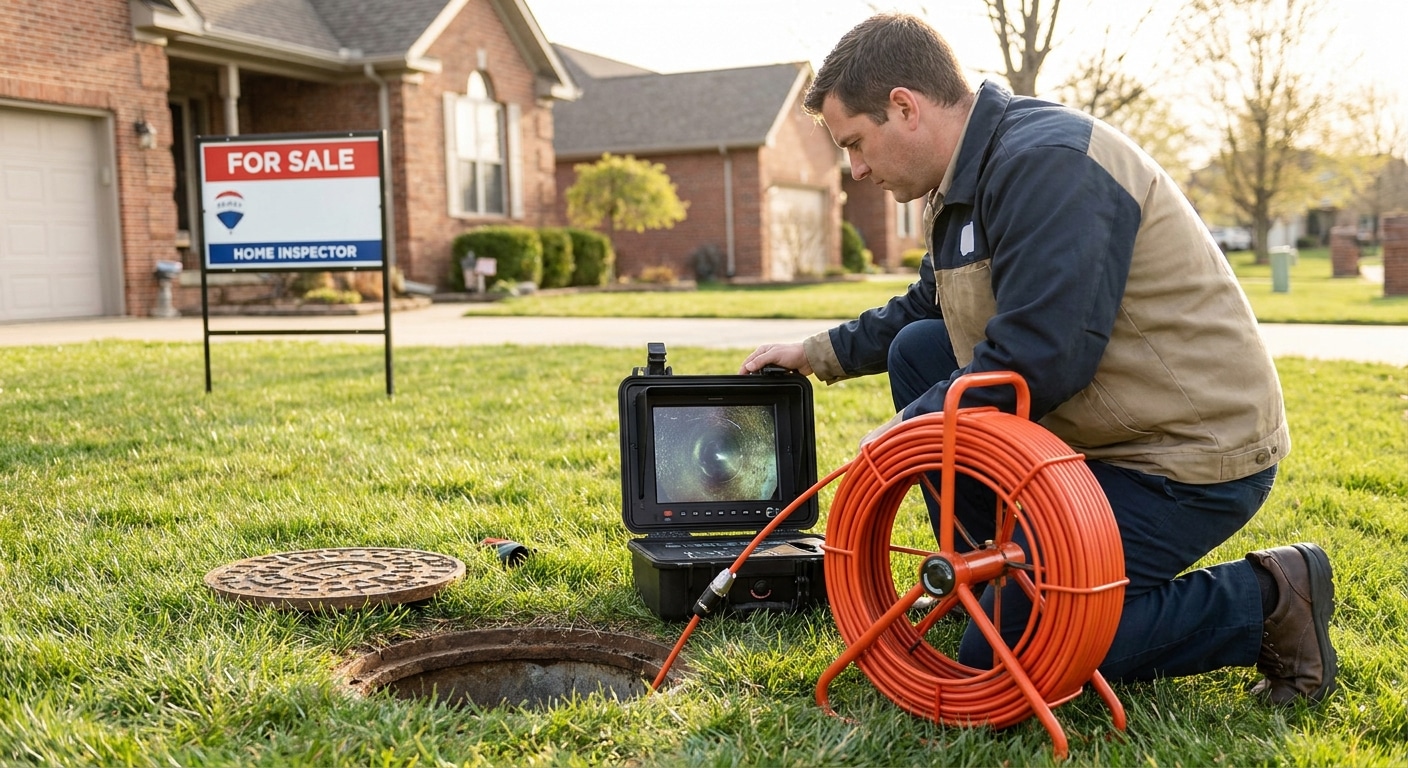
A sewer camera inspection before buying a home shows you exactly what's happening underground — cracks, root intrusion, a belly in the line, or a pipe material that's already near the end of its service life — before the sale closes and the problem becomes yours instead of the seller's.
- Cast iron and clay sewer laterals installed before 1975 in Northern Utah homes justify a sewer camera inspection every time — Buy the inspection.
- A sewer camera inspection typically runs $200 to $500 in 2026, cheap insurance against a lateral replacement that runs into five figures.
- Skip it only on homes under 15 years old with documented PVC or ABS lines and no root-intrusion history near the lateral.
- Recorded, distance-marked video footage — not a verbal summary — is what lets you negotiate repair credits before closing in 2026.
Why This Matters
Northern Utah's housing stock spans a wide range of pipe eras. Neighborhoods across Salt Lake City, Ogden, and Provo built between 1945 and 1975 commonly still run on cast iron or Orangeburg tar-paper sewer laterals, and both fail from the inside out with no warning visible at the surface.
A standard home inspection checks fixtures, runs water through a few drains, and calls it done — it does not send a camera down the lateral to the city connection. That gap is exactly where buyers get burned in 2026: a sewer collapse discovered six months after closing, with no recourse against the seller because nothing was documented at the time of sale. Expert Services runs sewer camera inspection calls across most of Northern Utah, and the pattern repeats on nearly every pre-1975 property that skipped the scope.
Who This Guide Is For
This guide is for anyone under contract, or about to write an offer, on a home built before 1985 in Northern Utah, plus anyone buying a rental or multi-unit property where a sewer failure means lost rent stacked on top of repair costs. Visit Expert Services for licensed sewer camera inspection scheduling ahead of a closing deadline. If you're buying new construction with a certificate of occupancy issued in the last 10 years, most of the urgency below doesn't apply — jump straight to the "what to avoid" section.
What to Look For in a Sewer Camera Inspection Before You Buy
Pipe Material Identification
The inspector needs to name the exact material on camera — cast iron, vitrified clay, Orangeburg, or PVC — and mark where it changes. A lateral that switches from PVC near the house to clay near the street usually means a partial repair happened decades ago, and the remaining clay section is the older, weaker half still carrying the risk.
Root Intrusion at Every Joint
Clay and Orangeburg pipe joints are exactly where tree roots find their way in, and root intrusion is the single most common finding on Northern Utah sewer scopes in 2026. A camera pass that moves too fast will miss hairline root masses that don't cause a backup until year two or three of ownership.
Bellies and Standing Water
A belly is a low spot where the ground has settled and water pools instead of draining downhill. A belly under 1 inch deep is common and rarely a dealbreaker; a section holding 2 inches or more of standing water on camera signals a structural settling problem, not something a drain cleaning cycle fixes.
Full Run to the City Tap
Some inspectors stop the camera at 25 feet and call the job finished. Insist on footage that reaches the property line or the city main connection, whichever is the documented point of responsibility — that stretch is usually the oldest, least-visited section of the whole line.
Video File and Written Report
You need the actual video file, timestamped and distance-marked, plus a written summary — not a verbal "it looked fine" from the technician standing at the cleanout. That file is the only leverage you'll have to renegotiate price or request a seller credit before closing.
Where a Sewer Camera Inspection Pays Off Most
Homes With Cast Iron Pipe (Pre-1975) — the highest-stakes call. Cast iron sewer pipe installed before 1975 carries an expected service life of 50 to 100 years depending on soil chemistry, and a lot of it in Salt Lake County is already past the 50-year mark in 2026. Corrosion shows up on camera as flaking, tuberculation, or a rough interior surface that snags paper and grease. If the property falls into this bracket, a full scope of homes with cast iron pipes is close to mandatory. Buy the inspection every time.
Rental and Investment Property Purchases — the one where you can't afford surprises. A sewer failure on an owner-occupied home is a headache; a sewer failure on a rental unit means a vacancy, an angry tenant, and a repair bill you're covering with no rent coming in to offset it. Anyone buying into rental property landlords territory should treat the inspection as part of underwriting, not an optional add-on. Buy it before the offer goes final.
Homes Near Mature Trees — the slow leak. Trees over 30 feet tall within 20 feet of a sewer line account for most root intrusion cases along the Wasatch Front's older streets. The camera shows root masses even when the drains are still running fine today, months before a backup forces the issue. Consider the inspection here — it's not automatic like cast iron, but a mature cottonwood or silver maple near the lateral shifts the odds enough to justify the $200-$500.
New Construction Under 15 Years Old — the one you can skip. Homes with a certificate of occupancy from 2011 or later almost always run PVC or ABS lateral pipe, both rated well past 100 years and largely immune to the root-intrusion pattern that plagues clay and Orangeburg. Skip the inspection here unless the seller's disclosure flags a prior sewer backup or repair.
Homes With No Sewer History on Record — the unknown you're paying to remove. When the seller's disclosure leaves "sewer line age or material" blank and the county has no permit for a lateral replacement, you're buying blind. Buy the inspection — it's the only way to convert an unknown into a documented condition before closing in 2026.
Schedule a sewer camera inspection
Get a licensed technician on-site before your closing deadline.
What to Avoid
A sewer camera inspection is one piece of the pre-purchase puzzle, not the whole thing. A handful of mistakes show up again and again on Northern Utah closings:
- Accepting a verbal-only report. "It looked okay" from a technician at the cleanout is not documentation — insist on the actual video file.
- Inspecting only the accessible section. A camera run that stops short of the property line leaves the oldest section of pipe unchecked, exactly where the risk concentrates.
- Treating the sewer scope as the only inspection that matters. Buyers who pair a sewer camera inspection with other targeted pre-purchase checks — radon testing when buying, for instance — walk away with a fuller picture of what they're actually inheriting, not just what's running under the yard.
- Skipping it because the home "looks new." A remodeled kitchen and fresh paint say nothing about a 60-year-old cast iron lateral running under the driveway.
Sewer Camera Inspection Verdict at a Glance
| Scenario | Pipe Material Risk | Verdict |
|---|---|---|
| Cast iron pipe, built before 1975 | High corrosion risk | Buy |
| Rental or investment property | Vacancy plus repair cost risk | Buy |
| Mature trees near the lateral | Root intrusion risk | Consider |
| New construction (2011 and later) | Low — PVC or ABS | Skip |
| No sewer history on record | Unknown | Buy |
FAQ
What’s the best time to get a sewer camera inspection when buying a home?
Schedule it during the standard inspection contingency period, before the deadline expires, so any findings can still go into repair credit negotiations. Waiting until after closing removes your leverage entirely.
How much does a sewer camera inspection cost in Utah in 2026?
A sewer camera inspection typically costs $200 to $500 in 2026 depending on lateral length and access points. That’s minor compared to a lateral replacement, which often runs into five figures.
Is a sewer camera inspection included in a standard home inspection?
No, a standard home inspection does not include a sewer camera scope. It has to be requested and scheduled separately, usually with a licensed plumber rather than the general home inspector.
Can I use a sewer camera inspection to negotiate the sale price?
Yes, documented findings like root intrusion, a belly, or corrosion give you grounds to request a repair credit or price reduction. The video file and written report are what make the negotiation stick.
How long does a sewer camera inspection take?
Most sewer camera inspections take 30 to 60 minutes on a typical residential lateral. Longer runs or multiple cleanout access points can push that closer to 90 minutes.
What pipe materials show up most in Northern Utah’s older homes?
Cast iron and vitrified clay dominate in homes built between 1945 and 1975, with some Orangeburg tar-paper pipe in the earliest end of that range. Homes built after 2011 are almost always PVC or ABS.
Who pays for a sewer camera inspection, buyer or seller?
The buyer typically pays for and orders the inspection as part of due diligence. If the report reveals a defect, the cost of repair can then become a negotiation point with the seller.
One Last Thing
The most overlooked line item on a sewer camera inspection report isn't the pipe condition — it's the distance marker. A technician who logs "root intrusion at 42 feet" just told you exactly where to dig for a spot repair, instead of paying for a full lateral replacement you don't need. Ask for footage with a running distance counter, every time, in 2026 and every year after.
Related Guides