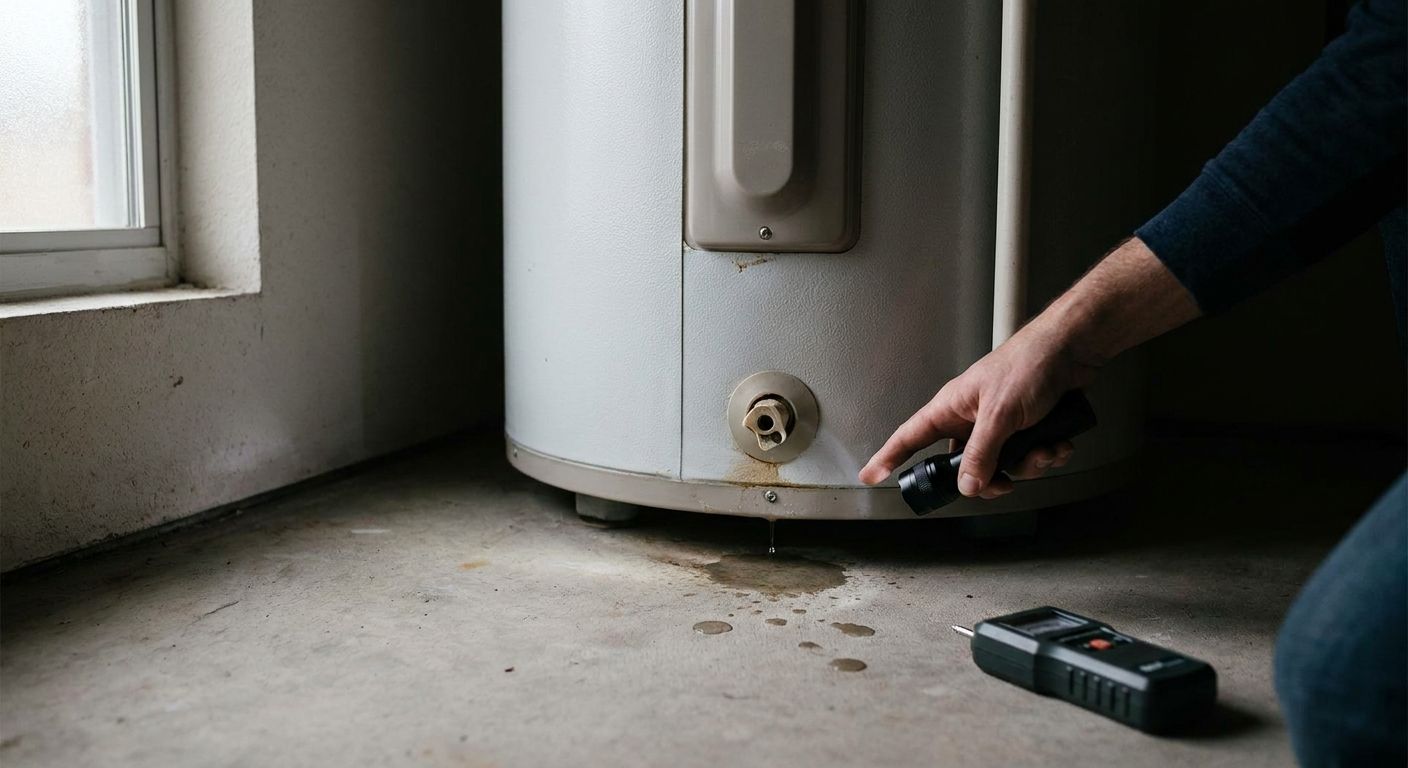
How to Tell If Your Water Heater Is Leaking (2026)
August 24th, 2026
A leaking water heater rarely announces itself — it shows up as a damp spot on the garage floor, a musty smell in the closet, or a spike on the water bill nobody can explain. This guide walks through exactly how to tell if your water heater is leaking, where to look, and when a leak means repair versus replacement.
- Puddles at the tank base, rust-colored water, or a hissing sound near the T&P valve are the clearest signs of a water heater leak in 2026.
- Check the drain valve, T&P valve, and tank seams first — most leaks start at one of these three points.
- A leaking tank (not a fitting) usually means replacement, not repair, especially on units past 10 years old.
- Water heater leaks left unchecked for even 24-48 hours can warp subfloors and trigger mold growth.
Why this matters
A slow water heater leak can run for weeks before anyone notices, and by the time it's visible on the floor, it's often already soaked into drywall, subfloor, or insulation. Utah homes with tanks in finished basements or upstairs closets are especially exposed — a failed tank there doesn't just waste water, it damages ceilings and floors below.
Catching a leak early is the difference between a $150 fitting repair and a full tank replacement plus water damage cleanup. Most manufacturers rate residential tanks for 8-12 years of service; once you're past that window, a leak almost always points to internal tank failure rather than a fixable part.
What you'll need
- A flashlight (leaks in dark utility closets are easy to miss without one)
- A dry towel or paper towels to wipe suspect areas and re-check for new moisture
- A flathead screwdriver or adjustable wrench (for tightening accessible fittings)
- 10-15 minutes of uninterrupted time to inspect the full unit
- Access to your main water shutoff, in case the leak is active and worsening
If your water heater is a tankless unit, the same moisture-check logic applies, but leaks there usually show up at the inlet/outlet connections rather than a tank seam — check tankless water heater installation for new construction for how those systems are configured.
The steps
1. Look at the floor around the base of the tank
This is the fastest way to confirm a leak exists. Wipe the floor dry with a towel, wait 15-20 minutes, and check for new moisture. Standing water, a damp ring, or rust stains on concrete all confirm water is escaping somewhere on the unit. A common mistake here: mistaking condensation (common on cold mornings) for a leak — condensation evaporates within an hour and doesn't leave mineral or rust residue.
2. Check the temperature and pressure (T&P) relief valve
The T&P valve sits near the top of the tank with a discharge pipe running down toward the floor. It's designed to release water if pressure or temperature inside the tank gets too high — but a failing valve drips constantly even under normal conditions. Look for water dripping from the end of the discharge pipe or corrosion around the valve body itself. If it's dripping steadily rather than occasionally, the valve needs replacement before it fails completely.
3. Inspect the drain valve at the bottom of the tank
The drain valve is a common leak point because it's plastic on many tanks and can crack or loosen over time. Run your hand along the valve and the pipe just below it — even a slow weep here shows up as slow, steady dripping rather than a spray. Tightening it a quarter turn with a wrench sometimes stops a minor leak, but a cracked valve body needs full replacement.
4. Check inlet and outlet pipe connections
The cold water inlet and hot water outlet fittings at the top of the tank use threaded connections that can loosen from vibration or thermal expansion over years of use. Feel around each fitting for moisture, and look for green or white mineral buildup, which indicates a slow leak that's been active for a while. These are usually the easiest leaks to fix since they're accessible without draining the tank.
5. Look for rust or bulging on the tank body itself
Run your hand along the visible tank shell, especially near seams and the bottom edge. Rust streaks, a bulge, or a soft spot in the metal signal internal corrosion has broken through the tank wall — this is not repairable. A tank leaking from the body itself, not a fitting, means the unit is failing from the inside out.
6. Check for water inside the burner compartment (gas units)
On gas water heaters, open the access panel at the bottom and look inside with a flashlight. Water pooling inside this compartment, rust on the burner assembly, or a musty smell all point to a leak dripping down from above. This spot gets missed often because homeowners only check the exterior of the tank.
7. Monitor your water meter or utility bill
If visual inspection turns up nothing but you suspect a leak, shut off every fixture in the house and watch the water meter for 15 minutes. Movement on the meter with everything off points to a leak somewhere in the system, including possibly the water heater's internal tank or connections. Cross-reference this against a jump in your last water bill — an unexplained 20%+ increase is a signal worth investigating.
Get a water heater leak diagnosed today
Licensed plumbers across Northern Utah confirm the source and fix it fast.
Troubleshooting
- Puddle appears but no visible crack or drip point — the leak may be coming from a pipe fitting above the tank and running down the side. Trace moisture upward before assuming the tank itself has failed.
- T&P valve drips only occasionally — this can mean the pressure relief valve is doing its job because your home's water pressure is too high. Have pressure tested rather than replacing the valve outright.
- Rust-colored water from taps but no visible leak — internal tank corrosion can show up in your hot water before it shows up as a floor leak. This is an early warning sign, not a false alarm.
- Leak stops after tightening a fitting — recheck it after 24 hours. Thermal expansion can loosen a fixed fitting again within a day if the underlying part is worn out.
- Water heater is leaking and over 10 years old — repair rarely makes financial sense at this age. Review signs you need a water heater replacement, not a repair before spending money on parts.
- No visible leak but basement smells musty near the unit — check behind and underneath the tank with a flashlight; leaks against a wall or in a drain pan can hide from a casual glance.
Tools and resources
- Flashlight and dry towels for the initial inspection
- Adjustable wrench for tightening drain valves and pipe fittings
- Sump pump installation for basement flood prevention if your water heater sits in a basement prone to pooling
- How to fix low water pressure at home if pressure issues are triggering repeated T&P valve drips
- Expert Services' licensed plumbing team for a full diagnostic when the leak source isn't obvious
What to do next
If your inspection confirms the tank body itself is leaking — not a fitting, not the drain valve, not the T&P valve — the unit needs replacement, not repair. Compare options in best tankless water heaters for large families before deciding between a tank swap and switching systems entirely, especially if your household has grown since the current unit was installed.
FAQ
How do I know if my water heater is leaking or just condensation?
Condensation evaporates within an hour and leaves no rust or mineral residue, while a real leak keeps producing moisture and often shows rust stains. Wipe the area dry and recheck in 20 minutes to tell the difference.
Is it dangerous to keep using a leaking water heater?
A slow leak from a fitting is usually not immediately dangerous, but a leak from the tank body signals internal failure that can worsen without warning. Gas units with water inside the burner compartment should be shut off until inspected.
Can a leaking water heater be repaired instead of replaced?
Leaks from the drain valve, T&P valve, or pipe fittings are usually repairable. Leaks from the tank body itself mean the unit is failing internally and needs replacement, not repair.
How much water damage can a leaking water heater cause?
A tank leaking even a few gallons a day can warp subfloor and drywall within a week and create conditions for mold growth. In finished basements, the damage often extends to flooring and wall material below the unit.
What does it mean if my water heater’s T&P valve is dripping?
A dripping T&P valve usually means excess pressure or temperature inside the tank, sometimes caused by high home water pressure rather than a bad valve. Have your water pressure tested before replacing the valve.
How long do water heaters typically last before they leak?
Most residential tanks last 8-12 years before internal corrosion leads to a leak. A unit leaking past that age range is a strong signal it’s time for replacement rather than repair.
Should I turn off my water heater if I find a leak?
Yes, shut off the water supply to the unit and the power or gas source if the leak is active and pooling. This limits water damage and prevents a gas unit from running with water inside the burner compartment.
Can rust-colored hot water mean a leak is coming?
Rust-colored water from your taps often means internal tank corrosion, which frequently precedes a visible leak. Treat it as an early warning sign and inspect the tank for moisture right away.
One last thing
Most homeowners check the floor around the tank and stop there — but the burner compartment on gas units and the space directly behind the tank against the wall are the two spots leaks hide longest before anyone notices. Check both, every time, even if the floor in front looks bone dry.
Related guides
- Signs you need a water heater replacement, not a repair
- Best tankless water heaters for large families
- How to fix low water pressure at home
- Sump pump installation for basement flood prevention
- Tankless water heater installation for new construction