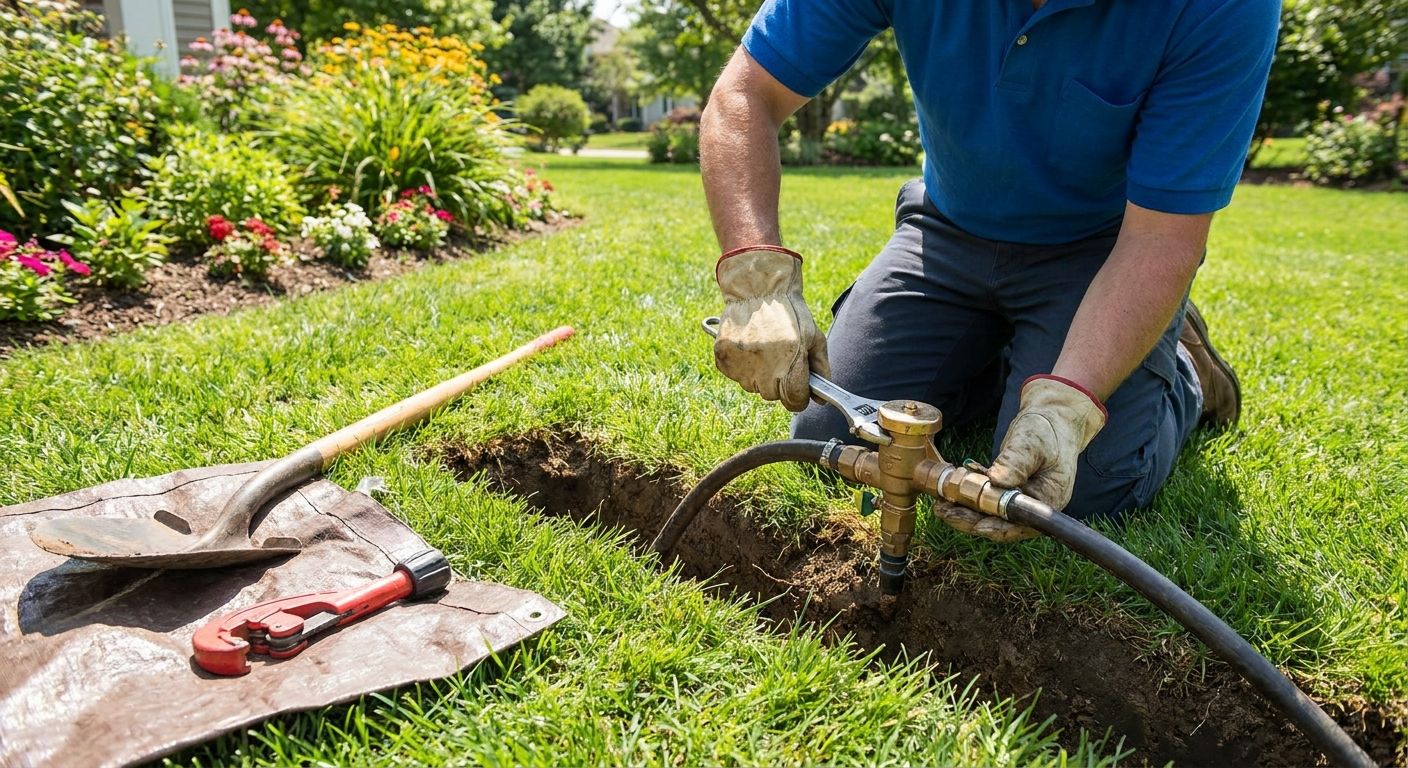
Backflow Preventer Installation for Irrigation (2026 Guide)
August 26th, 2026
Sprinkler systems tie straight into your home's potable water line, and that connection is exactly why a backflow preventer isn't optional in most of Northern Utah. This guide breaks down which device fits your setup, what a licensed installer should check, and which shortcuts turn into a code violation or a flooded yard.
- A pressure vacuum breaker (PVB) is the standard backflow preventer installation for irrigation systems on typical residential lots — buy it.
- An RPZ assembly is only necessary when a fertilizer or chemical injector ties into the irrigation line.
- Skip atmospheric vacuum breakers on any zoned system with continuous downstream pressure — they fail code and fail wet.
- Utah water districts require annual backflow testing filed by a certified tester, not just a one-time install.
- Backflow assemblies left un-winterized before the first hard freeze crack open and flood by spring 2026.
Why this matters
A backflow preventer stops fertilizer, pesticide residue, and stagnant sprinkler-line water from siphoning backward into the pipes that feed your kitchen faucet. Most Northern Utah municipalities require one on any irrigation system connected to the municipal supply, and several — including Salt Lake City and West Jordan — require an annual test report filed with the water department. Skip the device, or install the wrong type, and you're looking at a failed inspection, a boil-water risk, or a fine tacked onto your utility bill. A proper backflow preventer installation for irrigation systems is a permit item in nearly every jurisdiction here, not a weekend DIY project you quietly skip.
Who this is for
This guide is for homeowners installing a new sprinkler system, replacing an aging backflow assembly that's failing its annual test, or converting a hose-bib irrigation setup into a zoned system with an automatic controller. If your irrigation runs off a shared or secondary water source with no potable connection, none of this applies — but on the vast majority of Northern Utah lots, the sprinkler line and the house line share a meter, and that's the setup this guide covers.
What to look for in backflow preventer installation for irrigation systems
Device type matched to your system's pressure
A pressure vacuum breaker (PVB) only works if the line downstream never sits under continuous pressure — the valve manifold has to be able to drop to atmospheric pressure between cycles. Get this wrong and the device fails testing every single year.
Local cross-connection compliance
Most water districts in this region require the assembly registered with the city and tested annually by a certified backflow tester. Annual backflow testing isn't a one-time formality — it's a recurring requirement tied to your address, and missing it can trigger a water shutoff notice.
Installation height and orientation
A PVB has to sit at least 12 inches above the highest sprinkler head on the system, per the manufacturer specs built into the plumbing code. An RPZ assembly needs clearance below it for a relief valve that discharges water when it senses backflow — bury either device and you've built a flood risk into your yard.
Freeze protection for Utah winters
Anything installed above grade needs an insulated cover or a full drain-down before temperatures drop below freezing. A cracked PVB body from a hard freeze in December is one of the most common emergency calls plumbers in this region get every winter.
Licensed installation and testing
Most cities require a licensed plumber for the install and a state-certified tester for the annual check — sometimes the same person, sometimes not. Confirm both credentials before you hire anyone for a backflow preventer installation for irrigation systems, since an uncertified test report gets rejected by the water department.
Point of connection on the line
The device has to sit after the main shutoff but before any irrigation valve or zone splitter. If you're not sure where your main shutoff even is, that's worth confirming before any irrigation work starts — see how to shut off your main water valve in an emergency for reference.
Top picks: which backflow preventer fits your irrigation system
Pressure Vacuum Breaker (PVB) — the standard pick
Rated for a minimum of 15 psi static pressure and installed at least 12 inches above the highest head, the PVB is the default choice for zoned residential sprinkler systems without chemical injection. It's affordable, widely stocked, and every backflow tester in Northern Utah knows how to service one. Verdict: Buy for standard residential irrigation without fertilizer injection.
Reduced Pressure Zone Assembly (RPZ) — the high-hazard pick
Required the moment a fertilizer or pesticide injector connects to the irrigation line, the RPZ uses a mechanical relief valve that dumps water the instant it detects reverse flow. It costs more to install and test than a PVB, and it needs an above-ground enclosure with drainage clearance. Verdict: Buy if you're running a chemical injection system, Skip if your irrigation is water-only — the extra maintenance isn't worth it.
Double Check Valve Assembly (DCVA) — the low-hazard pick
A DCVA can be installed below grade in a vault, which makes it useful when an above-ground PVB or RPZ would look out of place near a front entrance. It's rated for low-hazard connections only — no chemical injection, no continuous pressure past a certain threshold. Verdict: Consider for irrigation lines where an above-ground assembly isn't practical.
Atmospheric Vacuum Breaker (AVB) — the budget pick
The cheapest device on this list, an AVB has to sit at the highest point of the system with zero valves downstream under continuous pressure — which rules it out for most multi-zone sprinkler setups with electric valves. Verdict: Skip for zoned irrigation controllers, Consider only for a single hose-bib-fed zone with no automatic valve.
What to avoid
- An AVB on a zoned controller system — the moment a downstream valve holds pressure, the device fails code and fails its annual test.
- A buried RPZ assembly — the relief valve needs clearance to discharge water, and burying it turns a safety feature into a flood source.
- Skipping city registration — an installed, untested backflow preventer still fails compliance in most Northern Utah jurisdictions and can trigger enforcement action.
- DIY installation without a permit — most cities require inspection before the assembly gets signed off, and an unpermitted install complicates resale disclosures later.
Get your irrigation backflow installed right
Licensed installation and testing across Northern Utah before your 2026 sprinkler season starts.
Verdict comparison table
| Device | Best For | Freeze Risk | Annual Testing | Verdict |
|---|---|---|---|---|
| PVB | Standard zoned irrigation | Moderate — needs drain-down | Required | Buy |
| RPZ | Chemical/fertilizer injection systems | Moderate — above-ground | Required | Buy (if injecting) |
| DCVA | Low-hazard, below-grade install | Low — vaulted | Required | Consider |
| AVB | Single-zone, no auto valves | High — must drain fully | Required where allowed | Skip for zoned systems |
FAQ
What’s the best backflow preventer for a home irrigation system?
A pressure vacuum breaker (PVB) is the best fit for most zoned residential sprinkler systems without chemical injection. It’s rated for 15 psi minimum static pressure and installs at least 12 inches above the highest sprinkler head.
Is a PVB or RPZ better for sprinkler systems?
A PVB is better for standard water-only irrigation, while an RPZ is required if a fertilizer or pesticide injector ties into the line. RPZ assemblies cost more to install and test annually.
Do Utah cities require annual backflow testing?
Most Northern Utah water districts require annual backflow testing filed by a state-certified tester, separate from the original installation. Missing the annual filing can trigger a compliance notice from the city.
Can I install a backflow preventer myself?
Most Northern Utah jurisdictions require a permit and licensed installation for backflow preventer installation on irrigation systems. An unpermitted install often fails inspection later and complicates home resale disclosures.
How cold does it need to be before I need to winterize my backflow preventer?
Any above-ground assembly needs draining or an insulated cover before temperatures drop below freezing. Cracked PVB and RPZ bodies from a hard freeze are one of the most common winter emergency plumbing calls in this region.
Where should a backflow preventer be installed on an irrigation line?
It has to sit after the home’s main shutoff valve but before any irrigation zone valve or splitter. Installing it downstream of a zone valve defeats its purpose and fails inspection.
What happens if I don’t have a backflow preventer on my sprinkler system?
Without one, fertilizer residue and stagnant irrigation water can siphon backward into the potable line that feeds your house. Most cities treat an unprotected connection as a code violation subject to enforcement.
Can a double check valve assembly replace an RPZ?
No — a DCVA is only rated for low-hazard connections with no chemical injection. If fertilizer or pesticide injectors are part of the irrigation system, code requires an RPZ instead.
One last thing
The detail most homeowners miss isn't the device type — it's the test report. An installed backflow preventer that never gets its annual certified test is functionally the same as having none at all in the eyes of most Northern Utah water departments, and that gap is what shows up on resale inspections years later. Book the install and the first test in the same visit before the 2026 irrigation season starts, and you won't be chasing a compliance notice in July.
Related guides