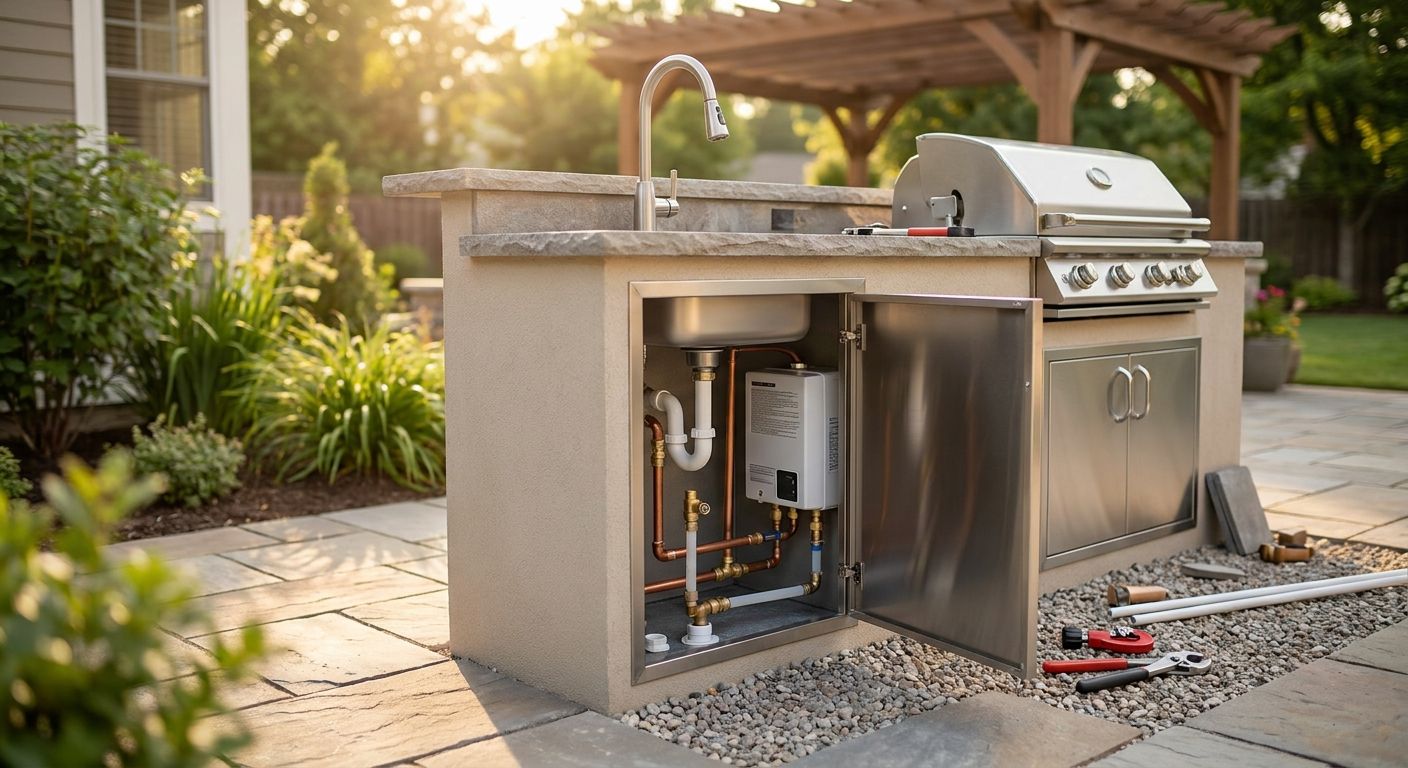
Outdoor Kitchen Plumbing Installation: 2026 Buying Guide
August 27th, 2026
Running a gas line and a water line to a backyard kitchen island sounds simple until the grill won't light, the sink backs up into the lawn, or the pipe freezes and splits the first cold snap. Outdoor kitchen plumbing installation in Utah has to account for freeze depth, gas demand, and cross-connection rules that indoor kitchens never touch.
- Outdoor kitchen plumbing installation in 2026 requires backflow protection on any line tied to irrigation or potable water – skipping it fails inspection.
- Frost-line burial (30+ inches in Northern Utah) determines whether a line survives its first winter – Buy into proper depth, Skip shallow trenching.
- A full outdoor kitchen (grill, sink, ice maker) typically needs a dedicated gas run sized for combined BTU load, not a tee off an existing line.
- Expert Services licenses every gas and water connection – unpermitted DIY hookups are the top cause of backyard kitchen failures reported in 2026.
Why this matters
A backyard kitchen island isn't a hose bib and a propane tank anymore. Homeowners in Northern Utah are running natural gas to built-in grills, cold and hot water to prep sinks, drain lines to grease traps or dry wells, and even ice maker lines to outdoor refrigerators. Every one of those connections has to survive a Utah winter, pass a cross-connection inspection, and handle real cooking loads without nuisance shutoffs.
Get the backflow preventer installation piece wrong and you risk contaminating the potable supply the moment an outdoor sink or irrigation zone shares a line with the house. That single oversight fails more backyard kitchen inspections in Northern Utah than any other item on the punch list.
Who this is for
This guide is for homeowners planning or mid-build on a backyard entertaining space with a built-in grill, sink, or beverage station – not a portable propane grill on a patio. If you're pouring concrete for an island, running trenches for gas or water, or adding a covered outdoor kitchen to a Northern Utah property in 2026, the plumbing decisions below determine whether the space works in July and survives January.
What to look for in outdoor kitchen plumbing installation
Frost-line burial depth
Northern Utah's frost line typically runs 30 to 36 inches depending on elevation and exposure. Any water line that sits shallower than that freezes on the first hard cold snap, and a split copper or PEX line under a finished patio means jackhammering pavers to fix it. Depth isn't negotiable – it's the single biggest failure point in backyard plumbing.
Gas line sizing for combined appliance load
A built-in grill, side burner, and pizza oven running off one undersized gas line starves every appliance at once. Sizing has to account for total BTU demand across all outdoor appliances running simultaneously, not just the grill alone. This is where a proper gas line installation for home renovations assessment pays for itself before the trench gets dug.
Backflow prevention on any shared line
If the outdoor kitchen's sink or ice maker taps into a line that also feeds irrigation, a backflow preventer is mandatory in most Northern Utah jurisdictions. Cross-connection is the mechanism that lets contaminated water siphon back into the house supply, and it's the item local inspectors check first on any backyard build in 2026.
Drain routing away from the foundation and patio base
Outdoor sinks and ice makers need somewhere for wastewater and condensate to go. Routing that dumps near the patio base or foundation causes erosion and freeze-heave under pavers within a season or two. A dry well or tie-in to the existing sewer line, sized correctly, avoids both.
Shutoff accessibility for winterization
Every outdoor kitchen needs an accessible shutoff valve separate from the main house valve, so the whole system can be drained before the first freeze without shutting off water to the house. Buried or buried-under-concrete shutoffs are a repeat complaint on backyard builds that skipped this step.
Licensed gas and water connections
Gas appliance hookups and potable water tie-ins require a licensed contractor in nearly every Northern Utah municipality, and unpermitted work shows up as a red flag during home sales. A proper gas appliance hookup keeps the paper trail clean and the appliance under warranty.
Top picks for backyard entertaining spaces
The full build – grill, sink, and ice maker island
This is the setup most Northern Utah homeowners land on for a serious entertaining space: a built-in gas grill, a stainless prep sink with hot and cold, and an under-counter ice maker or beverage fridge with its own water line. Expect a dedicated gas run sized above 80,000 BTU combined load and a backflow preventer at the tie-in point. Verdict: Buy – it's the configuration that holds up to real party traffic and resells well.
The grill-only gas upgrade
If the budget stops at a built-in grill with no sink, the job is simpler: one gas line sized for the grill's rated BTU plus 20 percent headroom for a future side burner. Skip the water entirely and you avoid the backflow requirement altogether. Verdict: Consider – solid for smaller patios, but plan the trench wide enough to add water later without repouring concrete.
The bar sink with cold water only
A cold-water-only bar sink for rinsing glasses and hands is the lowest-cost entry point into outdoor kitchen plumbing installation. No hot water line means no tempering valve and no insulated run, which cuts both material and labor. Verdict: Consider for casual entertaining spaces, but it won't handle food prep the way a full hot-and-cold sink does.
The freeze-protected spigot retrofit
For existing outdoor kitchens built without proper winterization, adding a frost-free hose bib and an accessible shutoff is the highest-value retrofit available. Northern Utah homeowners who skip this step re-learn the lesson every March when a hairline crack from the prior winter finally lets go under pressure. Reviewing how to winterize outdoor spigots before the build finishes saves a spring repair call. Verdict: Buy – it's cheap insurance against a burst line.
What to avoid
- DIY gas connections. A loose flare fitting on a buried gas line is a leak that takes weeks to notice and a code violation the moment an inspector sees it.
- Skipping the backflow preventer to save on the quote. It's the one line item inspectors check first, and retrofitting it after the patio is poured costs multiples of doing it during the trench phase.
- Undersized drain lines routed under decorative concrete. A 1.5-inch drain that can't keep up with a busy sink backs up onto the patio surface, and fixing it means cutting into finished hardscape.
Outdoor kitchen plumbing works best when it's planned alongside the rest of the property's water and gas systems instead of bolted on after the patio is finished – the same logic applies indoors, where professional kitchen remodeling services coordinate plumbing, electrical, and layout before a single cabinet goes in. Treating the backyard build as an extension of the house's systems, not a standalone add-on, is what keeps the whole thing working past year one.
Plan your outdoor kitchen plumbing
Get a licensed assessment before you break ground in 2026.
Verdict comparison table
| Setup | Gas required | Backflow preventer needed | Frost-line burial | Verdict |
|---|---|---|---|---|
| Full build (grill + sink + ice maker) | Yes, 80,000+ BTU | Yes | Yes, 30-36 in | Buy |
| Grill-only upgrade | Yes, sized to grill | No | N/A | Consider |
| Bar sink, cold only | No | Situational | Yes | Consider |
| Freeze-protected spigot retrofit | No | No | Yes | Buy |
FAQ
How much does outdoor kitchen plumbing installation cost in 2026?
Cost depends on distance from the house, whether gas is included, and backflow requirements, and it varies enough by site that a licensed walkthrough is the only reliable way to price it in 2026. Trenching length and frost-depth burial are the biggest cost drivers.
Do I need a backflow preventer for an outdoor kitchen sink?
Yes, if the sink’s water line shares a system with irrigation or any non-potable use, most Northern Utah jurisdictions require a backflow preventer. It’s the item inspectors check first on backyard builds.
Can I run gas to an outdoor grill myself?
Gas connections legally require a licensed contractor in nearly every Northern Utah municipality, and unpermitted gas work is a common reason home sales stall during inspection. Have the line sized and connected by a licensed plumber.
How deep does an outdoor water line need to be buried in Utah?
Northern Utah’s frost line runs roughly 30 to 36 inches depending on elevation, and any water line shallower than that risks freezing and splitting in winter. Burial depth is the top cause of backyard plumbing failures reported in 2026.
What happens if I don’t winterize my outdoor kitchen plumbing?
Unwinterized lines commonly crack during the first hard freeze and don’t show the leak until spring thaw, when pressure returns to the line. An accessible shutoff and a proper draining routine before winter prevents this.
Is a cold-water-only bar sink cheaper than a full hot-and-cold setup?
Yes, skipping hot water eliminates the tempering valve and insulated run, cutting both material and labor cost. It works for casual entertaining but limits food prep compared to a full sink.
Does an outdoor kitchen need its own shutoff valve?
Yes, a dedicated shutoff separate from the main house valve lets you drain the outdoor system before winter without cutting water to the house. Buried or inaccessible shutoffs are a common complaint on backyard builds that skipped this detail.
How big does the gas line need to be for a built-in grill and side burner?
Sizing depends on the combined BTU rating of every appliance running at once, not just the grill alone, and undersizing starves all of them simultaneously. A licensed assessment before trenching avoids repouring concrete later.
One last thing
The backflow preventer is the cheapest line item on an outdoor kitchen quote and the one homeowners try to cut first – it's also the single item that fails a backyard build at final inspection more than any other in 2026. Trench for it, budget for it, and don't let it get value-engineered out.
Related guides