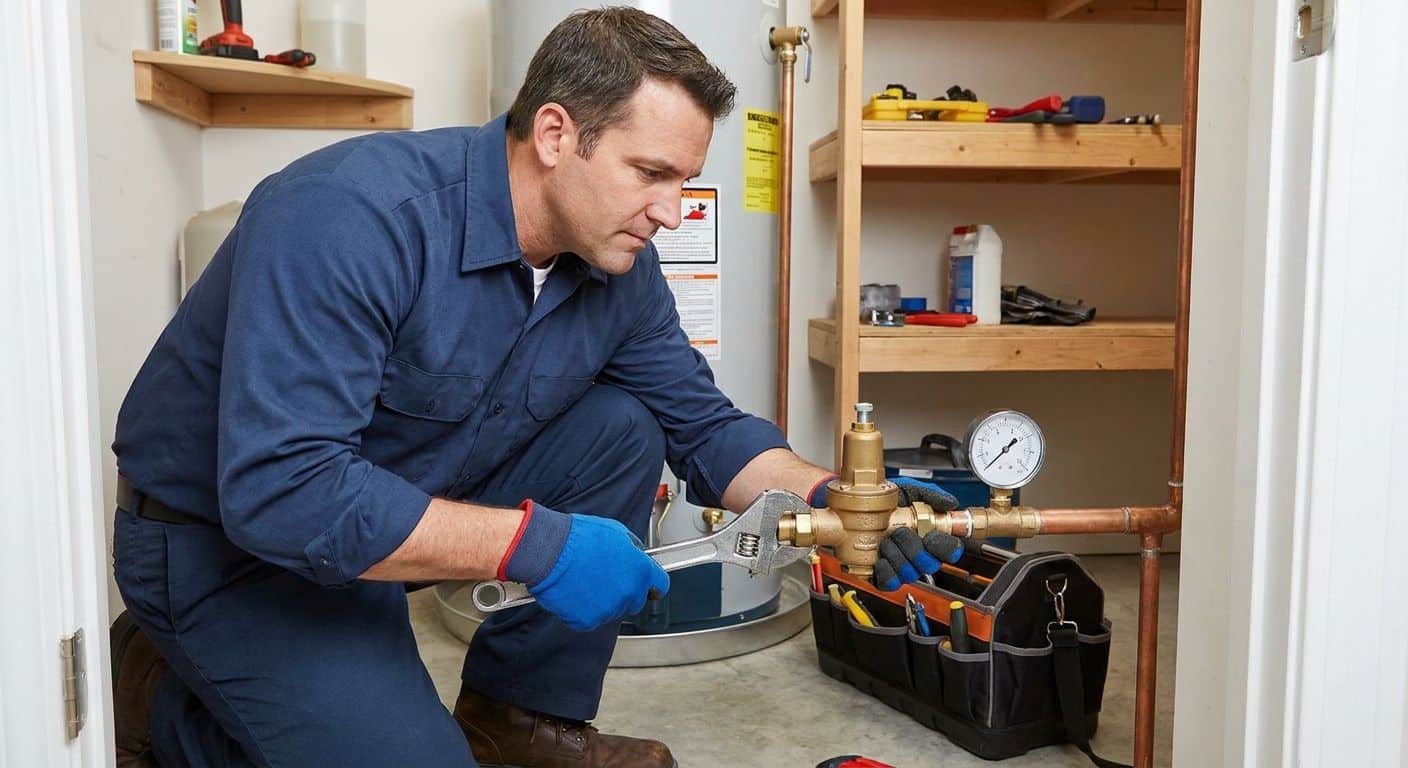
Pressure Reducing Valve Installation 2026: Buyer’s Guide
August 28th, 2026
High static water pressure above 80 psi cracks water heater tanks, blows out washing machine hoses, and shortens the life of every fixture in the house — a pressure-reducing valve installation brings that number back to a safe range and stops the damage before it starts.
- A pressure reducing valve installation is required by most Utah plumbing codes once static pressure exceeds 80 psi.
- Correct sizing (3/4-inch or 1-inch body) and an adjustable 25-75 psi range matter more than brand name.
- Pairing the valve with a thermal expansion tank is code-required in most jurisdictions once a PRV is added in 2026.
- Skip cheap plastic-bodied valves on homes with hard water or galvanized supply lines — they fail early.
- A licensed plumber can complete pressure reducing valve installation in 2-4 hours on most single-family homes.
Why this matters
Most homeowners never check their static water pressure until something breaks. A pressure gauge threaded onto an outdoor hose bib tells the real story: readings over 80 psi are common in homes at the bottom of a hill or close to a municipal pump station, and that pressure runs through every pipe, valve, and appliance in the house 24 hours a day.
The Uniform Plumbing Code caps residential static pressure at 80 psi for a reason. Above that threshold, water heater tanks stress at the welds, supply lines to ice makers and washing machines split at the connectors, and toilet fill valves wear out in a fraction of their expected life. A correctly sized pressure reducing valve installation is the fix, and it is not optional once a plumber's gauge confirms the reading.
Who this is for
This guide is for homeowners in high-elevation or high-pressure pressure zones across Northern Utah who have noticed banging pipes, leaking supply lines, or a plumber's gauge reading above 80 psi. It is also for anyone buying a home where a pre-purchase inspection flagged missing pressure regulation — a common gap in homes built before local code required it. If you have already dealt with a burst hose or a failed water heater and want to know why it happened, start with a check on how to fix low water pressure at home to rule out the opposite problem first, since some fixtures show symptoms of both extremes depending on time of day.
What to look for in a pressure-reducing valve installation
Correct valve sizing for your supply line
A PRV sized for a 3/4-inch line installed on a 1-inch main restricts flow and causes pressure drops at multiple fixtures running at once. Matching the valve body to the existing supply line diameter keeps flow rate where it needs to be for showers, laundry, and irrigation running simultaneously.
Adjustable pressure range
Most residential PRVs adjust across a 25-75 psi range, which lets a plumber dial in a target of 50-55 psi rather than guessing. A valve with a narrow or fixed range forces a compromise between comfort at the showerhead and protection for the water heater.
Lead-free brass or bronze body
A valve body certified lead-free under NSF/ANSI 372 is now standard for potable water in 2026, and it should not be treated as an upgrade option. Cheaper plastic-bodied valves crack under thermal cycling faster than brass, especially in homes with hard water mineral buildup.
Built-in strainer screen
Sediment and mineral scale are the leading cause of PRV failure in Utah's hard water. A valve with an integrated strainer that a plumber can pull and clean without removing the whole unit adds years to its service life — homes without one see the valve stick open or closed within a few seasons. If hard water is already showing up as scale on fixtures, read how to prevent hard water damage to pipes and appliances before scheduling install day.
Thermal expansion tank compatibility
Once a PRV is installed, the water heater becomes a closed system and thermal expansion has nowhere to go. Most jurisdictions require an expansion tank paired with the PRV, and skipping it trades one code violation for another.
Accessible shutoff and service clearance
A PRV installed behind drywall or under a slab with no access panel turns a 20-minute cartridge swap into a demolition project. Service clearance around the valve and a nearby shutoff should be part of the install plan, not an afterthought.
Top picks for high water pressure homes
The standard fix — a cartridge-style residential PRV rated for a 3/4-inch or 1-inch line, adjustable across 25-75 psi, with a lead-free brass body. This covers the majority of single-family homes with one water heater and standard fixture counts. Buy for any home with a static reading between 80 and 120 psi and no unusual demand.
The high-flow workhorse — a larger-body PRV sized for homes with 3+ bathrooms, a soaker tub, or simultaneous irrigation and interior demand. The larger orifice keeps flow rate steady under load instead of choking pressure when three fixtures run at once. Buy for larger households; Skip it on a small home where it's oversized and harder to tune precisely.
The code-compliant bundle — a PRV installed alongside a thermal expansion tank in the same service call, which is the setup most inspectors expect to see on a home built or repiped after 2018. Buy whenever the water heater doesn't already have expansion protection in place.
The whole-home repipe pairing — if a home is already scheduled for a supply-line overhaul because of galvanized or polybutylene pipe, the PRV goes in as part of that same job rather than a separate service call. A whole-home PEX repiping upgrade is the natural point to add pressure regulation since the lines are already open. Consider this bundle if a repipe is already on the calendar; Skip bundling it if the existing lines are sound and only the pressure is the issue.
The irrigation-adjacent setup — homes with a sprinkler system on the same service line as the house often need a PRV and a separate backflow assembly to satisfy both code requirements. Consider this pairing if irrigation runs off the main line; Skip it if irrigation is metered separately, since the two systems don't need to share regulation hardware.
What to avoid
- Plastic-bodied "universal" valves sold as one-size-fits-all — they look identical to brass units in a box but fail faster under Utah's hard water and don't hold calibration over time.
- DIY installs without a post-install pressure check — a valve installed but never tested against a gauge can still leave pressure at 90+ psi if the adjustment screw wasn't set correctly.
- Installing a PRV without addressing an existing expansion problem — if a water heater is already near end of life, adding a closed system without expansion protection accelerates tank failure instead of preventing it.
Verdict comparison
| Setup | Best for | Adjustable range | Verdict |
|---|---|---|---|
| Standard cartridge PRV | Most single-family homes | 25-75 psi | Buy |
| High-flow PRV | 3+ bathroom households | 25-75 psi, larger orifice | Buy |
| PRV + expansion tank bundle | Any home without expansion protection | 25-75 psi | Buy |
| PRV + PEX repipe | Homes with galvanized/poly pipe already scheduled for replacement | 25-75 psi | Consider |
| PRV + backflow pairing | Homes with shared irrigation line | 25-75 psi | Consider |
Get your water pressure tested
A licensed plumber can check static pressure and size the right valve in one visit.
FAQ
What is a pressure reducing valve installation and when is it required?
A pressure reducing valve installation lowers incoming municipal water pressure to a safe range for household plumbing, typically down to 40-60 psi. Most codes require it once static pressure at the home exceeds 80 psi.
How much does a pressure reducing valve installation cost in 2026?
Cost depends on valve size, pipe material, and whether an expansion tank is added at the same time. A licensed plumber can quote an exact price after checking the supply line and static pressure on site.
Is a pressure reducing valve installation a DIY job?
It’s possible for an experienced DIYer with the right fittings, but the valve still needs to be calibrated against a pressure gauge after install. Skipping that step is the most common reason a PRV fails to hold the target pressure.
Do I need an expansion tank with a pressure reducing valve?
Yes, in most jurisdictions a thermal expansion tank is required once a PRV closes the system, since the water heater no longer has anywhere to relieve expanding water. Skipping this step is a common code violation found during inspections.
How do I know if my home has high water pressure?
A pressure gauge threaded onto an outdoor hose bib gives a direct static pressure reading. Anything consistently above 80 psi means a pressure reducing valve installation is needed under most plumbing codes.
How long does a pressure-reducing valve last?
A quality brass or bronze PRV typically lasts 7-12 years before the cartridge needs replacing, especially in hard water areas. A built-in strainer that gets cleaned periodically extends that lifespan.
Can high water pressure damage my water heater?
Yes, pressure above 80 psi stresses tank welds and fittings over time and is a common cause of early water heater failure. Installing a PRV protects the tank along with every other fixture on the line.
Where should a pressure reducing valve be installed?
It goes on the main water line after the shutoff valve and before the water heater, usually near where the line enters the house. Service clearance around the valve matters for future cartridge replacement or cleaning.
One last thing
A PRV set correctly on install day doesn't stay correct forever — seasonal temperature swings and municipal pressure changes can push the reading up or down by 10-15 psi over a year, which is why a follow-up gauge check after the first season catches drift before it causes damage. If a home was flagged for high pressure during a pre-purchase inspection, that's also the moment to confirm the main shutoff still works; a fast reference is how to shut off your main water valve in an emergency.
Related guides
- Hard water damage to pipes and appliances
- Backflow preventer installation for home irrigation systems
- Whole-home PEX repiping upgrade