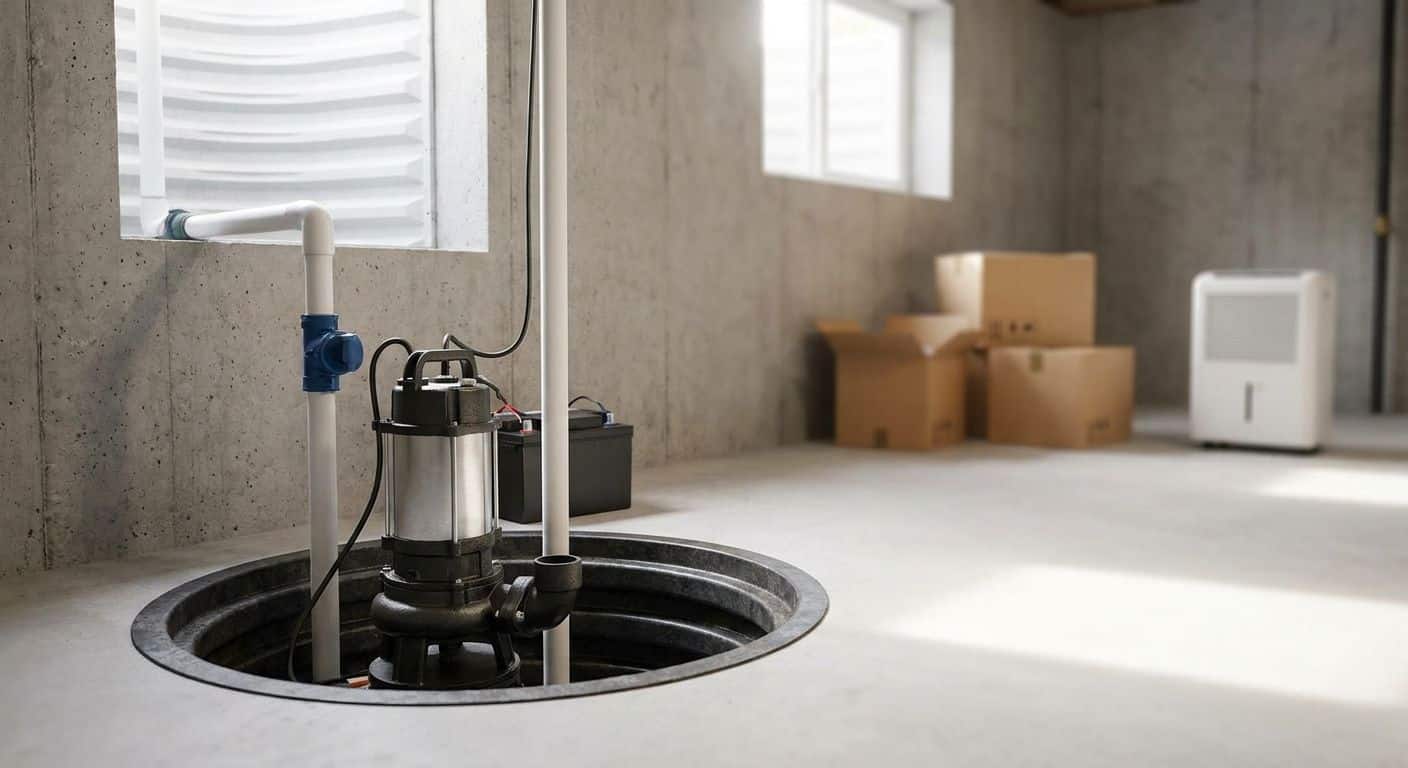
Best Sump Pumps for Basement Flood Protection 2026
September 3rd, 2026
Spring snowmelt and sudden summer downpours push more water into Wasatch Front foundations than most homeowners expect, and the wrong sump pump setup turns a manageable seep into a flooded basement. The best overall pick for 2026 is a submersible sump pump paired with a battery backup, followed by a cast iron pedestal pump for basements where you want to watch the float switch work, and a water-powered backup pump for homes with strong municipal pressure and frequent outages.
- A submersible sump pump with battery backup is the best overall pick for basement flood protection in Utah in 2026.
- Cast iron pedestal pumps cost less to maintain and let you inspect the float switch without pulling the unit.
- Water-powered backup pumps run without electricity but need strong, steady municipal water pressure to work.
- High-capacity submersible pumps (3/4 HP and up) matter most for homes near a high water table or heavy spring runoff.
- Sump pump installation for basement flood prevention should include a tested battery backup before the next storm season.
Why this matters
A basement flood in Utah rarely comes from one dramatic event. It's a sump pump that quietly fails during a February power outage, or a float switch that sticks after two years of no maintenance, and by the time anyone notices, the drywall is already wicking water. Sump pump installation done right in 2026 accounts for Utah's specific flood risks: spring snowmelt along the Wasatch Front, sudden summer cloudbursts that overwhelm storm drains, and winter storms that knock out power for hours at a time.
Most basement flood damage isn't the water itself — it's the pump that couldn't keep up or the backup that never existed. Knowing your basin size, inflow rate, and how long your neighborhood typically loses power during a storm decides which pump category actually protects you.
What makes the best sump pump for basement flood protection
- Pump capacity matched to basin size — gallons per hour (GPH) needs to exceed your worst-case inflow, not just average conditions
- A genuine power backup — battery or water-powered, because pumps fail exactly when the power does
- Reliable switch mechanism — vertical float, tethered float, or electronic sensor, each with different failure points
- Motor build and duty cycle — cast iron dissipates heat better than plastic housings during long runs
- High-water alarm or monitoring — an audible or app alert before water reaches the subfloor
- Utah-specific fit — altitude and municipal pressure affect water-powered backups; power outage frequency in your area affects battery sizing
Sump pumps at a glance
| Pump type | Best for | Standout feature | Key limitation |
|---|---|---|---|
| Submersible + battery backup | Utah basements overall | Runs on stored power during outages | Battery needs periodic testing and replacement |
| Cast iron pedestal pump | Unfinished basements, visual monitoring | Motor sits above the basin, easy to inspect | Louder, lower flow than submersibles |
| Water-powered backup pump | Homes with strong municipal pressure | Runs indefinitely with no battery to charge | Uses potable water, needs adequate flow |
| Battery backup add-on | Finished basements, high damage risk | Layers redundancy onto an existing primary pump | Added cost and its own maintenance schedule |
| High-capacity submersible (3/4 HP+) | High water table, heavy runoff areas | Moves significantly more GPH than standard units | Bigger electrical draw, may need dedicated circuit |
1. Submersible sump pump with battery backup: best overall for Utah basements
A submersible pump sits inside the basin below the waterline, moving water through a discharge line while a battery backup unit switches on the moment grid power drops. It's the setup most licensed plumbers default to along the Wasatch Front, where winter storms and grid outages tend to arrive together.
Submersible + battery backup pros:
- Keeps running through power outages without any manual intervention
- Quieter operation than pedestal models since the motor stays submerged
- Handles higher GPH loads, useful during spring snowmelt surges
Submersible + battery backup cons:
- Battery needs to be tested and eventually replaced, or the backup is useless when you need it
- Harder to visually inspect since the motor is underwater
- Costs more upfront than a standalone pedestal pump
Best for: homeowners who want one system that handles both routine water and outage scenarios without a second device. Verdict: Buy.
2. Cast iron pedestal sump pump: best for basements needing easy monitoring
A pedestal pump keeps the motor mounted above the basin on a column, with only the intake down in the water. That makes it the easiest type to inspect without pulling anything apart, which matters in unfinished basements where homeowners check the pit themselves.
Pedestal pump pros:
- Motor stays dry and accessible for visual checks
- Generally less expensive to replace than a submersible unit
- Cast iron housings run cooler during long duty cycles than plastic alternatives
Pedestal pump cons:
- Noticeably louder than a submersible pump
- Lower flow capacity, which matters less in a shallow basin and more during a heavy runoff event
- Takes up more vertical space in a basin, which can be a problem in tight pits
Best for: unfinished basements or utility rooms where the homeowner wants to see the pump working. Verdict: Buy for light-to-moderate inflow; Hold if your basement has flooded more than once in the past two winters.
3. Water-powered backup sump pump: best for homes with strong municipal pressure
This type uses your home's water pressure through a venturi to eject sump water, with no battery and no electricity required at all. It works entirely off the pressure already in your pipes, which makes it attractive for homes where extended outages are common.
Water-powered backup pros:
- Never needs a battery charge or replacement
- Can run continuously for as long as water pressure holds
- No moving electrical parts to fail during a storm
Water-powered backup cons:
- Requires consistently strong municipal water pressure — low-pressure homes shouldn't rely on this as a primary backup
- Uses potable water for every gallon it ejects, which adds to a water bill during a long flood event
- Not a substitute for a primary pump, only a backup layer
Best for: homes with documented strong, steady water pressure and a history of multi-hour power outages. Verdict: Buy as a secondary system, never as your only pump.
4. Battery backup add-on system: best for finished basements with high damage risk
This isn't a standalone pump — it's a second pump and battery unit installed alongside your existing primary sump pump, ready to take over the instant the primary fails or power drops. For a basement with drywall, flooring, and a home theater or bedroom, that redundancy is worth the extra equipment.
A sump pump handles groundwater rising through the pit, but it does nothing for sewage backing up through a floor drain during a municipal system overload. That's a separate risk, and pairing a sump system with a backflow check valve for basement drains closes the gap a pump alone can't cover.
Battery backup add-on pros:
- Adds a second layer of protection without replacing the primary pump
- Covers both power-outage and primary-pump-failure scenarios
- Some units include app or audible alerts for high water
Battery backup add-on cons:
- Adds cost and a second maintenance schedule on top of the primary pump
- Battery capacity is finite — it buys hours, not days, during an extended outage
- Needs professional installation to wire correctly alongside the primary system
Best for: finished basements, basement bedrooms, or any space where flooding means real remodeling costs. Verdict: Buy if the basement is finished; Skip if it's an unfinished mechanical room only.
5. High-capacity submersible pump (3/4 HP and up): best for high water table or heavy runoff areas
Standard 1/3 HP and 1/2 HP submersible pumps handle most residential basins fine, but homes near a high water table or in neighborhoods that see heavy spring runoff need more GPH capacity to keep pace. A 3/4 HP or larger submersible moves noticeably more water per cycle, which matters when snowmelt saturates the ground for weeks at a time.
High-capacity submersible pros:
- Handles sustained high-inflow conditions that overwhelm standard-capacity pumps
- Fewer cycles per hour under heavy load, which reduces motor wear
- Better suited to larger basins and longer discharge runs
High-capacity submersible cons:
- Draws more current, and older homes may need a dedicated circuit
- Oversizing for a small, low-inflow basin wastes money and can short-cycle
- Costs more than a standard-capacity unit
Best for: homes documented to sit near a high water table or in a known heavy-runoff zone. Verdict: Buy if inflow data supports it; Wait if you haven't confirmed your actual water table depth first.
How this list was ranked
Each pump type was scored against the six criteria above: capacity fit, backup power, switch reliability, motor build, monitoring, and Utah-specific conditions like snowmelt volume and outage frequency. No two entries share a use case — the ranking is a decision path based on your basement type, not a single leaderboard.
“A sump pump that only runs when the power is on isn’t basement flood protection, it’s basement flood delay.”
Which sump pump should you choose?
For most Utah homeowners, a submersible pump with a battery backup is the default choice for 2026 — it handles routine water and the outages that tend to hit during the exact storms that cause flooding in the first place. Homes with strong municipal pressure and a history of long outages should add a water-powered backup as a second layer. Finished basements with real damage exposure justify the battery add-on system regardless of which primary pump is already installed.
Before choosing anything, know your basin size, your documented water table depth if available, and how often your area has lost power for more than four hours in the past two winters — that combination points to the right pump faster than any spec sheet.
Get your sump pump inspected before spring
Schedule a basement flood protection assessment for your Utah home.
FAQ
What’s the best sump pump for a Utah basement in 2026?
A submersible sump pump with a battery backup is the best overall choice for Utah basements in 2026 because it handles both routine groundwater and the power outages that often accompany the storms causing the flooding. Homes with strong water pressure can layer in a water-powered backup as a second option.
Do I need a battery backup sump pump in Utah?
Yes, if your area has lost power for more than a few hours during a winter storm in the past two years. A primary pump with no backup stops working the moment the grid does, which is exactly when basements flood.
Is a water-powered backup sump pump a good option?
It’s a solid backup layer for homes with strong, consistent municipal water pressure, since it never needs a battery. It shouldn’t replace a primary electric pump — it works best as the second line of defense.
What’s the difference between a sump pump and an ejector pump?
A sump pump moves groundwater that collects in a basin, while an ejector pump moves wastewater from basement toilets and sinks up to the main sewer line. Basements with a bathroom typically need both; see ejector pump installation for basement bathrooms for that separate system.
How often should a sump pump be tested?
Test the float switch and backup power at least twice a year, ideally before spring snowmelt and before the first hard freeze. A pump that hasn’t run in months can seize or the battery can be dead exactly when you need it.
Can a sump pump prevent sewer backup?
No. A sump pump handles groundwater rising through the pit, not sewage backing up through a floor drain during a municipal overload. Those are separate risks that need separate protection.
How long does a sump pump typically last?
Most sump pumps last 7 to 10 years under normal residential use, though heavy-inflow homes running the pump constantly during runoff season may see shorter lifespans. Battery backup units often need battery replacement well before the pump motor itself fails.
What size sump pump do I need?
Size depends on basin diameter and worst-case inflow rate, not just square footage of the basement. A standard 1/3 to 1/2 HP unit covers most homes, while properties near a high water table or heavy runoff zones need 3/4 HP or larger.
One last thing
The pump that fails most often isn't the cheapest one — it's the one nobody tested since installation. A battery backup sitting untested for three years is functionally decorative, and the only way to know it works is to pull the plug on the primary pump and watch what happens.
Before locking in a system for 2026, confirm your discharge line doesn't dump water right back toward the foundation, check that your main water shutoff valve is easy to reach in an emergency, and get the whole setup inspected once a year rather than assuming it's fine because it hasn't flooded yet.
Related guides