Duct Cleaning for Allergy Relief: 2026 Buying Guide
August 12th, 2026
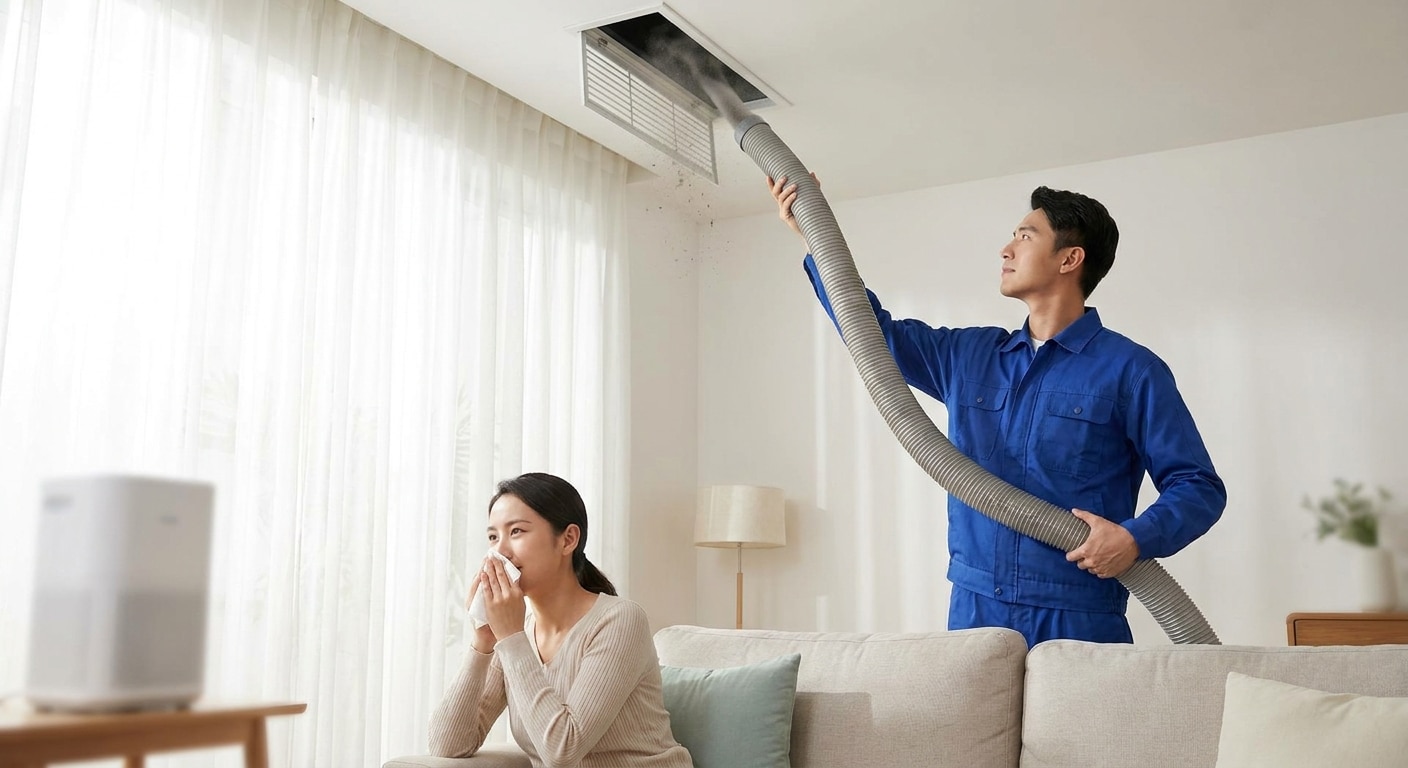
Dusty ductwork isn't the only reason your allergies flare up at home, but a clogged filter, leaky return, and years of dust buildup in the supply lines all compound whatever pollen or pet dander is already circulating through your HVAC system. This guide breaks down when duct cleaning actually moves the needle on allergy relief, what to pair it with, and what's a waste of money in 2026.
- Whole-home duct cleaning paired with a spring HVAC tune-up gives the strongest duct cleaning allergy relief for Northern Utah homes. Buy.
- A MERV 13 filter swap before cleaning stops more incoming dust than the cleaning itself. Buy.
- Skip chemical fogging or duct sanitizing add-ons — EPA guidance says they’re unproven for allergy symptoms.
- Ductless mini-splits in additions need filter service, not duct cleaning, since there’s no ductwork to clean.
- Clean ducts every 3-5 years unless you have pets, smokers, or recent renovation dust in the house.
Why this matters
The EPA has stated for years that duct cleaning has not been shown to prevent health problems in most homes, and that claim still holds in 2026 unless your ducts have visible mold, vermin, or heavy debris. That doesn't mean duct cleaning is worthless for allergy relief — it means the filter, the seal, and the timing matter more than the cleaning visit alone.
Northern Utah adds its own layer: dry valley dust in summer, wildfire smoke drifting into homes during fire season, and closed-up houses all winter recirculating whatever settled in the ducts during fall. A technician from Expert Services will tell you the same thing most allergists do — attack the source (filtration and sealing) before you pay for a cosmetic cleaning.
Who this is for
This is for homeowners in Northern Utah dealing with seasonal sneezing, itchy eyes, or a family member with asthma, especially in homes older than 15 years, homes with pets, or homes that just went through a renovation that kicked dust into the return vents. If your allergies are worse indoors than outdoors, keep reading.
What to look for in duct cleaning for allergy relief
Filter rating matters more than the cleaning visit
A one-time duct cleaning removes years of accumulated dust, but if you slide a cheap MERV 6 filter back in, new dust starts collecting again within weeks. MERV 13 filters trap particles down to 0.3 microns — small enough to catch pollen, mold spores, and most pet dander — and they're the single cheapest lever for allergy relief you can pull before booking a cleaning.
Sealed ductwork beats a single cleaning visit
Leaky return ducts pull unfiltered air straight from your attic or crawlspace, which means dust and insulation fibers bypass your filter entirely. Sealing joints and boots is less glamorous than a cleaning service, but it stops the problem at the source instead of resetting the clock every few years.
Whole-house scope vs. spot cleaning
Some companies advertise per-vent pricing and only clean the vents you can see, skipping the trunk line and returns where most debris actually sits. Ask specifically whether the quote covers supply, return, and the air handler cabinet — that's the difference between real allergy relief and a cosmetic vacuum job.
Timing: pair cleaning with a seasonal HVAC tune-up
Scheduling duct cleaning right before your spring or fall HVAC tune-up means the technician is already inside the system checking coils, blower wheels, and filter housing — all places dust and mold like to collect. Booking them together instead of separately catches more allergy triggers per visit in 2026 than either service alone.
Technician licensing and inspection standards
A licensed HVAC technician should inspect before cleaning, not just show up and start vacuuming. If nobody looks at your coil, blower wheel, or filter housing first, you're paying for a partial job.
Top picks for allergy relief in 2026
Whole-home duct cleaning + spring HVAC tune-up — the safe pick. Bundling a full-scope duct cleaning with a seasonal tune-up typically runs a Utah home through supply, return, and air handler inspection in a single 3-5 hour visit. This is the pick that actually addresses best home HVAC systems for Utah homes holistically instead of treating ducts as an isolated problem. Verdict: Buy.
MERV 13 filter upgrade before cleaning — the cheap first move. Swapping a MERV 6 or 8 filter for MERV 13 costs a fraction of a duct cleaning service and starts filtering pollen and dander immediately, no appointment required. Pair it with a properly sized furnace — see best furnace for Utah winters — since an undersized unit strains harder to push air through a denser filter. Verdict: Buy.
Ductless mini-split filter service for additions — the different animal. If your allergy trigger room is a bonus space or addition running on a ductless system, there's no ductwork to clean — the fix is regular filter service on the ductless mini-split systems for home additions unit itself, not a duct cleaning quote. Verdict: Consider.
Chemical duct fogging or "sanitizing" add-on — the upsell. Some duct cleaning companies pitch an antimicrobial fog as an allergy cure-all add-on, usually for an extra fee. EPA guidance doesn't support this as a health benefit for a typical home without visible mold contamination. Verdict: Skip.
Get your ducts and filters checked
A licensed technician inspects before quoting — no guesswork on scope or price.
What to avoid
- "Sanitizing" sprays marketed as an allergy cure. They look like a health upgrade but there's no EPA-backed evidence they reduce allergy symptoms in a home without mold contamination.
- Bargain per-vent pricing with no inspection. A $99 whole-house ad that skips the trunk line and return boots isn't solving your allergy problem, it's vacuuming what's visible.
- Ignoring attic or crawlspace duct leaks. Cleaning the inside of ducts while air keeps leaking in unfiltered from outside the ductwork undoes most of the benefit within a season.
Verdict comparison
| Option | Best For | Typical Cost Signal | Verdict |
|---|---|---|---|
| Whole-home cleaning + tune-up | Homes with pets, renovation dust, or 15+ year old ducts | 3-5 hour combined visit | Buy |
| MERV 13 filter upgrade | Anyone wanting immediate relief before booking service | Under $30 per filter, 60-90 day swaps | Buy |
| Ductless mini-split filter service | Additions and bonus rooms without ductwork | Seasonal filter rinse, no ducts involved | Consider |
| Chemical fogging add-on | Homes with visible mold contamination only | Extra line-item fee | Skip |
| DIY duct vacuum kits | Nobody, realistically | Low cost, minimal reach into trunk lines | Skip |
FAQ
Does duct cleaning help with allergies?
Duct cleaning helps allergy relief when ducts have visible dust, mold, or debris buildup, but a MERV 13 filter and sealed ductwork do more day-to-day work than a one-time cleaning. Pair both for the strongest result in 2026.
How much does duct cleaning cost in Utah in 2026?
Pricing varies by home size and duct access, and it’s worth getting a scoped quote rather than a flat per-vent rate. A licensed technician should inspect the supply, return, and air handler before quoting.
How often should I clean my ducts for allergies?
Most homes need duct cleaning every 3-5 years, but homes with pets, smokers, or recent renovation dust may need it sooner. Annual filter changes matter more than the cleaning schedule itself.
Is duct cleaning better than an air purifier for allergies?
They solve different problems: duct cleaning removes buildup already in the system, while an air purifier or upgraded MERV filter catches new particles as they circulate. Most allergy sufferers need both.
Can dirty ducts cause asthma symptoms?
Dirty ducts can aggravate asthma by recirculating dust, pet dander, and mold spores through a home, especially in closed-up winter months. A sealed, well-filtered system reduces that exposure more consistently than an occasional cleaning.
Do ductless mini-splits need duct cleaning?
No, ductless mini-split systems have no ductwork to clean, so the equivalent maintenance is regular filter rinsing on the indoor unit. Skipping filter service on a mini-split has the same effect as a dirty duct on a traditional system.
What MERV filter rating is best for allergies?
MERV 13 filters trap particles down to 0.3 microns, covering most pollen, mold spores, and pet dander that trigger allergy symptoms. Check your furnace’s airflow rating first, since some older units can’t handle MERV 13 without a blower upgrade.
Should I pay extra for a duct sanitizing treatment?
Only if there’s visible mold contamination confirmed by inspection, not as a routine allergy add-on. EPA guidance does not support sanitizing sprays as a general health benefit for typical residential ductwork.
One last thing
The EPA's own guidance is blunt: duct cleaning has not been shown to prevent health problems in most homes unless there's visible mold, vermin, or heavy debris in the system. The technicians who actually help with allergy relief spend more time on filter rating and duct sealing than on the vacuum truck outside — if a quote skips straight to scheduling a cleaning without asking about your filter or checking for leaks, that's the tell.
Related guides