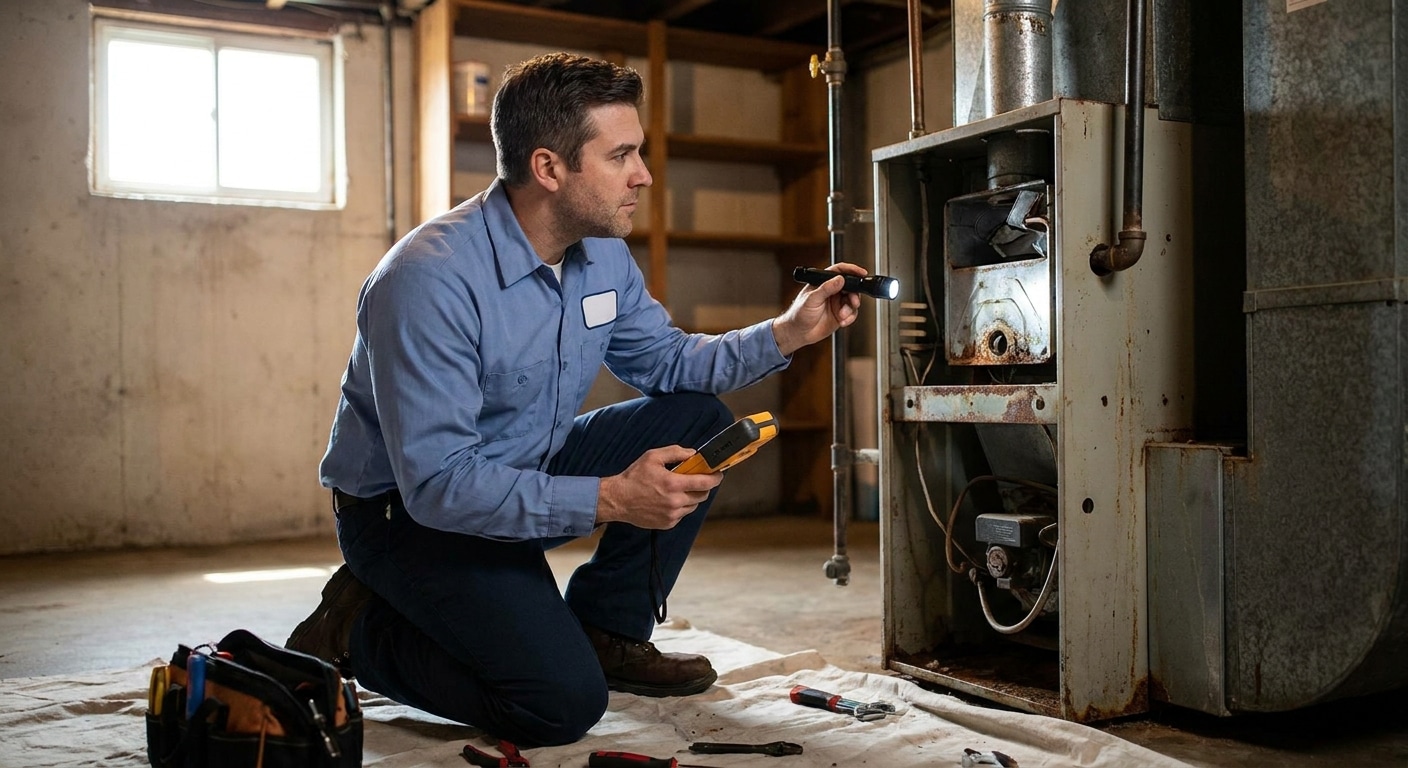
How to Know If Your Furnace Needs Replacing (2026)
August 12th, 2026
A furnace that's failing gives you warning signs weeks or months before it dies completely — the trick is knowing which signs mean "schedule a repair" and which mean "start shopping for a replacement."
- A furnace over 15-20 years old with a major repair bill is usually a replace, not a repair — the 50% rule settles most close calls.
- Rising gas bills, uneven room temps, and short-cycling together point to a dying heat exchanger, not a simple part swap.
- A cracked heat exchanger or carbon monoxide reading means stop using the furnace today and call a licensed technician.
- Modern 90%+ AFUE furnaces cut fuel waste versus units installed before 2010, which changes the math on 2026 energy bills.
Why this matters
A furnace doesn't fail on a schedule — it fails on the coldest night of the year, which in Northern Utah means single digits and a family with no heat until a technician can get there. Knowing how to know if your furnace needs replacing before it quits gives you weeks of lead time instead of an emergency call at 11pm.
The stakes aren't just comfort. A cracked heat exchanger can leak carbon monoxide into living space, and a furnace running at 80% AFUE instead of a modern 95% unit burns noticeably more gas every winter. Waiting past the point of no return costs more in both directions.
What you'll need
- The furnace's age (check the nameplate inside the front panel, or the install date on your paperwork)
- A list of repairs and their cost over the last 2 years
- A recent gas bill next to one from the same month last year
- A basic carbon monoxide detector, if you don't already have one installed near the furnace
- 15 minutes to walk the house and check room-to-room temperature differences
If the furnace is pushing past 15 years and any of the checks below flag a problem, start pricing a replacement furnace built for Utah winters rather than another repair.
The steps
Step 1: Check the furnace's age against its expected lifespan
Most gas furnaces last 15 to 20 years with regular maintenance; heat pumps and older units can wear out sooner. Find the nameplate inside the furnace's front access panel — it lists the manufacture date, sometimes encoded in the serial number.
If your unit is past year 15, every repair decision from here should weigh against the fact that a full replacement is likely closer than another decade away.
Common mistake: assuming a furnace that "still runs" is fine regardless of age. Efficiency degrades years before total failure.
Step 2: Add up your repair costs from the last 24 months
Pull receipts or call your service provider for a history. If two years of repairs already total 30-50% of what a new furnace costs, you're paying to delay the inevitable rather than fixing a problem.
This is the industry's 50% rule: if a single repair quote exceeds half the cost of full replacement, replace. Multiple smaller repairs that add up to that threshold count the same way.
Common mistake: treating each repair as an isolated event instead of a running total. The pattern matters more than any single bill.
Step 3: Compare this month's gas bill to last year's same month
A furnace losing efficiency burns more fuel to produce the same heat. Line up your current bill against the same billing period from a year ago, adjusted for weather if you can find degree-day data.
A jump of 10-15% or more with no change in usage habits usually means the heat exchanger or blower motor is working harder than it should. That's a strong indicator you're looking at how to know if your furnace needs replacing rather than just needing a filter change.
Common mistake: blaming a colder winter without checking. Compare against actual temperature data, not memory.
Step 4: Walk the house and check room-to-room temperatures
Uneven heating — one bedroom at 65°F while the living room hits 72°F — points to a furnace that can no longer push air evenly, often because the blower or ductwork can't keep pace with a struggling heat exchanger.
Use a simple thermometer or your thermostat's remote sensor if you have one. Note the difference and which rooms run cold.
Common mistake: assuming uneven heat is a ductwork issue alone. It often is the furnace losing output capacity, especially in a unit over 12 years old.
Step 5: Listen for short-cycling and unusual noises
Short-cycling — the furnace turning on and off in rapid bursts instead of running a full heating cycle — signals a failing thermostat, a clogged filter, or worse, a cracked heat exchanger tripping a safety switch. Banging, screeching, or a loud boom on startup are not normal at any furnace age.
Time the on/off cycles for ten minutes. If the furnace fires more than 3-4 times in that window, something mechanical or electrical is failing.
Common mistake: ignoring the noise because "it's always been a little loud." A new noise or a new pattern is the signal, not the baseline sound.
Step 6: Test for carbon monoxide and check the flame color
A healthy gas flame burns steady blue. Yellow, flickering, or orange flame tips can mean incomplete combustion and possible carbon monoxide production — a cracked heat exchanger is the most common cause in furnaces over 15 years old.
If you have a CO detector near the furnace and it alarms, or if you smell anything unusual, shut the furnace off and ventilate the space immediately. This step overrides every other consideration in this guide.
Common mistake: running the furnace "until the technician arrives" after a CO alarm. Shut it off first, then call.
Step 7: Get a professional inspection before deciding
A licensed technician can pressure-test the heat exchanger, check AFUE performance against the nameplate rating, and give you a real number for repair versus replace. This step turns steps 1-6 from guesswork into a documented decision.
Ask for the inspection to include a combustion analysis and a written estimate for both the repair and a comparable new furnace installed. That side-by-side is what actually settles the decision.
Common mistake: getting only a repair quote. Always ask for both numbers so you're comparing apples to apples.
Get a furnace inspection before winter
A licensed technician gives you a repair-vs-replace number in one visit.
Troubleshooting
Furnace runs but the house never gets warm. Check the thermostat setting first, then the filter — a clogged filter restricts airflow enough to mimic a dying blower. If a fresh filter doesn't fix it, the blower motor or heat exchanger is likely the real issue.
Pilot light or ignitor won't stay lit. A weak thermocouple or a failing ignitor is often a straightforward repair on furnaces under 10 years old. On older units, it's frequently the first of several failures in the same season.
Gas bill spiked but the furnace seems to run normally. Efficiency loss doesn't always come with obvious symptoms. Have a technician run a combustion efficiency test — a furnace rated for 90% AFUE that's actually delivering 75% will run "fine" while quietly wasting fuel.
Furnace smells like burning dust at startup. Normal for the first hour of the season as dust burns off heating elements; not normal if it persists past a day or returns mid-season, which can indicate an overheating component.
Thermostat shows the furnace running, but no heat at the vents. Check the breaker and the furnace's own reset switch before assuming a major failure — sometimes it's that simple. If power is fine and airflow is fine but no heat, the ignition system or gas valve needs inspection.
Tools and resources
- A basic multimeter or a smart thermostat with room sensors, to catch temperature swings early
- A carbon monoxide detector rated for the room where the furnace sits
- Two years of utility bills, saved digitally so comparisons in step 3 take minutes, not an afternoon
- A licensed HVAC inspection if you're weighing a full system upgrade instead of a furnace-only swap
- A furnace maintenance plan if you manage a rental and want to catch these signs before a tenant calls at 2am
What to do next
If steps 1-6 pointed toward replacement, get a written estimate that compares repair cost against a new furnace installed, not just the unit price. If the furnace passed every check, schedule a fall tune-up so you catch next year's warning signs before they turn into a January emergency in 2026.
FAQ
How do I know if my furnace needs replacing or just repairing?
If the furnace is over 15 years old and a repair quote exceeds 50% of a new unit’s installed cost, replace it. Under that threshold, and under 12 years old, repair usually makes more financial sense.
What is the average lifespan of a furnace?
Most gas furnaces last 15 to 20 years with regular maintenance. Units that skip annual tune-ups often fail closer to the 12-15 year mark.
Is a cracked heat exchanger dangerous?
Yes — a cracked heat exchanger can leak carbon monoxide into the living space and is a leading reason technicians recommend replacement over repair. Shut the furnace off and call a licensed technician if you suspect this.
How much more efficient is a new furnace?
Modern furnaces run at 90-95% AFUE compared to 80% or lower in units installed before 2010. That difference shows up directly in monthly gas bills.
Why did my gas bill go up with no change in usage?
A furnace losing efficiency burns more fuel to produce the same heat, often the earliest sign of a failing heat exchanger or blower. Compare your bill to the same month last year to confirm the pattern.
Is it normal for a furnace to short-cycle?
No — a furnace turning on and off more than 3-4 times in ten minutes usually signals a clogged filter, failing thermostat, or a safety switch tripping on a cracked heat exchanger. It’s not something to ignore through a full winter.
Should I replace my furnace before it fully breaks?
Yes, if it’s past 15 years and showing two or more warning signs from an inspection. Replacing on your schedule beats replacing during an emergency mid-winter, both on cost and comfort.
Can a furnace repair make it last another 5-10 years?
Sometimes, if the furnace is under 12 years old and the repair addresses a single component like an ignitor or thermocouple. Repairs on units already past 15 years rarely buy more than a season or two.
One last thing
The single biggest tell most homeowners skip: comparing two years of gas bills side by side. A repair history feels dramatic and a strange noise gets attention immediately, but a quiet 12% creep in fuel use over 24 months is the signal that catches people off guard every time — by the time the furnace makes noise, it's already been losing money for a year.
Related guides
- Best furnace for Utah winters
- Furnace repair for older homes with outdated systems
- Furnace maintenance plans for landlords and property managers
- Best home HVAC systems for Utah homes