Iron and Sediment Filtration for Well Water: 2026 Guide
September 2nd, 2026
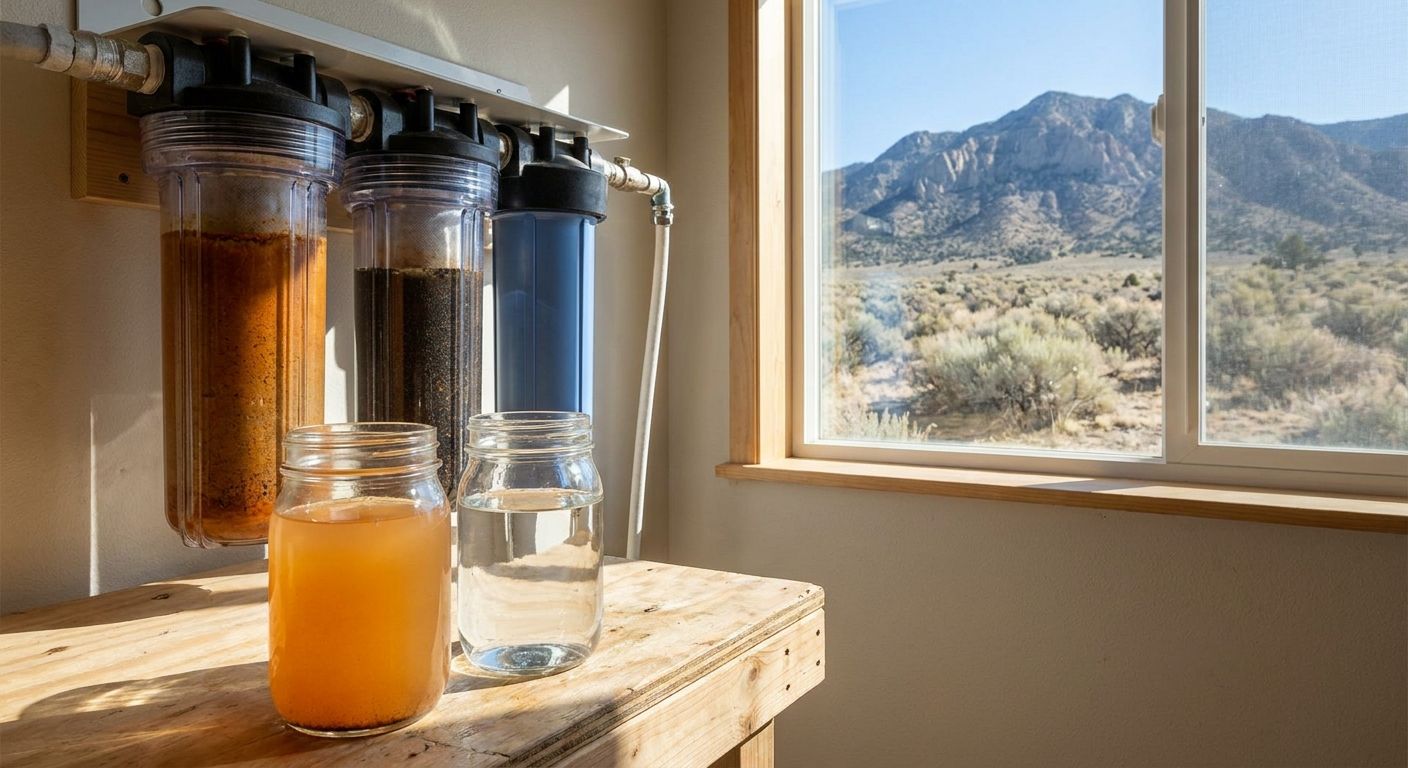
Iron and sediment filtration for Utah well water is a two-stage treatment approach that strips dissolved iron, iron bacteria, and grit out of a private well supply before it reaches your fixtures, appliances, and water heater. Well owners along the Wasatch Front and in rural Northern Utah deal with a mix of high mineral content and sandy or silty aquifer sediment that municipal customers never see, so a single carbon filter or a water softener alone rarely solves the problem.
- Iron and sediment filtration for well water combines a sediment pre-filter with a dedicated iron filter, not a softener alone.
- Utah well owners with orange staining or grit in the toilet tank need a water test before buying equipment in 2026.
- Expert Services installs iron and sediment filtration systems across Northern Utah and sizes equipment to the well’s actual iron reading.
- Skipping the sediment pre-filter is the most common reason iron filtration systems clog within the first year.
Why Iron and Sediment Filtration Matters for Utah Well Water Households
Private wells aren't regulated the way municipal supplies are, so the well owner decides whether the water gets treated at all. Northern Utah groundwater frequently carries iron above the EPA's 0.3 mg/L secondary standard, plus fine sand and silt pulled up from the aquifer, which is why staining and clogged aerators show up faster in well-water homes than in city-water homes.
Untreated iron and sediment don't stop at stained sinks and laundry. They shorten water heater life, clog aerators and shower heads, and put mechanical strain on any water softener or appliance downstream of the well pump. A water quality testing for well and municipal water in Utah report is the only way to confirm whether you're dealing with dissolved iron, iron bacteria, ferric (oxidized) iron, or plain sediment — each calls for a different fix, and guessing wrong wastes money on the wrong equipment.
Test your well water before buying anything
Don't diagnose the problem by stain color alone. A lab test reports the iron concentration, confirms whether manganese is present, and flags iron bacteria, which sediment filters and softeners don't remove on their own.
- Pull a raw sample at the wellhead, not from a downstream faucet
- Test total iron, ferrous vs. ferric iron, and manganese separately
- Check pH — iron removal media performs differently below 6.5 and above 8.5
- Record flow rate and static pressure at the time of sampling
- Keep the results; every equipment decision below depends on them
Identify what's actually staining your fixtures
Orange-red staining on porcelain usually points to ferric iron. A slimy, oily film with a musty or sulfur smell points to iron bacteria, a separate problem that neither a sediment filter nor a softener fixes.
- Reddish-brown staining on white fixtures: ferric (oxidized) iron
- Black staining, often with iron: manganese
- Slimy film with musty odor: iron bacteria
- Grit collecting in the toilet tank or washing machine inlet screen: sediment, not iron
Match the sediment pre-filter to your well's grit load
A sediment pre-filter goes ahead of any iron system, full stop. Skipping this step is the single biggest reason iron filtration media clogs and loses capacity within the first year in Utah well homes.
- Spin-down (reusable) pre-filters for wells with heavy sand or silt
- Cartridge sediment filters rated 5-20 micron for finer grit
- Housing sized to your well's peak flow rate, not just average daily use
- A pressure gauge before and after the filter to track clogging over time
Install a dedicated iron filtration system
Once sediment is handled, the iron itself needs its own media bed — air injection oxidizers, greensand filters, or catalytic media systems, depending on the iron level and pH from your test. This is where a DIY cartridge approach runs out of capacity fast on Utah well water, and where a licensed installer earns its keep by sizing the system correctly the first time.
- Air injection oxidizing filters for moderate iron with no chemical feed
- Greensand filters for higher iron combined with manganese
- Catalytic media systems for iron paired with hydrogen sulfide odor
- Chemical feed (chlorine or permanganate) injection for iron bacteria specifically
- A backwash valve programmed to your household's actual water use, not a generic default
Expert Services handles the sizing, plumbing, and electrical hookup for these systems on wells across Northern Utah, which matters because an undersized iron filter fouls in months and an oversized one wastes backwash water.
Adjust or upgrade your water softener setting
A softener isn't an iron filter, but it still needs adjusting once iron filtration is in place — iron fouls softener resin fast if it arrives upstream of the iron filter instead of after it.
- Confirm plumbing order: sediment filter, then iron filter, then softener
- Increase softener regeneration frequency if any residual iron reaches the resin bed
- Check resin bed condition annually on wells with iron history
- Review sizing against household size — see best water softeners for large Utah households if the home has 4+ occupants
Backwash and maintain the system on a schedule
Iron filters lose capacity gradually, not all at once, which is why homeowners often don't notice a problem until staining returns.
- Set backwash cycles by gallons used, not just a fixed calendar day
- Inspect media bed depth annually — media compacts and needs topping off
- Replace sediment pre-filter cartridges every 1-3 months depending on grit load
- Watch for rising pressure drop across the system as an early clog signal
Recheck water pressure and flow after installation
Adding two filtration stages to a well line changes pressure dynamics. Confirm the system isn't robbing flow at peak demand — showers, laundry, and outdoor irrigation running at once.
- Measure static and dynamic pressure before and after installation
- Compare flow rate at the furthest fixture from the wellhead
- If pressure drops noticeably, see low water pressure repair for older Utah homes
- Reconfirm pressure annually as media beds age and compact
Filtration Options for Utah Well Water Households
| Option | Best for | Key limitation |
|---|---|---|
| Spin-down sediment pre-filter | Wells with heavy sand or silt | Doesn't touch dissolved iron |
| Air injection oxidizing filter | Moderate iron, no odor issue | Needs consistent backwash schedule |
| Greensand filter | Higher iron with manganese present | Requires periodic media regeneration |
| Catalytic media system | Iron combined with sulfur odor | Higher upfront system complexity |
| Chemical feed injection | Iron bacteria specifically | Requires chemical supply and monitoring |
| Water softener (paired, not standalone) | Hardness after iron is removed | Fouls fast if placed before iron filter |
Verdict: a sediment pre-filter paired with a properly sized iron filtration system, installed in the correct order, is the only combination that solves both staining and mechanical wear on Utah well water — a softener alone never does.
Common Mistakes Utah Well Water Households Make
- Installing a softener first and skipping iron filtration entirely. Iron fouls softener resin within months and voids most manufacturer warranties.
- Buying equipment before testing. Sizing an iron filter off stain color instead of a lab reading leads to systems that clog or underperform.
- Putting the sediment filter after the iron filter. Grit reaches the iron media bed first and shortens its working life.
- Ignoring iron bacteria because sediment filtration seems to help at first. The slime returns because bacteria aren't removed by mechanical filtration alone.
- Setting backwash cycles on a fixed calendar instead of gallons used. Households with variable water use over- or under-backwash the media.
Get your well water tested and sized right
Schedule an inspection before buying iron or sediment equipment.
FAQ
What’s the best filtration for iron in well water?
A sediment pre-filter combined with a dedicated iron filter — air injection, greensand, or catalytic media depending on your test results — is the standard fix for iron in well water. A water softener alone does not remove iron and will foul quickly if it’s asked to.
Is a sediment filter enough to remove iron?
No. A sediment filter only removes suspended grit and sand; dissolved iron passes straight through it. Iron removal requires a separate oxidizing or media-based filter installed after the sediment stage.
How much iron is too much in well water?
The EPA’s secondary standard for iron is 0.3 mg/L, an aesthetic guideline for staining and taste rather than a health limit. Utah well water frequently tests above that level, which is when staining and appliance wear become noticeable.
Do I need both a water softener and an iron filter?
Most Utah well homes with hard water and iron need both, in the right order: sediment filter, then iron filter, then softener. Placing the softener before the iron filter shortens the resin’s life significantly.
How often does an iron filter need to backwash?
Backwash frequency depends on household water use and iron concentration rather than a fixed calendar schedule. Systems set by gallons used, not by date, hold capacity more consistently.
Can iron bacteria clog my plumbing?
Yes. Iron bacteria form a slimy biofilm that clogs aerators, valves, and well screens over time, and it isn’t removed by sediment filtration or softening alone. It typically requires a chemical feed treatment targeted at the bacteria.
Does hard water make iron staining worse?
Hardness and iron are separate problems, but both stress the same plumbing and appliances. Treating iron without addressing hardness still leaves scale buildup on water heaters and fixtures.
Can I install an iron filter myself?
Basic sediment cartridge filters are DIY-friendly, but sizing and plumbing a full iron filtration system correctly requires matching media type, backwash valve settings, and flow rate to a lab-tested iron level. Getting the plumbing order wrong is the most common installation mistake on Utah wells.
One Last Thing
The detail most Utah well owners miss: iron bacteria and dissolved ferric iron look almost identical in a glass of water but need completely different equipment. A $30 lab test settles the question before you spend on a system that won't touch the actual problem.
Related guides
- How to prevent hard water damage to pipes and appliances
- Pressure reducing valve installation for high water pressure homes
- Signs you need a water heater replacement, not a repair
- Sump pump installation for basement flood prevention