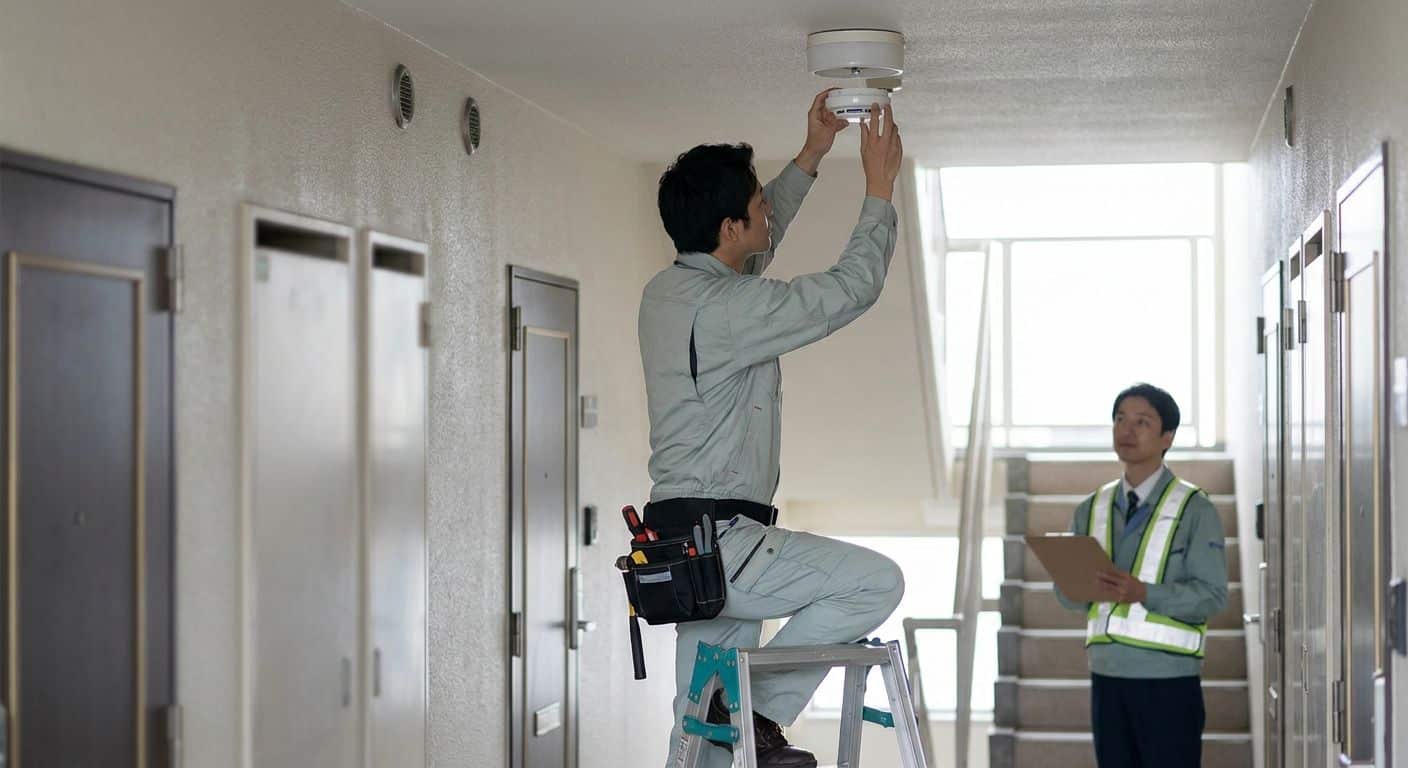
Smoke Detector Installation Multi-Family: 2026 Verdict
August 21st, 2026
Multi-family properties don't get to treat smoke detectors like a single-family afterthought — one bad install across 40 units becomes a liability problem, not a maintenance ticket. This guide breaks down what property managers and landlords in Northern Utah need before a licensed electrician touches the panel.
- Hardwired interconnected photoelectric detectors are the correct baseline for smoke detector installation multi-family projects in 2026 — Buy.
- Sealed 10-year lithium battery units work for retrofit units without existing wiring, but skip them in common hallways.
- Addressable fire panel systems earn their cost in buildings over 16 units where code compliance gets audited.
- Never mix detector types across a building — inspectors flag inconsistent systems first.
Why this matters
A smoke detector that fails during an inspection or, worse, during an actual fire, turns into a legal exposure issue for the owner and the property manager both. NFPA 72 requires interconnected alarms in new construction and major renovations — meaning if one unit's detector triggers, every detector on that interconnected string sounds. Most jurisdictions in Utah follow the International Fire Code with local amendments, and multi-family buildings get inspected more closely than single-family homes because more people are at risk per failure point.
The fix isn't complicated, but it's specific. Get the detector type, power source, and interconnection wrong and you're re-doing the job in 18 months instead of 10 years. A licensed electrician who's done smoke detector installation multi-family work knows the difference between a code-compliant retrofit and a shortcut that fails the next fire marshal walkthrough.
Who this is for
This guide is written for landlords, property managers, and HOA boards overseeing apartment buildings, condo complexes, duplexes, and triplexes across Northern Utah — anywhere three or more dwelling units share a structure or a common electrical system. If you're managing a single rental house, the calculus is simpler and this level of detail is overkill. If you're responsible for a 20-unit building or a portfolio of them, the decisions below determine whether your next fire marshal inspection is a formality or a punch list. Property managers juggling plumbing, HVAC, and electrical maintenance across a portfolio already know that deferred electrical work costs more the longer it sits.
What to look for in smoke detector installation for multi-family properties
Interconnection capability
Every detector in a unit — and in many jurisdictions, every unit sharing a stairwell or common hallway — needs to sound together. Hardwired interconnection with battery backup is the 2026 standard for anything built or majorly renovated since NFPA 72 adoption; wireless interconnection is acceptable in some retrofit cases but costs more per unit and needs periodic signal verification.
Photoelectric vs. ionization sensing
Photoelectric sensors respond faster to smoldering fires — the kind that start in couches, mattresses, and electrical wiring, which is exactly what dominates multi-family fire incident data. Ionization sensors react faster to flaming fires but false-alarm more from cooking smoke, which is the number one nuisance complaint in apartment buildings. Dual-sensor units cost more upfront but cut nuisance calls that erode tenant trust in the system.
Electrical panel capacity
Adding hardwired interconnected detectors to an older building means the panel has to handle the load and the circuit has to be dedicated correctly — not shared with outlets or lighting circuits that get switched off. Buildings with panels older than 25-30 years often need capacity checked before any hardwired detector project starts; a panel evaluation for commercial buildings upfront avoids a mid-project surprise that stalls the whole install.
Battery backup and sealed lithium options
Hardwired units still need battery backup for power outages — that's non-negotiable under most fire codes. Sealed 10-year lithium battery detectors eliminate the tenant-tampering problem entirely, since there's no battery compartment to pull the battery from before a party or to forget to replace.
Combination smoke/CO detection
Any unit with a fuel-burning appliance — gas furnace, gas water heater, gas range — or an attached garage needs combination smoke/CO detection under most adopted fire codes. Skipping this in a multi-family building where units share mechanical rooms or garage-adjacent walls is one of the most common code violations inspectors cite.
Central monitoring or addressable panel integration
Larger buildings — generally 16 units and up, or any building with a monitored fire alarm contract — benefit from addressable panel systems where each detector reports its exact location to a central panel. This isn't necessary for a fourplex. It's close to mandatory for a mid-rise apartment building with a monitoring contract already in place.
Get a multi-family electrical quote
Licensed electricians for interconnected smoke detector installs across Northern Utah.
Top picks for multi-family smoke detector installation
Hardwired interconnected photoelectric detectors — the safe pick. Every unit sounds together, photoelectric sensing cuts cooking-smoke nuisance calls, and this configuration satisfies NFPA 72 interconnection requirements in new construction and major renovation projects. The one spec that matters: dedicated circuit, not shared with lighting or receptacles. Buy for any building under active renovation or new construction.
Sealed 10-year lithium battery detectors — the retrofit pick. No wiring required, no battery compartment for tenants to raid, and a 10-year service life that outlasts most lease turnovers twice over. The tradeoff: no interconnection between units without a wireless mesh add-on, which adds cost and a signal-verification step. Consider for scattered-site rentals or buildings where running wire through finished walls isn't practical.
Addressable fire panel integration — the wildcard. Each detector reports its exact location to a central panel, which cuts response time for maintenance staff and satisfies monitoring contract requirements. This is overkill and expensive for anything under 16 units. Buy if you already carry a monitored fire alarm contract; Skip for a fourplex.
Combination smoke/CO detectors — the compliance pick. Required in any unit with a gas appliance or attached garage under most adopted fire codes, and cheap insurance against a carbon monoxide incident that a smoke-only detector would never catch. Buy for every unit with a fuel-burning appliance, no exceptions.
Smart Wi-Fi connected detectors — the common-area pick. Push notifications to a property manager's phone when a detector trips in a vacant unit or common hallway are genuinely useful for portfolios spread across multiple cities. They depend on stable building Wi-Fi and a clean electrical circuit — whole-house surge protection matters more here than on a standard hardwired unit, since a power surge that fries the Wi-Fi module defeats the entire point. Consider for common areas and leasing offices; Skip as the sole detection method inside individual units.
What to avoid
- Ionization-only detectors near kitchens. They false-alarm on cooking smoke constantly, and tenants start disabling them out of frustration — which is worse than no detector at all.
- Mixed detector types across one building. Inconsistent hardware across units is one of the first things a fire marshal flags during inspection, even if every individual unit technically passes.
- DIY or unlicensed installation to save money. A miswired interconnected circuit can fail silently — no alarm sounds, no error shown — until the day it matters. If you're not sure who to call, start with how to choose an electrician for emergency repairs before signing a contract for a multi-unit job.
Verdict comparison
| Detector type | Interconnection | Power source | Best for | Verdict |
|---|---|---|---|---|
| Hardwired photoelectric | Yes, built-in | AC + battery backup | New construction, major reno | Buy |
| Sealed 10-year lithium | No (unless wireless mesh) | Sealed lithium battery | Scattered-site retrofits | Consider |
| Addressable panel system | Yes, panel-reported | AC + battery backup | 16+ unit buildings, monitored contracts | Buy (large buildings) |
| Combination smoke/CO | Yes, built-in | AC + battery backup | Units with gas appliances/garages | Buy |
| Smart Wi-Fi connected | Via app, not code-recognized | AC or battery | Common areas, leasing offices | Consider |
FAQ
What is required for smoke detector installation in multi-family properties in 2026?
Multi-family buildings generally require interconnected, hardwired smoke detectors under NFPA 72 and the locally adopted fire code, with combination smoke/CO units in any dwelling with a gas appliance or attached garage. Requirements vary by jurisdiction, so confirm specifics with the local fire marshal before installation.
Are battery-only smoke detectors legal in apartment buildings?
Sealed 10-year lithium battery detectors are acceptable in many retrofit situations where wiring isn’t practical, but new construction and major renovations typically require hardwired interconnected units. Check the specific fire code adopted by the property’s jurisdiction.
How often should smoke detectors be tested in rental units?
Monthly testing is the standard recommendation for all smoke detectors, hardwired or battery-powered. Landlords managing multiple units should build this into a recurring maintenance schedule rather than relying on tenants to self-report.
Do all units in an apartment building need interconnected smoke detectors?
Interconnection requirements depend on the building’s age, renovation history, and the fire code in effect at the time of construction. New construction and gut renovations almost always require full interconnection under NFPA 72.
How long do smoke detectors last before they need replacing?
Ten years is the standard service life for both hardwired and sealed battery smoke detectors. After that, sensor sensitivity degrades even if the unit still powers on and tests successfully.
Is photoelectric or ionization better for apartment buildings?
Photoelectric sensors respond faster to smoldering fires and produce fewer false alarms from cooking smoke, making them the better fit for most multi-family units. Dual-sensor units combine both technologies where budget allows.
Do multi-family properties need carbon monoxide detectors too?
Yes, if any unit has a gas-burning appliance or an attached garage, most adopted fire codes require combination smoke/CO detection in that unit. Combination units cost only slightly more than smoke-only detectors and satisfy both requirements at once.
Who should install smoke detectors in a multi-family building?
A licensed electrician should handle hardwired interconnected installations, since miswired circuits can fail silently without tripping any visible error. Battery-only sealed units in individual units can be installed by maintenance staff, but the building’s overall system should still be reviewed by a licensed professional.
One last thing
The detail most property managers miss: a sealed 10-year lithium detector installed today will need replacing right around 2036 — mark it on the same maintenance calendar as the roof and the water heaters, because tenant turnover will not remind anyone. Buildings that batch-replace on a fixed schedule instead of waiting for individual failures spend less per unit and fail fewer inspections.
Related guides
- Plumbing, HVAC, and electrical maintenance for property managers
- Electrical panel repair for commercial buildings
- How to choose an electrician for emergency repairs
- Whole-house surge protection for smart home devices