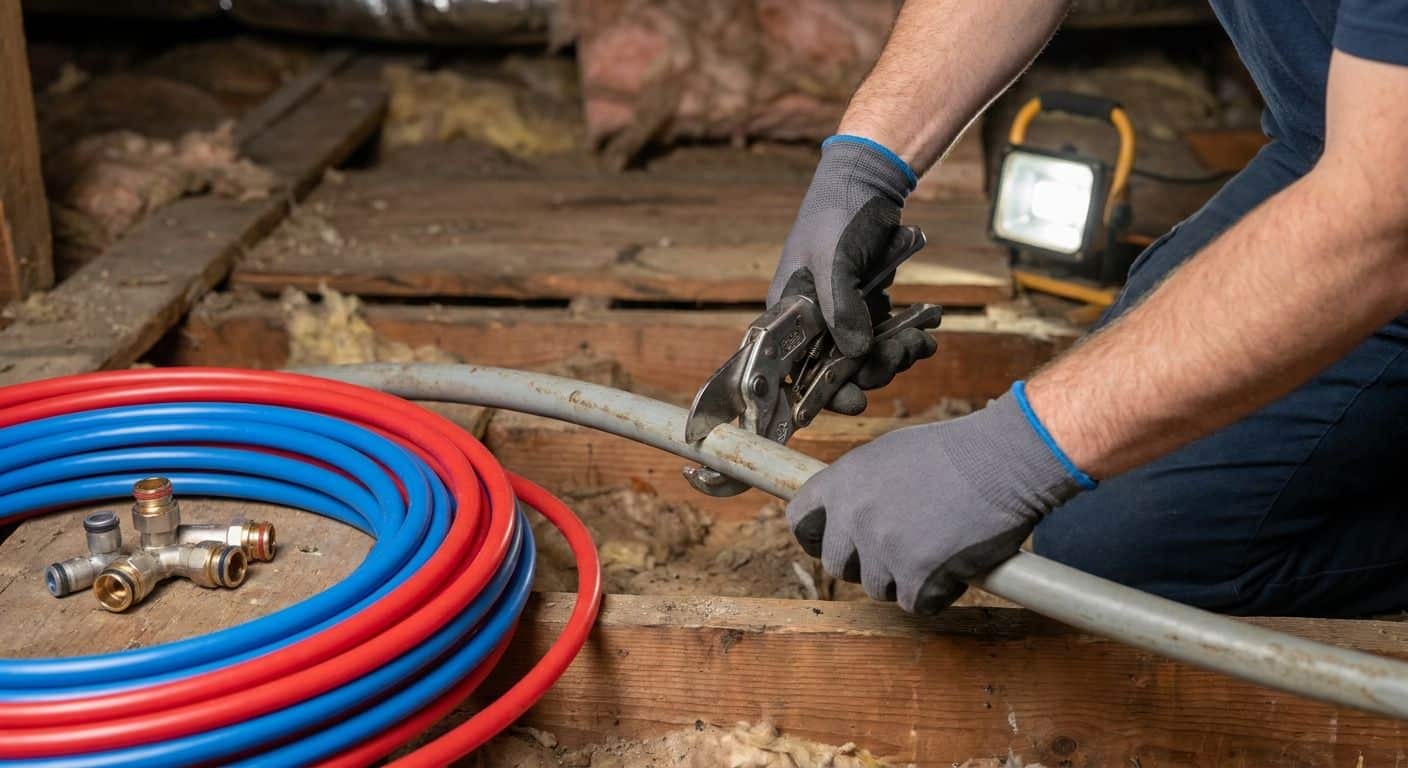
Polybutylene Pipe Replacement for Utah Homes: 2026 Guide
August 21st, 2026
If your home in Salt Lake City, Ogden, or Provo was built between 1978 and 1995, the plumbing behind your walls might be a lawsuit waiting to happen — literally. Polybutylene pipe replacement is the single biggest plumbing decision facing owners of older Utah homes right now, and putting it off costs more than it saves.
- Polybutylene pipe replacement is non-negotiable for Utah homes built 1978-1995 with gray or blue plastic supply lines — full PEX repipe wins.
- Acetal insert fittings, not the pipe itself, cause most polybutylene failures — spot patching one leak ignores the rest of the system.
- Utah’s hard water accelerates polybutylene degradation from the inside out, so a 2026 inspection often finds more damage than expected.
- Insurance carriers increasingly flag or surcharge homes with polybutylene plumbing, making documented replacement a resale asset.
Why this matters
Polybutylene was marketed through the late 1970s, 80s, and into 1995 as the cheap, flexible alternative to copper. Roughly 6 to 10 million homes nationwide were plumbed with it before a 1995 class-action settlement (Cox v. Shell Oil) acknowledged what plumbers already knew: chlorine and chloramine in municipal water oxidize the pipe from the inside, and it fails without warning, often behind drywall.
Utah's water utilities treat with chloramine, and much of the state has hard water on top of that. Both accelerate the breakdown of polybutylene pipe and the acetal fittings that connect it. A pipe that looks fine on a home inspection in 2026 can still be brittle enough to split during a cold snap. That's why polybutylene pipe replacement gets treated as a whole-system project by Expert Services, not a one-fitting fix.
Who this is for
This guide is for owners of Northern Utah homes built roughly between 1978 and 1995 who have gray or blue plastic supply lines, have had an insurance company flag their plumbing, or are buying or selling a home from that era and need a straight answer on repipe scope. If your home was built after 1996 or you've already had a full copper or PEX repipe, this isn't your problem.
What to look for in polybutylene pipe replacement for older Utah homes
Positive identification, not a guess
Gray pipe stamped "PB2110" is the giveaway, but polybutylene sometimes shows up in blue (underground) or white variants, and it's often mistaken for PEX at a glance. A licensed plumber should confirm the material at the water heater, under sinks, and at the main shutoff before you sign off on any repipe scope — guessing wrong means paying twice.
Fitting type, not just pipe material
Most polybutylene failures start at the acetal plastic insert fittings, not along the pipe run itself. A replacement plan that swaps the pipe but reuses old fittings, or specs new fittings without checking crimp compatibility, leaves the weakest link in place.
Whole-home scope versus spot repair
If polybutylene shows up in one location, it's in every location — the whole house was plumbed the same year with the same material. A contractor proposing to patch just the leak you found is solving today's problem and setting up next year's.
Permit and inspection compliance
Utah jurisdictions require permits for whole-home repipes, and a permitted, inspected job is what insurance carriers and future buyers actually want to see. Unpermitted work is a red flag at resale even if the pipe itself is fine.
Water quality and pipe interaction
Hard water and chloramine both play a role in polybutylene's failure rate, and they matter again in choosing the replacement material. A repipe that ignores existing water conditions is only solving half the problem — see how water softener installation for Utah's hard water fits into a broader pipe-protection plan.
Documentation for insurance and resale
Some carriers now surcharge or decline coverage on homes with known polybutylene plumbing. A completed, permitted repipe with an itemized invoice and material specs is what turns a liability into a documented upgrade at resale.
Top picks: replacement approaches for polybutylene pipe replacement
The safe pick: whole-home PEX repipe
PEX tubing has been standard in new Utah construction for over two decades and typically carries a manufacturer-rated service life of 25 to 40 years depending on the product line. It flexes with freeze cycles better than rigid pipe, which matters during Utah's winter cold snaps, and installation is faster than copper because it needs fewer joints. Verdict: Buy — for most single-family homes built in the polybutylene era, this is the default recommendation for 2026.
The premium pick: whole-home copper repipe
Copper has a track record exceeding 50 years in service when installed correctly, and some buyers still prefer it for resale perception, especially in higher-end Utah neighborhoods. It costs more in labor because every joint is soldered, and it's a harder retrofit in finished walls. Verdict: Consider — worth it if you're already opening walls for a larger renovation or targeting a specific resale market.
The wildcard: trenchless approach for buried polybutylene
When polybutylene runs underground to a detached structure or the main line into the house, trenchless methods avoid tearing up landscaping or a driveway. This only applies to buried runs, not interior wall plumbing, so scope it separately from your interior repipe. Verdict: Consider — situational, not a substitute for the interior repipe.
The one to skip: spot fitting replacement only
Swapping out the one acetal fitting that just failed under a sink feels cheaper today. It leaves every other original fitting and pipe run in place, still degrading on the same 1978-1995 timeline as the one that already broke. Verdict: Skip — this is a stopgap, not a repair, and it's the option most likely to bring you back into an emergency call within a year. If a burst line does happen before a full repipe is scheduled, see emergency plumber for burst pipes in winter for what to do immediately.
The budget trap: CPVC as a full-home fix
CPVC gets pitched as a cheaper alternative to PEX or copper. It's more brittle in cold temperatures, more prone to stress cracking at fittings, and less forgiving of the freeze-thaw cycles common across Northern Utah winters. Verdict: Skip — the short-term savings don't hold up against the freeze risk.
What to avoid
- DIY compression fitting patches. They look like a fix, but they're not rated for the pressure cycling of a whole-home system and they void any warranty a licensed repipe would carry.
- "Repipe" quotes that don't list pipe material and fitting type in writing. If the estimate doesn't specify PEX or copper and the fitting brand, you can't verify what you're actually getting.
- Skipping the permit to save time. An unpermitted repipe shows up as a gap in the home's paper trail at resale, even years later in 2026 and beyond.
Get your polybutylene pipes inspected
A licensed plumber confirms material and scope before you commit to a repipe.
Verdict comparison
| Approach | Best for | Expected lifespan | Verdict |
|---|---|---|---|
| Whole-home PEX repipe | Most single-family homes | 25-40 years | Buy |
| Whole-home copper repipe | Renovations, resale-focused owners | 50+ years | Consider |
| Trenchless for buried lines | Detached structures, buried mains | Situational | Consider |
| Spot fitting replacement | Nothing — stopgap only | Months to a few years | Skip |
| Full CPVC repipe | Not recommended in Utah winters | Shorter than PEX/copper | Skip |
Low water pressure is another common symptom of aging polybutylene systems as fittings narrow and scale builds up — if that's part of what you're noticing, low water pressure repair for older Utah homes covers the diagnostic side separately from the repipe decision.
FAQ
How do I know if my house has polybutylene pipe?
Look for gray, blue, or white plastic pipe stamped "PB2110" at the water heater, under sinks, or at the main shutoff. Homes built between 1978 and 1995 are the most likely candidates, and a licensed plumber can confirm material with certainty in a single visit.
Is polybutylene pipe replacement mandatory in Utah?
No jurisdiction mandates replacement outright, but insurance carriers increasingly require it or apply surcharges once polybutylene is identified. Many Utah homeowners replace it proactively before a failure forces the issue.
Is PEX better than copper for replacing polybutylene?
PEX is the more common choice for whole-home polybutylene pipe replacement in 2026 because it installs faster and flexes better in freeze conditions. Copper lasts longer overall but costs more in labor since every joint is soldered.
Can I replace just the failed section of polybutylene pipe?
You can, but every other pipe and fitting installed in the same year is degrading on the same timeline. Spot repair is a short-term stopgap, not a fix for the underlying system.
Does polybutylene pipe affect home insurance in Utah?
Yes, some carriers decline coverage or add surcharges once polybutylene plumbing is identified during underwriting. A documented, permitted repipe resolves the issue and can be presented at renewal or resale.
How long does a whole-home repipe take?
Scope depends on home size, number of fixtures, and whether walls need to be opened, and a licensed plumber can give a firm timeline after an on-site inspection. Multi-story homes with finished basements generally take longer than single-story ranch layouts.
Why does polybutylene fail more in Utah specifically?
Chloramine treatment in municipal water and widespread hard water across Northern Utah both accelerate the internal oxidation that makes polybutylene brittle. The combination shortens the pipe’s effective life compared to regions with softer, chlorine-only treated water.
One last thing
The polybutylene pipe itself is rarely the first thing that fails — the acetal insert fittings crack first, usually at a joint you can't see. That's why a repipe quote that only talks about pipe material and skips fitting specs is an incomplete quote, no matter how competitive the price looks in 2026.
Related guides