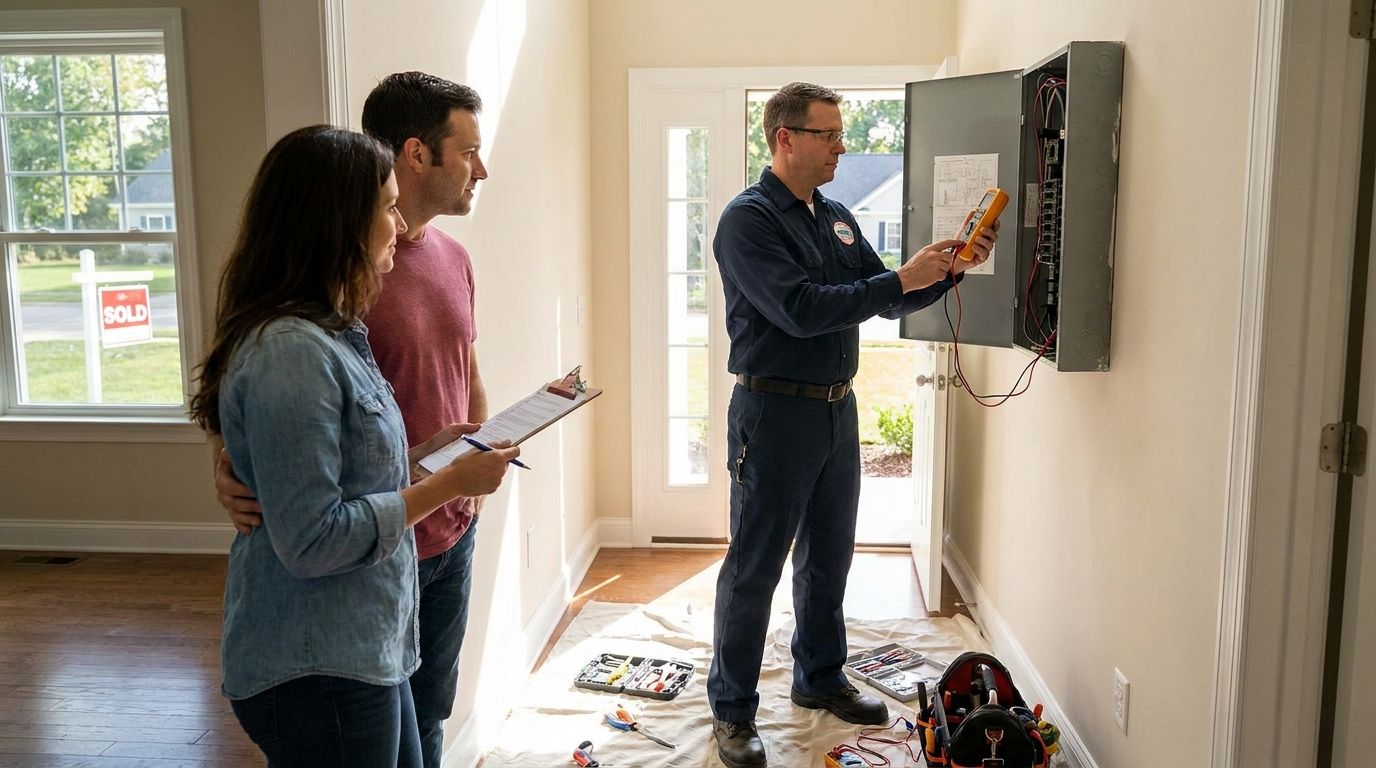
Electrical Inspection Before Buying a Home: 2026 Checklist
August 22nd, 2026
An electrical inspection before buying a home in Northern Utah catches what a general home inspector skims past in ten minutes: panel amperage, wiring material, and code gaps that turn into five-figure surprises after closing in 2026.
- A 100-amp panel isn’t automatically a deal-breaker in 2026, but pair it with aluminum wiring and you’re looking at a rewire, not a repair.
- Federal Pacific Stab-Lok and Zinsco panels are a renegotiate-or-walk signal, not a line item for the punch list.
- GFCI and AFCI gaps are a cheap fix before closing and an expensive one after you own the house.
- An electrical inspection before buying a home should run alongside the general home inspection, not replace it.
Why this matters
A general home inspector spends maybe 20 minutes on the electrical system in a two-hour walkthrough. They'll open the panel, note obvious defects, and move on to the roof. They are not licensed to trace circuits, test amperage under load, or tell you whether a 1972 panel is a fire risk or just old.
That gap matters more in Northern Utah than in newer markets. Salt Lake City, Ogden, and Provo all have large pockets of housing stock from the 1950s through the 1970s, and those decades produced exactly the wiring problems that show up on inspection reports: undersized panels, aluminum branch circuits, and grounding that was legal when installed but isn't compliant now. If a seller's disclosure doesn't mention the panel, that's not a good sign — it usually means check if you need an electrical panel upgrade before you sign anything.
Who this is for
This is for buyers under contract or about to make an offer on a home built before 1985 anywhere in Northern Utah, especially anyone financing with FHA or VA loans that require code-compliant electrical at closing. It's also for buyers planning to add an EV charger, a hot tub, or a home addition in the next few years — a panel that barely covers current loads won't cover new ones. If you're already scheduling a sewer scope, pair it with the electrical check; the logic is the same one covered in sewer camera inspection before buying a home: the visible stuff isn't the risk, the stuff behind the walls is.
What to look for in an electrical inspection before buying a home
Panel age and amperage
A 60-amp or 100-amp panel was standard through the 1980s but doesn't cover a modern kitchen, central air, and an EV charger at the same time. 200 amps is the practical minimum for a 2026 household running normal appliance loads. If the panel is original to a 1970s build, assume it's near the end of its service life even if nothing has failed yet.
Wiring material and installation era
Aluminum branch wiring was installed heavily between 1965 and 1973 because copper prices spiked. It's not automatically dangerous, but the connections loosen over time and cause overheating at outlets and switches — a known cause of house fires in homes from that era. If the inspection turns up aluminum wiring, budget for a partial or full rewire rather than a repair; electrical rewiring for older Utah homes covers what that scope actually looks like.
Panel brand and recall history
Federal Pacific Electric (Stab-Lok) and Zinsco panels have a documented history of breakers that fail to trip during overloads, a problem covered publicly by the Consumer Product Safety Commission. Both brands stopped production decades ago but are still installed in Utah homes from the 1960s and 1970s. Finding one of these panels on an inspection report isn't a minor note — insurers in some cases decline or surcharge policies over it.
GFCI and AFCI coverage
National Electrical Code requires ground-fault protection within 6 feet of any water source — kitchens, bathrooms, garages, and exteriors — and arc-fault protection in most living spaces under the 2020 NEC cycle. Homes built before these code updates were adopted often have zero GFCI outlets. It's a cheap retrofit, but it's also a real gap in shock protection until it's done.
Grounding and bonding
Older two-prong outlets without a ground wire are common in pre-1960s Utah homes. A licensed inspector checks whether the system has a proper ground rod and bonding at the panel, not just whether outlets accept a three-prong plug. Ungrounded systems damage sensitive electronics and fail safety inspections for refinancing later.
Permit history and unpermitted work
Panel upgrades, sub-panels, and rewiring done without permits are common in flipped homes. Ask the seller's agent for permit records from the city or county building department. Unpermitted electrical work means nobody verified it against code, and you inherit the liability the day you close.
Top priorities to flag during the walkthrough
1. The panel amperage math problem. A 100-amp panel feeding a house with central AC, an electric range, and a future EV charger is undersized on paper before you've plugged anything new in. Verdict: negotiate a panel upgrade credit or walk if the seller won't budge.
2. The invisible aluminum wiring risk. Because it's behind drywall, aluminum branch wiring won't show up on a casual walkthrough — only a licensed electrician checking outlet and switch boxes will catch it. Verdict: deal-breaker if paired with an already-aging panel; negotiable if the rest of the system is sound.
3. The recalled panel brand. Federal Pacific and Zinsco panels look identical to any other panel from the outside. Verdict: renegotiate the price to cover replacement — don't accept a cosmetic fix.
4. Flickering lights or warm outlet covers. Sellers sometimes chalk this up to "old bulbs," but it's frequently a loose connection or overloaded circuit, the same pattern covered in cases where older systems develop flickering lights over time. Verdict: minor fix if isolated, red flag if it's happening in multiple rooms.
5. Missing GFCI in kitchens and baths. This is the cheapest item on the list to fix and the easiest for a seller to knock out before closing. Verdict: ask for it in writing as a closing condition, not a suggestion.
What looks fine but isn't
- A freshly painted panel cover. Sellers sometimes paint or clean up an exterior panel right before showings. It hides rust and corrosion, not the condition underneath.
- New outlet covers over old wiring. Cosmetic outlet replacements don't fix aluminum connections or missing grounds behind the wall plate.
- A seller-installed panel upgrade with no permit pulled. If the seller mentions they "had the panel upgraded a few years ago" but there's no permit on file, that work was never inspected against code.
Verdict comparison
| Criteria | What you're checking | Red flag | Verdict |
|---|---|---|---|
| Panel amperage | Rated capacity vs. household load | 60A-100A panel with modern appliance load | Negotiate upgrade |
| Wiring material | Copper vs. aluminum branch circuits | Aluminum wiring from 1965-1973 | Deal-breaker if paired with old panel |
| Panel brand | Manufacturer and model plate | Federal Pacific Stab-Lok or Zinsco | Renegotiate or replace before closing |
| GFCI/AFCI coverage | Outlets near water, bedroom circuits | Zero GFCI in kitchen/bath | Closing condition, cheap fix |
| Grounding | Ground rod, bonding at panel | Two-prong outlets, no ground | Inspect further, budget for upgrade |
| Permit history | City/county building records | Electrical work with no permit | Verify scope before closing |
Book a pre-closing electrical inspection
Get a licensed electrician’s report before your contingency window closes.
FAQ
Is an electrical inspection before buying a home necessary if the general inspector already checked the panel?
Yes, because a general home inspector isn’t licensed to test circuits under load or trace wiring behind walls. A licensed electrician catches amperage, wiring material, and code gaps a general inspection report won’t flag in detail.
How much does an electrical inspection cost before closing?
Cost varies by home size and how much of the system needs testing, so get a quote for your specific property rather than relying on a flat estimate. Ask what’s included: panel inspection, wiring sample checks, and GFCI/AFCI testing are the core items.
What’s the difference between a 100-amp and 200-amp panel?
A 100-amp panel supplies less total power to the house than a 200-amp panel, which matters once you add central air, an electric range, or an EV charger. Most homes built before the 1980s in Northern Utah still have 100-amp service.
Are Federal Pacific panels dangerous?
Federal Pacific Stab-Lok panels have a documented history of breakers failing to trip during overloads, according to the Consumer Product Safety Commission. Finding one during a home inspection is a reason to renegotiate, not a cosmetic issue.
Is aluminum wiring a deal-breaker when buying a home?
Aluminum wiring isn’t automatically a deal-breaker, but it does require monitoring and sometimes a partial rewire, especially at outlet and switch connections. Homes wired between 1965 and 1973 are the most likely to have it.
Can I negotiate repairs after an electrical inspection?
Yes, electrical findings are standard leverage in a purchase contract’s inspection contingency. Sellers commonly agree to a price credit or to complete specific repairs like GFCI installation before closing.
Does a home need to be rewired before it can be sold?
No, most states including Utah don’t require a full rewire before a sale unless a lender’s appraisal flags a specific safety hazard. That’s exactly why buyers need their own electrical inspection before buying a home rather than relying on the seller’s disclosure.
What is knob-and-tube wiring and should I worry about it?
Knob-and-tube wiring is an early wiring method used mostly before 1950 that lacks a ground wire and wasn’t built for modern loads. Many insurers won’t write a policy on a home with active knob-and-tube wiring until it’s replaced.
One last thing
Most buyers assume an old panel is the worst-case scenario. It isn't — a Federal Pacific or Zinsco panel that's still under warranty-looking condition on the surface is worse, because the failure mode is invisible until a breaker doesn't trip when it should. That's the one item on this list worth paying for a dedicated electrical inspection before buying a home, even when the general inspector says the panel "looks fine."
Related guides
- Flickering lights repair for older electrical systems
- GFCI outlet installation for kitchens and bathrooms