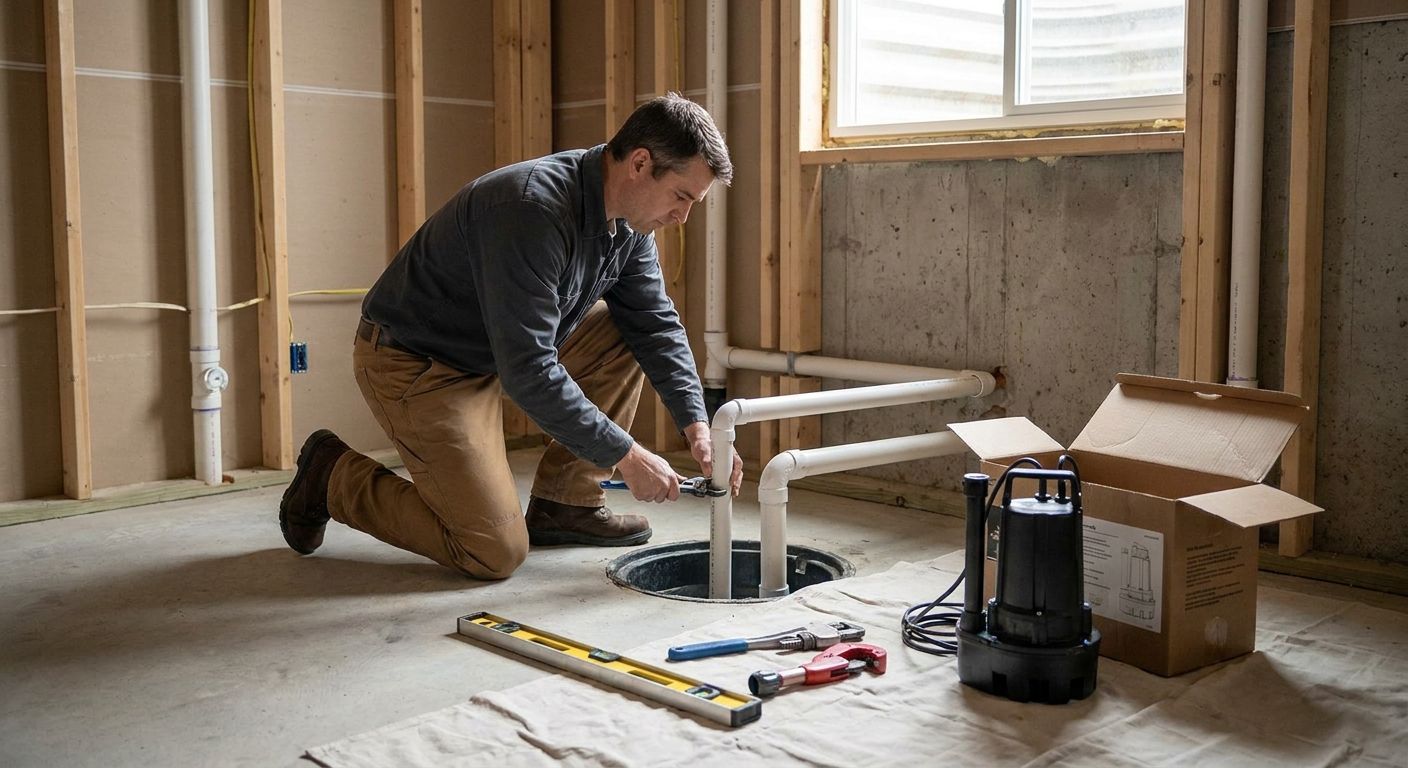
Ejector Pump Installation for Basement Bathrooms (2026)
August 24th, 2026
Adding a bathroom below grade means the drain line has to fight gravity, and that's a job for an ejector pump, not a floor drain and a prayer. This guide breaks down what actually matters when you're installing one for a basement bathroom in 2026, plus which pump categories fit a half bath versus a full bath with a tub.
- A 4/10 HP sewage ejector pump handles a basement half bath; go to 1/2 HP for a full bath with a tub or shower.
- Ejector pump installation requires a dedicated GFCI circuit under NEC 210.8 — don’t skip it.
- Pumps rated for 2-inch solids and a 30-gallon basin are the 2026 baseline for basement bathroom setups.
- Battery backup is optional for a single half bath but a near-requirement for a basement apartment with two fixtures.
- Swapping in a sump pump instead of a true sewage ejector pump is the single most common failure point in DIY basement bathroom jobs.
Why This Matters
A basement bathroom below the main sewer line can't drain by gravity. The ejector pump collects waste from the toilet, sink, and shower in a sealed basin, then pushes it up and out to the municipal line or septic tank. Get the pump undersized or the venting wrong, and you're looking at sewage backups in a finished basement — one of the most expensive repair calls Expert Services runs across Northern Utah. Ejector pump installation isn't a place to cut corners on horsepower or code compliance.
Who This Is For
This guide is for homeowners finishing a basement in 2026 who are adding a bathroom — a half bath under the stairs, a full bath with a shower for a guest suite, or a bathroom serving a basement apartment or ADU. If your basement floor sits below the sewer line's invert elevation, you need an ejector pump, not a gravity drain, no matter how small the fixture count.
What to Look For in Ejector Pump Installation for Basement Bathrooms
Horsepower and Solids-Handling Rating
The pump motor has to match what's going down the drain. A 4/10 HP sewage ejector pump rated for 2-inch solids is the standard baseline for a single toilet and sink combo. Add a shower or tub, and the added flow volume pushes most installers to a 1/2 HP model with higher head pressure to clear the vertical lift to the main line.
Basin Size and Sealed Lid
A 30-gallon basin is the common capacity for a basement bathroom setup, giving the pump enough reserve volume to cycle properly instead of short-cycling on every flush. The basin needs an airtight, gasketed lid — an open or cracked lid is how sewer gas ends up in a finished basement.
Check Valve and Backflow Protection
Every ejector pump discharge line needs a check valve positioned close to the pump outlet. Without it, wastewater in the discharge pipe drains back into the basin after every cycle, forcing the pump to run twice as often and cutting its service life.
Dedicated GFCI Circuit
The National Electrical Code (NEC 210.8) requires ground-fault protection on receptacles serving pump equipment in damp locations, and a basement ejector pump basin qualifies. This isn't optional wiring — it's a code requirement inspectors check for during basement bathroom permitting in 2026.
Vent Pipe Sizing
The basin needs its own vent, typically tied into the home's existing vent stack with a minimum 2-inch line. Undersized or missing venting creates pressure imbalances that show up as gurgling drains and slow flushes throughout the house, not just the basement bathroom.
Alarm and Backup Power
A high-water alarm on the basin buys you a warning before a power outage or pump failure turns into an overflow. Battery backup takes it a step further, keeping the pump running through outages that would otherwise leave a basement bathroom unusable — and Northern Utah's winter storms take down power more than most homeowners expect.
Top Picks by Basement Bathroom Type
The Standard Workhorse: 4/10 HP Sewage Ejector Pump
This is the default for a basement half bath with just a toilet and sink. It handles 2-inch solids, fits a standard 30-gallon basin, and covers the flow volume of a single-fixture bathroom without oversizing the system. Verdict: Buy for half baths and light-use basement bathrooms.
The High-Capacity Pick: 1/2 HP Pump for Full Baths
Add a shower or tub and the flow volume jumps enough that a 4/10 HP pump will short-cycle or struggle against head pressure on longer vertical runs. A 1/2 HP model with a higher GPM rating clears that lift without running constantly. Verdict: Buy for any basement bathroom with a shower, tub, or combined fixtures.
The Upflush Macerating System
Some basement layouts don't have room for a full basin and gravity feed setup — tight mechanical rooms, low ceiling clearance, or retrofit jobs where breaking concrete isn't an option. A macerating upflush system grinds waste and pumps it through a smaller-diameter line, which gets around those space constraints. It costs more to maintain long-term than a standard ejector setup. Verdict: Consider only when basin space or concrete access rules out a standard system.
The Commercial-Grade Dual-Pump Setup
A basement apartment or ADU with two bathrooms and a kitchen sink puts more volume through the system than a single-pump setup can reliably handle during peak use. A dual-pump configuration alternates or runs pumps in tandem, cutting the odds of a single point of failure taking down every drain in the unit. Verdict: Buy for basement rental units and ADUs with multiple fixtures.
The Wildcard: Battery Backup Add-On
This isn't a standalone pump — it's an add-on system that kicks in when grid power drops. For a basement apartment where a backed-up bathroom means a tenant call at 11pm, it's worth the added equipment. For an occasional-use guest half bath, it's a nice-to-have rather than a must. Verdict: Buy for rental and multi-fixture setups, Consider for single-fixture guest baths.
Get your basement bathroom scoped right
Confirm pump sizing, venting, and code compliance before drywall goes up.
What to Avoid
- A sump pump swapped in for a sewage ejector pump. Sump pumps move clear groundwater, not solids, and they'll clog or fail within weeks on toilet waste. Confirm the unit is rated as a sewage ejector, not a sump pump, before it goes in the basin.
- Skipping the vent tie-in to save a wall opening. An unvented basin traps sewer gas and creates pressure problems that show up as symptoms in bathrooms upstairs, far from where the actual mistake was made.
- Undersizing the basin to fit a tight mechanical room. A basin smaller than the standard 30-gallon capacity forces the pump to cycle constantly, which shortens motor life fast — a rushed installer choosing an 18-gallon unit to save space is a common shortcut that costs homeowners a pump replacement within a couple of years.
Verdict Comparison
| Pump Type | Motor Size | Solids Handling | Best For | Verdict |
|---|---|---|---|---|
| Standard sewage ejector | 4/10 HP | 2 inch | Basement half bath | Buy |
| High-capacity ejector | 1/2 HP | 2 inch | Full bath with shower/tub | Buy |
| Macerating upflush | Varies | Grinds solids | Tight retrofit spaces | Consider |
| Dual-pump system | 2x pumps | 2 inch each | Basement apartment/ADU | Buy for rentals |
| Battery backup add-on | N/A | N/A | Power outage protection | Buy for multi-fixture units |
Ejector pump installation for a basement bathroom isn't a single-part decision — the pump, basin, venting, and electrical circuit all have to match the fixture load, and mismatching any one of them shows up as a callback within the first year.
FAQ
What is an ejector pump and how is it different from a sump pump?
An ejector pump moves wastewater and solids from a below-grade bathroom up to the main sewer line, while a sump pump only moves clear groundwater. Using a sump pump for bathroom waste in 2026 basement projects is the most common installation mistake homeowners make.
Do I need a permit for ejector pump installation in Utah?
Most Northern Utah jurisdictions require a plumbing permit for ejector pump installation tied to a new basement bathroom. Check with your local building department before work starts, since inspection requirements vary by city.
How long does ejector pump installation take?
A straightforward basement bathroom installation typically takes a day or two, depending on basin placement, venting access, and whether concrete needs to be cut for the discharge line. Full bath setups with a shower or tub tend to run longer than a half bath install.
Can I install an ejector pump myself?
Ejector pump installation involves code-required GFCI wiring, vent tie-ins, and check valve placement, so most jurisdictions require a licensed plumber for the permit to pass inspection. A DIY install that skips venting or the dedicated circuit is a common reason basement bathroom projects fail inspection.
What size ejector pump do I need for a basement bathroom?
A 4/10 HP pump rated for 2-inch solids covers a basement half bath with a toilet and sink. A full bath with a shower or tub needs a 1/2 HP pump to handle the added flow volume and vertical lift.
How often does an ejector pump need to be replaced?
Service life depends heavily on cycle frequency, basin sizing, and whether a check valve is installed correctly — an undersized basin or missing check valve shortens motor life significantly. A properly sized and vented system run under normal residential use lasts years longer than one installed with shortcuts.
Is a battery backup necessary for an ejector pump?
Battery backup isn’t required by code but is strongly recommended for basement apartments or ADUs where a power outage without pump function means a backed-up bathroom. For a single occasional-use guest half bath, it’s optional rather than essential.
What happens if the ejector pump fails?
A failed ejector pump backs up wastewater into the basin and eventually into the fixtures it serves, which in a finished basement means standing water and potential drywall or flooring damage. A high-water alarm on the basin gives an early warning before that failure reaches the bathroom floor.
One Last Thing
The vent tie-in gets skipped more than any other single component on basement bathroom ejector pump jobs, because it's the one step that requires opening a wall or ceiling that's already finished. It's also the step most likely to cause gurgling and slow drains two floors away when it's done wrong — a symptom that gets misdiagnosed as an unrelated plumbing issue more often than it should in 2026 service calls.
Related Guides
- Sump pump installation for basement flood prevention
- GFCI outlet installation for kitchens and bathrooms
- Toilet installation for bathroom remodels
- Bathroom exhaust fan installation for moisture control