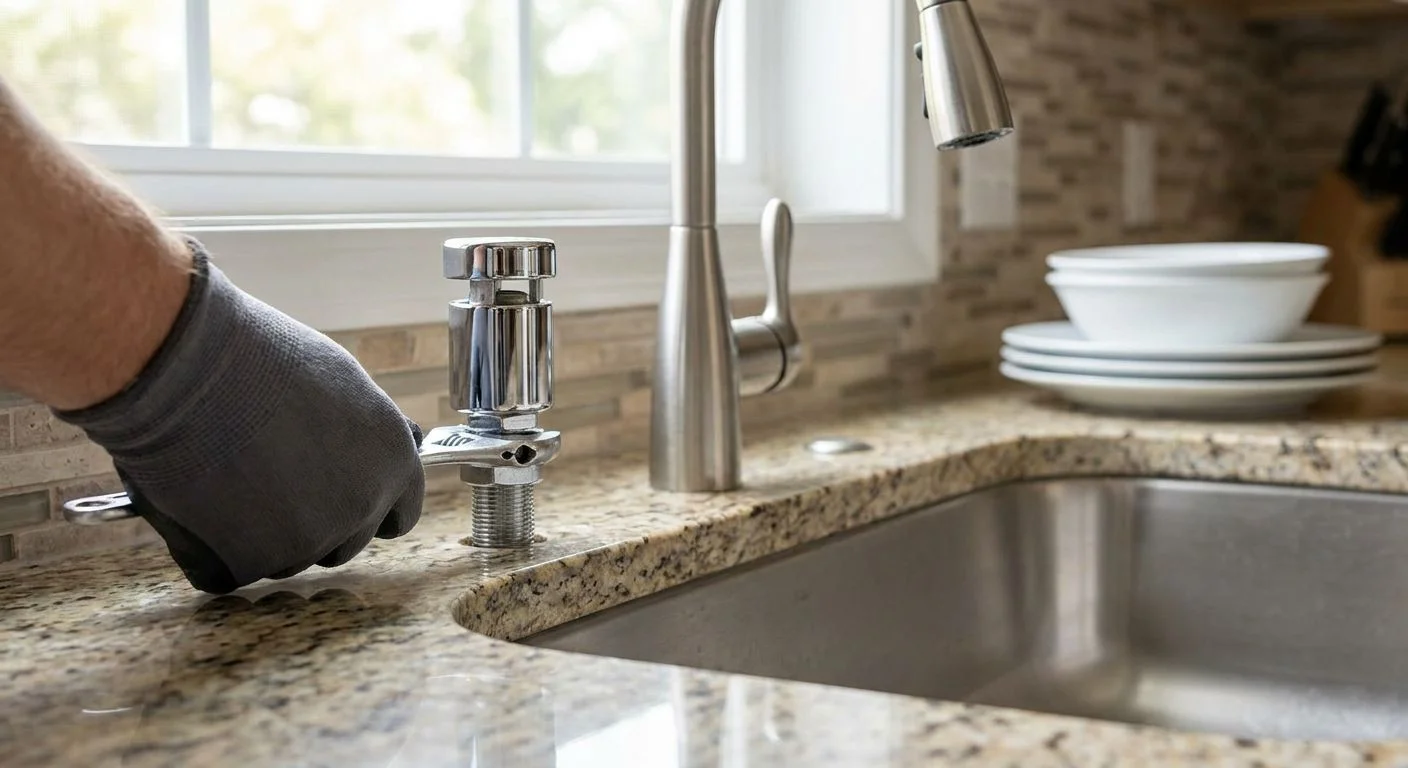
Kitchen Sink Air Gap Installation for Dishwashers 2026
August 27th, 2026
A dishwasher drain line has to discharge through a code-approved air gap or high loop, and picking the wrong method leaves you failing inspection or scrubbing backed-up dishwater out of your sink. Here's how to choose the right kitchen sink air gap installation for your setup in 2026 and what actually holds up over years of hard-water use in Northern Utah homes.
- Deck-mounted chrome air gaps are the code-safe pick for kitchen sink air gap installation in most Utah jurisdictions in 2026 — buy this if you’re remodeling.
- High-loop routing is a workaround, not a fix; many local plumbing inspectors won’t sign off on it — Consider only as a temporary measure.
- Air gaps paired with a garbage disposal knockout plug are the cleanest retrofit for kitchens with disposals — Buy for remodels.
- Skip decorative or oversized caps that don’t clear the sink’s flood-level rim by at least 1 inch — that’s a code failure waiting to happen.
Who this is for
This guide is for homeowners installing a new dishwasher, remodeling a kitchen, or buying an older Northern Utah home where a home inspector flagged a missing or improperly mounted air gap. It's also for landlords bringing a rental up to code before a new tenant moves in. If you're comparing a proper air gap against a high-loop workaround, or you inherited a setup from a previous owner and don't know if it passes muster, this is written for you. Licensed plumbers at Expert Services see all three failure modes weekly: no air gap at all, an air gap mounted too low, and a high loop that's kinked flat under the sink.
Why this matters
A dishwasher pumps used water — food particles, grease, detergent — through a drain hose that ties into your sink drain or garbage disposal. Without a physical air gap between that drain line and the dishwasher, a clogged or slow kitchen drain can siphon dirty water backward into the dishwasher tub. The International Plumbing Code, Section 807.3, addresses this directly: dishwasher waste has to discharge through an air gap or an approved alternative. Skip it and you're not just risking a failed inspection — you're risking contaminated dishwater sitting in your dishwasher after every cycle.
What to look for in kitchen sink air gap installation for dishwashers
Local code compliance
Utah building departments enforce the IPC with local amendments, and several Wasatch Front jurisdictions require a visible air gap rather than accepting a high loop as equivalent. Before you buy anything, confirm which standard your city inspector is checking against — this single detail decides whether the rest of your purchase matters.
Mounting location and hole availability
Most air gaps mount through a spare hole in the sink deck or countertop, the same knockout often used for a soap dispenser or sprayer. If your sink doesn't have a fourth hole, you're either drilling the countertop or mounting the air gap through the countertop itself near the faucet — a bigger job than a straight swap.
Minimum height above the flood rim
Code requires the air gap's flood-level rim to sit at least 1 inch above the sink's flood-level rim. That's not a suggestion — it's the number an inspector measures with a tape. A unit that looks fine on the shelf can still fail if your counter is thick or your sink is deep.
Flow capacity matched to your dishwasher's pump
An undersized air gap chokes drainage and leaves standing water in the dishwasher tub after the cycle ends. Match the barb sizes on the air gap (typically 7/8-inch inlet, 1-inch outlet) to your dishwasher's drain hose and disposal or drain tailpiece.
Material and hard-water resistance
Chrome-plated brass holds up against Utah's hard water far better than painted zinc alloy, which pits and corrodes within a few years under mineral-heavy water. If your home already shows scale buildup on faucets, that's your answer on material.
Clog access
Every air gap needs a removable cap so you can clear debris without pulling the whole unit. Units with a screw-off or snap-off cap you can service in under a minute beat ones that require disassembling the drain line.
Top picks for kitchen sink air gap installation
Deck-mounted chrome air gap — the code-safe pick. This is the standard cylindrical air gap mounted through a spare sink or countertop hole, with the required 1-inch clearance above the flood rim built into the design. It satisfies IPC 807.3 in jurisdictions that require a visible air gap rather than a high loop, and the removable cap makes clog checks a five-minute job. Verdict: Buy — this is the default answer for anyone facing an inspection in 2026.
High-loop drain routing — the budget workaround. Instead of a physical air gap device, the dishwasher drain hose is looped up and secured as high as possible under the counter before connecting to the disposal or drain tailpiece, relying on gravity and elevation instead of an open air break. It costs nothing beyond a zip tie or hose clamp, but plenty of Utah inspectors won't accept it as a substitute for a listed air gap, and it does nothing to stop siphoning if the loop sags over time. Verdict: Consider only as a stopgap before a code-required upgrade, never as a permanent fix during a remodel or resale.
Air gap through a garbage disposal knockout — the remodel pick. When a kitchen remodel includes a new disposal, the dishwasher drain routes into the disposal's dedicated inlet, and the air gap mounts through the sink deck alongside it, keeping both connections clean and code-visible in one pass. This is the setup most plumbers spec during a full garbage disposal installation because it avoids retrofitting a second hole later. Verdict: Buy if you're already swapping the disposal — doing both at once saves a second under-sink visit.
Retrofit air gap through an unused dispenser hole. Older sinks sometimes have a capped hole left from a removed soap or lotion dispenser, and that hole is often the right diameter for a standard air gap without any drilling. It's the cheapest path to code compliance for a sink that already has the hole, but it only works if the hole lines up with your countertop's flood-rim clearance. Verdict: Consider — check the hole size and height before buying, since not every dispenser hole clears the 1-inch minimum.
What to avoid
- Decorative or novelty caps that don't publish a flood-rim clearance spec. If the packaging doesn't state the air gap meets the 1-inch minimum, assume it doesn't and skip it.
- Reusing a high loop after a remodel raises your counter height. A loop that cleared the code minimum before a counter swap may sag or sit too low afterward — recheck it, don't assume it still works.
- Air gaps with no accessible cap. If clearing a clog means pulling the entire unit and disassembling the drain line, you'll avoid maintenance until it backs up into the sink.
“If the dishwasher backs up into the sink instead of draining clean, the high loop isn’t holding backflow anymore.”
Verdict comparison
| Method | Code Compliant (most UT jurisdictions) | Clog Access | Best For | Verdict |
|---|---|---|---|---|
| Deck-mounted chrome air gap | Yes | Easy — removable cap | Inspections, resale | Buy |
| High-loop routing | Often not accepted | N/A | Temporary stopgap | Consider |
| Air gap + disposal knockout | Yes | Easy | Full kitchen remodels | Buy |
| Retrofit through dispenser hole | Yes, if height clears | Easy | Sinks with a spare hole | Consider |
Need the air gap installed right the first time
Licensed plumbers handle code-compliant dishwasher air gap installs across Northern Utah.
FAQ
Is a kitchen sink air gap required by code in Utah?
Most Northern Utah jurisdictions enforce the International Plumbing Code section 807.3, which requires a dishwasher drain to discharge through an air gap or an approved alternative. Some cities accept a high loop; many inspectors in 2026 still ask for a visible air gap on new installs and remodels.
Can I install a dishwasher without an air gap?
You can run a high loop instead of a physical air gap in jurisdictions that accept it, but without either method the dishwasher risks siphoning dirty drain water backward during a clog. Check with your local building department before skipping the air gap entirely.
How high does an air gap need to sit above the sink?
Code requires the air gap’s flood-level rim to sit at least 1 inch above the flood-level rim of the sink it’s mounted in. A unit that doesn’t clear this measurement fails inspection regardless of how it looks.
Why is my air gap leaking or gurgling?
A gurgling or overflowing air gap almost always means a clog downstream in the disposal inlet or drain line, not a problem with the air gap itself. Pull the cap, clear the barrel with a bottle brush, and check the disposal’s dishwasher knockout plug was actually removed.
Is a high loop as good as an air gap?
A high loop relies on elevation and gravity rather than an open air break, and it’s less reliable long-term than a listed air gap device. Many Utah inspectors won’t accept it as equivalent, especially on new construction or during a sale.
Does a garbage disposal need a special connection for the dishwasher?
Yes — disposals have a dedicated inlet nipple with a knockout plug that must be removed before connecting the dishwasher drain hose. Forgetting to knock out that plug is one of the most common reasons a new dishwasher won’t drain.
What size hole does a kitchen sink air gap need?
Most standard air gaps mount through a 1 3/8-inch hole, the same size used for soap dispensers or sprayer bases on many kitchen sinks. If your sink lacks a spare hole, mounting through the countertop is the alternative, which is a bigger job.
How often does an air gap need cleaning?
Check it whenever the dishwasher drains slowly or you notice water pooling near the cap during a cycle. A quick cap removal and rinse handles most buildup, and hard water areas in Utah tend to need this more often than soft-water regions.
One last thing
The most overlooked failure point isn't the air gap itself — it's the disposal knockout plug. Plenty of dishwasher backups blamed on a bad air gap trace back to an installer who never punched out that inlet nipple, leaving the drain hose connected to a dead end. Check that plug before you replace anything upstream.
Related guides
- Faucet repair for leaking kitchen sinks
- GFCI outlet installation for kitchens and bathrooms
- Hydro jetting for stubborn drain clogs