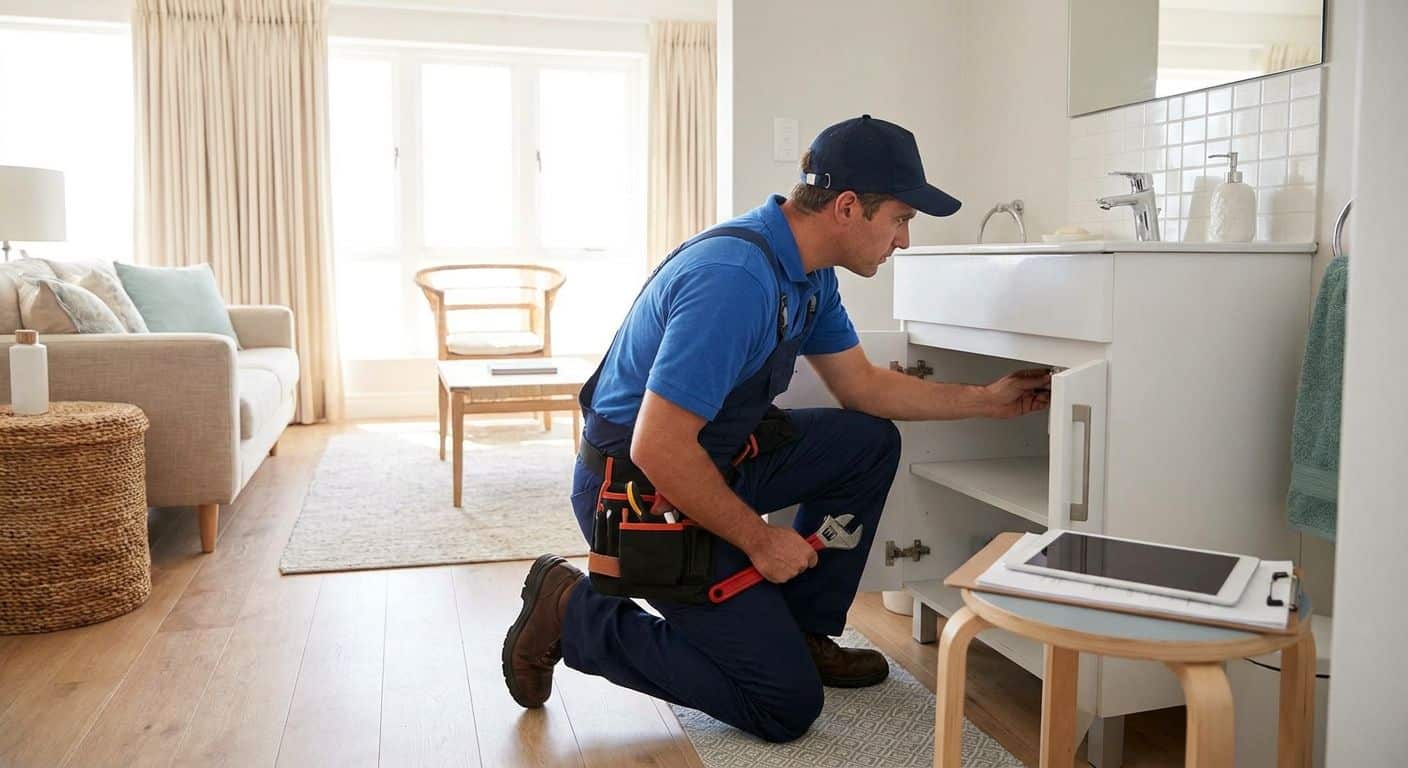
Plumbing Inspection for Airbnb Hosts: 2026 Checklist
August 27th, 2026
Short-term rental guests use plumbing harder than any homeowner ever will, and a busted water heater during a booked weekend costs you a refund, a bad review, and a same-day service call.
- A plumbing inspection for Airbnb hosts should cover water heater capacity, shutoff valve access, and drain clearance before every high-turnover season.
- Sewer camera inspection catches root intrusion and cast iron corrosion that a visual walkthrough misses entirely.
- A plumbing maintenance plan for landlords beats reactive repair calls once you’re running back-to-back bookings.
- Skip the DIY under-sink glance — Expert Services recommends a licensed inspection at least twice a year for active rentals in Northern Utah.
Why this matters
A vacancy home plumbing check and a short-term rental plumbing check are not the same job. Your Airbnb runs through 3-6x the water heater cycles of a single-family home occupied by one household, and every checkout is a stress test on toilets, drains, and shutoff valves that guests have never touched before.
Most hosts find out about a failing water heater at 11pm on a Friday, mid-stay, from a guest message. A plumbing maintenance plan for landlords catches that failure two weeks earlier, during a scheduled visit, before it becomes a refund.
Utah's hard water and freeze-thaw cycles add a second layer of risk on top of guest-turnover wear. A property built before 2000 with galvanized or cast iron drain lines is already running on borrowed time, and Airbnb-level usage shortens that clock.
Who this is for
This checklist is built for hosts running one to a handful of short-term rental units across Salt Lake County, Davis County, and Utah County — properties booked through Airbnb, Vrbo, or direct booking sites, where a plumbing failure during a stay means a refund, a 1-star review, and a same-day emergency call. If you self-manage or use a co-host, you need a system, not a hunch, for knowing what's about to fail.
What to look for in a plumbing inspection for Airbnb hosts
Water heater capacity and age
A water heater sized for a family of four struggles when four separate groups cycle through in a month, each running back-to-back showers on turnover day. Anything over 8-10 years old is a liability during peak booking season — check the manufacture date on the tank label, not just when you moved in.
Shutoff valve accessibility and labeling
Guests will never find your main shutoff valve during a leak, and neither will your cleaner if it's buried behind storage bins. Every unit needs a labeled, accessible valve and a laminated instruction card near the water heater — see how to shut off your home's main water valve for the exact steps to post.
Drain line clearance
High guest turnover means more hair, grease, and foreign objects going down drains than any single household produces. A line that's 60% clogged still drains fine for one family — it backs up completely after three consecutive checkouts in a week.
Toilet reliability
A running toilet wastes water silently for days between cleanings, and a flapper that's about to fail will fail on someone else's stay, not yours. This is the single most common plumbing complaint hosts report, and it's usually a $20 part ignored for months.
Water pressure consistency
Guests notice weak shower pressure immediately and mention it in reviews. Inconsistent pressure across units — strong in the kitchen, weak upstairs — usually points to a partially closed valve or sediment buildup that gets worse with heavier use.
Backflow and irrigation safety
If your rental has a yard, patio, or outdoor kitchen for guest use, a backflow preventer keeps irrigation water from contaminating your potable supply. This matters more on properties with automatic sprinklers guests might accidentally trigger or override.
Top picks: what to inspect and fix first
The workhorse — water heater tune-up. Sediment flushing and anode rod checks add years to a tank that's cycling through 4-6 guest turnovers a month. A tank running past 10 years with no service history is a Buy — get it inspected or replaced before your next booking wave, detailed in water heater repair for rental properties. Verdict: Buy.
The preventive move — sewer camera inspection. Root intrusion and cracked clay or cast iron lines don't show symptoms until a backup happens mid-stay, and by then you're comping a night and calling for emergency service. A sewer camera inspection run once a year on properties over 20 years old catches problems 6-12 months before failure. Verdict: Buy.
The emergency prep — shutoff valve labeling and access. This costs almost nothing and takes under an hour, but it's the difference between a guest calling you calmly versus a flooded unit by the time you arrive. Every rental needs this regardless of age or budget. Verdict: Buy.
The safety net — an emergency plumbing plan for the property. Guests don't know your plumber's number, and 2am calls to your personal cell aren't sustainable past your second listing. Emergency plumbing for rental property landlords covers what a same-day response plan should include. Verdict: Buy.
The wildcard — skipping the maintenance plan and hoping. Some hosts run reactive-only, fixing things as guests report them. It works until it doesn't, usually during your highest-revenue week of the year. Once you're running more than one unit, a standing maintenance plan (mentioned above) replaces this gamble with a schedule. Verdict: Skip the reactive-only approach past one property.
What to avoid
- A quick visual walkthrough instead of a real inspection. Looking under sinks for obvious leaks misses slab leaks, partial clogs, and corroding supply lines that only show up under camera or pressure testing.
- Ignoring the crawlspace or basement because it's inconvenient. This is where polybutylene pipe, galvanized supply lines, and early-stage leaks actually live in Utah homes built before the mid-1990s.
- Treating one clean stay as proof the plumbing is fine. A system can handle one guest group and still fail on the fourth consecutive turnover of the month — inspection frequency matters more than any single result.
Book a rental property plumbing inspection
Get water heater, drain, and shutoff checks done before your next booking wave.
Verdict comparison
| Inspection item | Frequency | Cost of ignoring it | 2026 verdict |
|---|---|---|---|
| Water heater tune-up | Every 6-12 months | Mid-stay failure, refund + emergency call | Buy |
| Sewer camera inspection | Annually (homes 20+ years) | Backup during a booked stay | Buy |
| Shutoff valve labeling | One-time, check yearly | Guest-caused flood damage | Buy |
| Toilet flapper/running check | Every cleaning turn | Silent water waste, higher bill | Buy |
| Reactive-only repair model | N/A | Unpredictable downtime, lost bookings | Skip past 1 unit |
FAQ
How often should Airbnb hosts get a plumbing inspection?
Active short-term rentals need a plumbing inspection at least twice a year, and quarterly if the property has cast iron, clay, or galvanized pipe original to a pre-1990s build. Peak booking season is the worst time to discover a failing water heater, so schedule inspections before spring and before the holiday travel surge.
What plumbing problems are most common in short-term rentals?
Running toilets, weak water heater recovery, and slow drains from guest-added hair and grease top the list. High turnover multiplies wear that a single household spreads out over months into a matter of weeks.
Is a sewer camera inspection worth it for a rental property?
Yes, especially on homes over 20 years old with clay or cast iron lines, because root intrusion and pipe corrosion give no warning before a backup happens. A camera inspection run annually catches these issues 6-12 months before failure during a guest stay.
How much does a plumbing inspection cost for a rental property?
Costs vary by property size and pipe age, so check current pricing directly with a licensed plumber for an accurate quote. A standing maintenance plan for landlords often costs less over a year than one emergency after-hours call.
What should hosts do if a guest reports a plumbing emergency?
Have a labeled main shutoff valve and a posted emergency contact number in every unit before the first booking. A same-day response plan with a licensed plumber prevents a single leak from turning into days of lost bookings.
Do older Utah homes need more frequent plumbing checks for Airbnb use?
Yes — homes with polybutylene, galvanized, or cast iron pipe from before the mid-1990s fail faster under guest-turnover volume than newer PEX systems. Quarterly checks are reasonable for these properties once they’re in active rental use.
Can a bad water heater hurt Airbnb reviews?
Cold showers and weak hot water recovery are among the most-mentioned complaints in short-term rental reviews. A water heater sized and maintained for guest-level usage prevents this before it costs you a star rating in 2026 bookings.
One last thing
The cheapest fix on this entire list — labeling and clearing access to the main shutoff valve — is also the one most hosts skip, and it's the single item that turns a plumbing emergency from a flooded unit into a guest who calmly turned a handle and texted you a photo.
Related guides
- Plumbing maintenance plans for landlords
- Emergency plumbing for rental property landlords
- Water heater repair for rental properties
- Sewer camera inspection before buying a home
- How to shut off your home's main water valve in an emergency