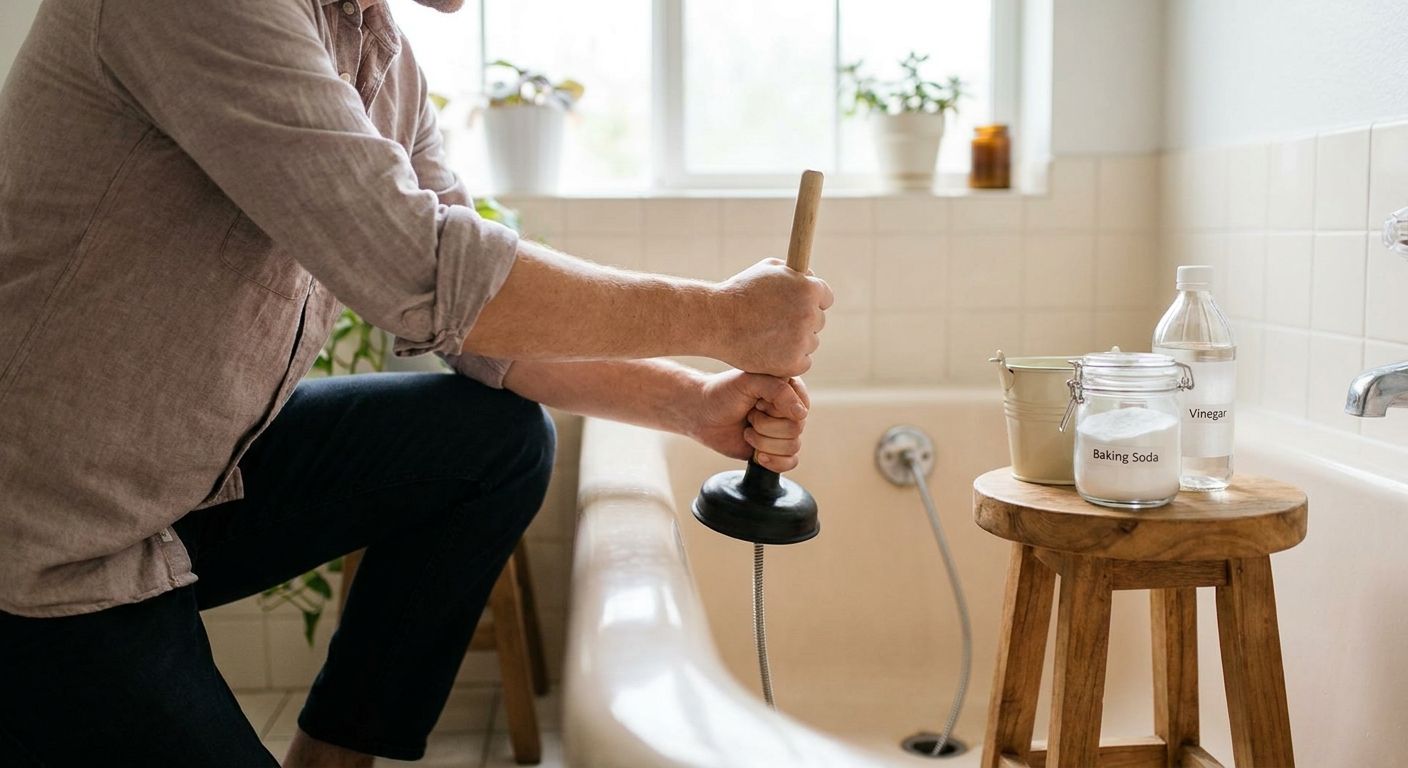
Unclog a Bathtub Drain Without Chemicals (2026 Guide)
August 28th, 2026
A slow bathtub drain in 2026 rarely needs a bottle of chemical cleaner — a plunger, a cheap plastic zip-it tool, and about 20 minutes clear most hair-and-soap clogs on the first try.
- Boiling-hot water plus dish soap loosens soap-scum clogs in under 10 minutes without chemicals.
- A $3 zip-it tool pulls hair clogs out in one pass; that beats liquid drain cleaner for bathtubs.
- How to unclog a bathtub drain without chemicals starts with pulling the stopper, not pouring anything down it.
- Baking soda and vinegar cuts grease film but won’t clear a solid hair mass on its own.
- A clog that returns within a week on an older Utah home usually means buildup inside the pipe, not the trap.
Why this matters
Most bathtub clogs aren't grease or food waste — they're hair wrapped around the stopper mechanism, bound together with soap scum and skin oil. That combination doesn't dissolve well in water alone, and it also doesn't need sodium hydroxide to break up. Chemical drain cleaners heat up inside the pipe, and in homes with cast iron pipes that heat and corrosion speeds up pipe failure that's already been building for decades. Skip the chemicals and you protect the pipe while still clearing the clog.
In 2026, most bathtub drains still use a trip-lever or push-pull stopper, and both trap hair the same way. The fix is mechanical, not chemical, in nearly every case.
What you'll need
- A screwdriver (Phillips, usually) to remove the overflow plate or stopper
- A sink plunger (the flat-cup kind, not the flanged toilet plunger)
- A plastic zip-it tool or a straightened wire coat hanger
- A wet/dry shop vacuum, if you have one
- Baking soda and white vinegar
- An old towel and rubber gloves
- Knowledge of where your main water valve is, in case a step goes sideways and water starts backing up faster than expected
The steps
1. Pull the stopper and clean it by hand
Most trip-lever and push-pull stoppers lift straight out or unscrew with a quarter turn. Pull it and you'll usually find the actual clog wrapped right around it — a solid mat of hair and soap film. Clearing this one piece solves roughly half of all bathtub slow-drain complaints without touching the pipe at all. Common mistake: forcing a lift-and-turn stopper without checking which type it is first, which can snap the linkage.
2. Fish the drain with a zip-it tool
Feed a plastic zip-it tool (barbed plastic strip, sold at any hardware store) 8-10 inches down the drain opening, twist it, and pull. It grabs hair the barbs are designed for and drags the clog straight up. Repeat 3-4 times, rotating the tool slightly each pass to hit different sides of the pipe. Common mistake: yanking too fast — a slow, steady pull keeps the hair wrapped on the barbs instead of shredding it loose inside the pipe.
3. Pour boiling-adjacent hot water down the drain
Heat water to roughly 140°F (just under a rolling boil) and pour it directly down the drain in two stages, waiting 30 seconds between pours. Heat softens soap scum and grease film enough for the next steps to actually reach the clog. Common mistake: using a full rolling boil in a bathtub with PVC drain pipe — that much heat can warp plastic fittings over time.
4. Run the baking soda and vinegar mix
Pour 1 cup of baking soda down the drain, follow with 1 cup of white vinegar, and cover the drain opening with a wet cloth to trap the fizzing reaction inside the pipe instead of letting it vent back up. Let it sit 15 minutes, then flush with another round of hot water. This step cuts remaining grease film and soap residue that the zip-it tool couldn't grab. Common mistake: skipping the cloth cover — without it, most of the fizzing pressure escapes up through the drain instead of working against the clog.
5. Plunge the drain
Block the overflow plate with a wet rag (this is the part people skip, and it's why plunging a tub often fails), fill the tub with 2-3 inches of water to create a seal, and plunge with 8-10 firm strokes. The overflow plate is a second opening that lets air escape instead of pressure building against the clog, so sealing it first matters more than the plunging itself. Common mistake: plunging with the overflow open — you'll get splashing and almost no suction against the actual clog.
6. Vacuum the clog out, if you have a wet/dry shop vac
Set the shop vac to liquid mode, seal a rag around the hose nozzle at the drain opening for suction, and run it for 30-60 seconds. This pulls loosened hair and debris straight up rather than pushing it further down the pipe, which is the opposite of what plunging does. Common mistake: running a standard vacuum (not wet/dry rated) — water damages the motor immediately.
7. Re-test the drain speed
Run the tub faucet for 60 seconds and time how fast the water clears. A drain that empties in under 20 seconds is fixed. Anything slower means residue remains further down the pipe than these tools can reach.
Still slow after these steps?
A licensed plumber can clear it in one visit, no chemicals used.
Troubleshooting
- Water backs up into the tub instead of draining at all. The clog sits past the trap. Stop pouring liquids down the drain and try the zip-it tool deeper, or move to a drain snake.
- The clog clears for a day, then slows again. Soap scum is re-coating the pipe walls. Run the baking soda and vinegar treatment weekly for a month rather than as a one-time fix.
- Gurgling sounds after you flush a toilet elsewhere in the house. That's a venting issue, not a simple bathtub clog, and it points toward the branch line. Hydro jetting clears buildup that hand tools can't reach.
- The clog is at the overflow drain, not the main drain. Remove the overflow plate with a screwdriver and fish that opening separately — it's a second hair trap most people never check.
- Water drains fine but smells sour. That's bacterial buildup in the P-trap, not a clog. The baking soda and vinegar step in this guide handles it; a repeat treatment monthly keeps it from coming back.
- The tub is in a home built before 1975 and clogs happen often. Cast iron and clay drain lines corrode from the inside over decades, narrowing the pipe diameter permanently. No DIY method fixes that — it's a pipe condition, not a clog.
Tools and resources
- Zip-it tool or plastic drain snake (under $5 at any hardware store)
- Wet/dry shop vacuum, if clearing multiple drains in the house
- Baking soda and distilled white vinegar
- A screwdriver set for stopper and overflow plate removal
- For anything past the trap, hydro jetting uses pressurized water to scour the full length of a pipe without chemicals or digging
What to do next
If the drain still runs slow after all seven steps, or if it's the third time this year, the problem is deeper in the line than a zip-it tool or plunger reaches. That's especially true in older Northern Utah homes where cast iron drain pipe has been corroding since before 1980. A camera inspection identifies exactly where the buildup or damage sits before anyone recommends a repair.
FAQ
How do I unclog a bathtub drain without chemicals?
Remove the stopper, clear visible hair by hand, then use a zip-it tool followed by hot water, baking soda and vinegar, and a sealed plunge. Most hair-and-soap clogs clear within 20 minutes using this sequence.
Does baking soda and vinegar actually work on bathtub clogs?
It works on soap scum and grease film but rarely clears a solid hair mass by itself. Pair it with a zip-it tool or plunger for a full clog rather than relying on it alone.
Is boiling water safe to pour down a bathtub drain?
A full rolling boil can warp PVC fittings over repeated use. Water around 140°F clears soap scum just as effectively without that risk.
How much does it cost to have a plumber clear a bathtub drain in 2026?
Costs vary by clog location and pipe material, and pricing is best confirmed directly with a licensed plumber for your specific drain. Recurring clogs on old cast iron pipe typically cost more to resolve than a simple hair clog near the stopper.
Why does my bathtub drain slowly even after I clean the stopper?
Soap scum coats the pipe walls further down than a stopper cleaning reaches. Try the hot water and baking soda and vinegar steps together, and repeat weekly if the tub sees heavy daily use.
Can a plunger really unclog a bathtub?
Yes, but only if the overflow plate is sealed with a wet rag first. Without sealing it, air escapes through the overflow opening and the plunger loses most of its suction.
What’s the difference between a zip-it tool and a drain snake?
A zip-it tool is a short plastic barbed strip good for hair within 10-12 inches of the opening. A drain snake is a longer flexible cable that reaches further down the pipe for tougher or deeper clogs.
When should I stop DIY methods and call a plumber?
Call a plumber when a clog returns within a week, when water backs up instead of draining, or when gurgling shows up in other fixtures. Those signs point to a pipe issue past what hand tools reach.
One last thing
The overflow plate behind the tub faucet catches almost as much hair as the drain itself, and most homeowners never open it. Pull those two screws once a year, even when the drain seems fine, and you'll catch the next clog before it forms.
Related guides
- Drain cleaning for homes with cast iron pipes
- Hydro jetting for stubborn drain clogs
- How to shut off your home's main water valve in an emergency
- How to fix low water pressure at home