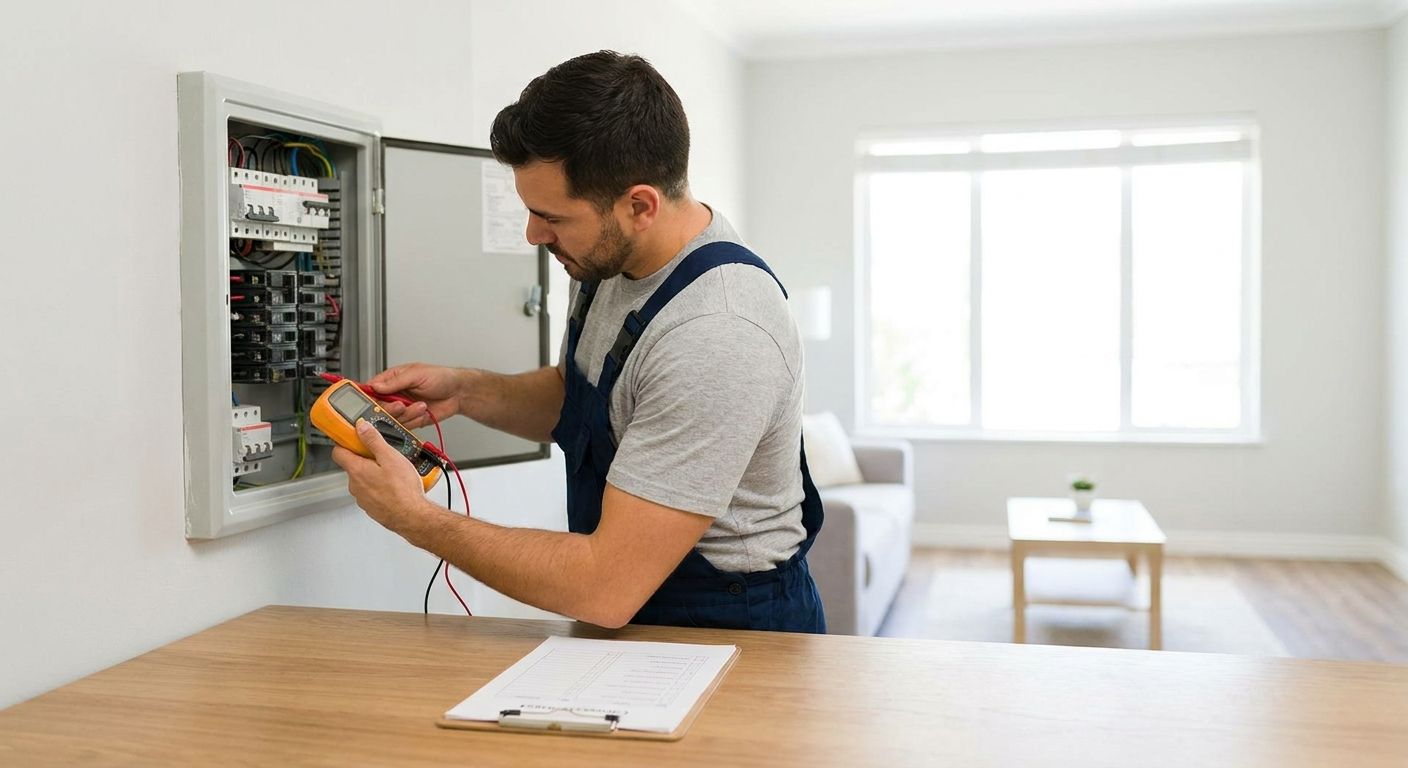
Electrical Safety Inspection for Landlords: 2026 Checklist
September 2nd, 2026
Landlord electrical safety inspections confirm a rental's wiring, panel, and outlets meet code before a new tenant gets keys, catching the hazards that turn into liability claims after move-in. A single-family rental and a fourplex don't face the same risks — older Northern Utah housing stock adds wiring-type checks that newer construction skips entirely.
- Electrical safety inspection for landlords should cover every outlet, GFCI, and the panel before a 2026 lease starts.
- Homes wired before 1990 need a wiring-type check — aluminum and knob-and-tube wiring raise fire risk.
- GFCI protection is required in kitchens, bathrooms, garages, and outdoor outlets under current code.
- A licensed electrician catches panel and wiring defects a landlord’s walkthrough misses.
- Skipping the panel check is the most common mistake landlords make before move-in.
Why electrical safety inspections matter for landlords
A tenant who gets shocked by a bad outlet or loses power because of a corroded panel doesn't file a maintenance ticket — they file a claim. Landlords carry that liability the moment keys change hands, and most rental insurance policies expect documented proof that the electrical system was checked before occupancy.
Utah's rental stock skews older in cities like Salt Lake City, Ogden, and Provo, where homes built before 1970 often still carry original panels or partial rewires done without permits. A pre-move-in electrical safety inspection is the cheapest insurance a landlord buys in 2026 — it's a service call, not a renovation.
Property managers running multiple units face this on a recurring basis, not a one-time event. Building a standard checklist into every turnover keeps the process consistent, whether it's a single duplex or a portfolio managed through plumbing, HVAC, and electrical maintenance for property managers.
How to run an electrical safety inspection before tenant move-in
1. Pull the property's electrical history and permits
Start with paperwork before touching a single outlet. Knowing what's been done — and what hasn't — tells you where to look first.
- Check city or county permit records for panel upgrades or rewiring
- Review any prior home inspection or electrical inspection reports
- Ask if the property ever filed an electrical insurance claim
- Note prior tenant complaints about flickering lights, tripped breakers, or dead outlets
- Confirm the age of the home — anything built before 1970 needs closer wiring review
2. Test every outlet and switch
A visual scan misses more than it catches. Physically test each outlet in every room, including closets and exterior walls.
- Use a plug-in outlet tester to confirm correct wiring and grounding
- Check for outlets that feel warm to the touch
- Look for scorch marks or discoloration around plates
- Confirm three-prong outlets are actually grounded, not just swapped covers
- Flag any outlet that's loose or won't hold a plug securely
3. Inspect the electrical panel and breakers
The panel is where most serious problems hide, and it's the one place a rushed walkthrough skips. If the panel shows rust, double-tapped breakers, or a brand tied to known failure recalls (Federal Pacific and Zinsco panels are the two most cited), that's not a cosmetic issue.
- Look for double-tapped breakers (two wires under one screw)
- Check for rust, corrosion, or heat discoloration inside the panel
- Test whether breakers actually trip and reset
- Confirm open slots have blank covers, not exposed wiring
- Verify the panel's amperage still matches the home's actual load, especially with added appliances
If the panel raises any of these flags, an electrical panel upgrade is worth pricing out before the tenant moves in, not after a breaker fails mid-lease.
4. Confirm GFCI and AFCI protection in wet and living areas
Current code requires GFCI protection in kitchens, bathrooms, garages, laundry rooms, and outdoor outlets. Older rentals built before that requirement existed often never got retrofitted.
- Press the test button on every GFCI outlet and confirm it trips power
- Confirm GFCI coverage exists at kitchen counters and bathroom vanities
- Check garage and exterior outlets for GFCI protection
- Verify laundry room outlets near water sources are protected
- Note any bedroom circuits missing AFCI protection in newer code jurisdictions
GFCI outlet installation for kitchens and bathrooms closes this gap in a single visit if the rental predates the requirement.
5. Check smoke and carbon monoxide detectors
Detectors get ignored because they're small and already installed — but a dead battery or an expired sensor is the same as no detector at all.
- Test every smoke detector's function button
- Check the manufacture date stamp; most sensors expire at 10 years
- Confirm a detector exists in every bedroom and on every floor
- Verify a carbon monoxide detector is installed near the furnace or any gas appliance
- Replace batteries in every unit even if it tested working
Multi-unit properties have their own placement rules worth reviewing under smoke detector installation for multi-family properties.
6. Look for outdated or hazardous wiring types
Homes wired before 1972 sometimes still run on aluminum branch wiring, and homes older than that may carry knob-and-tube wiring behind walls. Both raise fire risk and both are things a landlord can't fix with a screwdriver.
- Check the panel and any accessible junction boxes for aluminum-colored wire
- Look for the ceramic knobs and tubes of pre-1950s wiring in unfinished basements or attics
- Note any mix of wiring types on the same circuit
- Flag exposed splices without junction boxes
- Document any wiring you can't identify for a licensed electrician to confirm
7. Schedule a licensed inspection before signing the lease
A landlord's own walkthrough catches the obvious problems. It won't catch load calculations, panel certification, or code violations that only a licensed electrician is qualified to sign off on. Expert Services runs licensed electrical inspections across most of Northern Utah, and for a rental that's changing hands, that certification is what protects a landlord if something fails after move-in.
Get an electrical inspection before move-in
Licensed electricians serving landlords across Northern Utah.
8. Document findings and give tenants the walkthrough report
A verbal "it's fine" is worthless in a dispute. Written documentation with photos protects both the landlord and the tenant.
- Photograph the panel, every outlet tested, and all detectors
- Write a short report noting pass/fail on each item
- Have the tenant sign and date the report at move-in
- Keep a copy in the property file, not just email
- Share the report with your insurance carrier if the policy requires it
Inspection options compared
| Option | Best for | Key limitation |
|---|---|---|
| DIY visual walkthrough | Small landlords with one or two units | Misses panel defects and wiring behind walls |
| Handyman inspection | Basic outlet and switch testing | Not licensed to certify code compliance or open the panel |
| Licensed electrician inspection | Any rental before move-in, older homes, insurance requirements | Requires scheduling a service call |
| Home warranty inspection | Landlords already bundling a warranty plan | Usually limited to appliance coverage, not full code review |
| Video/photo self-audit | Remote landlords managing from out of state | Can't test load or safely open the panel |
Verdict: for any rental built before 1990, a licensed electrician inspection is the only option that catches panel and wiring hazards a visual check misses.
Common mistakes landlords make before move-in
- Skipping the panel because it "looks fine" — double-tapped breakers and corrosion don't show from the outside.
- Assuming installed smoke detectors still work — a 10-year sensor past its date is functionally dead.
- Glossing over wiring type in pre-1970 homes — aluminum and knob-and-tube wiring need documentation, not a glance.
- Handing over keys before confirming GFCI outlets trip — a dead GFCI in a bathroom is a liability the landlord owns, not the tenant.
- Skipping written documentation — no signed report means no protection in a damage or injury dispute later.
“If a breaker won’t reset during the walkthrough, don’t hand over keys until a licensed electrician clears the panel.”
FAQ
What’s included in an electrical safety inspection for landlords?
An electrical safety inspection for landlords covers the panel, every outlet, GFCI and AFCI protection, wiring type, and smoke and carbon monoxide detectors. A licensed electrician also checks for double-tapped breakers and recalled panel brands.
How often should landlords inspect rental electrical systems?
Inspect at every tenant turnover at minimum, and add a standalone check every few years for older properties. Homes with aluminum or knob-and-tube wiring warrant more frequent review.
Is a landlord legally required to inspect electrical systems before move-in?
Requirements vary by city and lease type, but habitability standards generally require a safe electrical system regardless of a formal inspection mandate. Documented inspections protect landlords if a dispute or injury claim comes up later.
How much does an electrical inspection cost for a rental property?
Cost depends on the home’s size, age, and panel condition, so get a quote directly from a licensed electrician rather than budgeting off a generic number. Older homes with wiring issues typically take longer and cost more than a straightforward outlet and panel check.
Can a landlord do the electrical inspection themselves?
A landlord can handle the visual walkthrough — testing outlets, checking detector dates, looking for obvious panel damage. Opening the panel, certifying code compliance, or diagnosing wiring type behind walls requires a licensed electrician.
What’s the difference between a home inspection and an electrical safety inspection?
A general home inspection covers electrical at a surface level alongside plumbing, roofing, and structure. An electrical safety inspection goes deeper into the panel, wiring type, and GFCI/AFCI compliance specifically.
How long does an electrical inspection take for a rental unit?
A single-family rental inspection typically takes one to two hours depending on square footage and panel accessibility. Multi-unit properties take longer since each unit’s outlets and detectors need separate testing.
What wiring problems are most common in older Utah rentals?
Aluminum branch wiring in homes built before 1972 and knob-and-tube wiring in homes built before 1950 are the two most common issues found in Northern Utah’s older rental stock. Both raise fire risk and typically require a licensed electrician to address.
One last thing
Northern Utah's older neighborhoods — parts of Salt Lake City, Ogden, and Provo — carry more pre-1970 housing stock than newer suburbs like Herriman or South Jordan. If a rental falls in that older bracket, put the panel and wiring-type check first on the list in 2026, not last, since that's where aluminum wiring and undersized panels actually show up.
Related guides