Best Water Filtration Systems for Well Water in 2026
September 8th, 2026
Northern Utah well water routinely carries iron, sediment, sulfur odor, and mineral hardness that municipal water never touches — the filtration system that fixes one of those problems usually does nothing for the others, so picking a unit off a shelf without knowing what's in your water wastes money twice.
- Whole-house iron and sediment filtration is the best overall pick for most Northern Utah well water in 2026.
- The best water filtration systems for well water match the equipment to lab results, not guesswork.
- Reverse osmosis solves drinking water taste and purity; it does not treat whole-house iron or hardness.
- UV disinfection is non-negotiable the moment a water test shows coliform bacteria.
- Test before you buy — a $30-50 lab panel changes which system actually makes sense.
Why this matters
Wells in the Wasatch Front and surrounding valleys pull from aquifers with wildly different mineral profiles — a well in Kaysville can run high iron while one a few miles away in Farmington tests clean for iron but high for hardness. There's no single fix that covers every Northern Utah well, which is exactly why generic "best water filter" lists from national sites miss the point.
Start with well water quality testing before spending a dollar on equipment. A lab panel tells you iron and manganese levels, hardness in grains per gallon, pH, and whether bacteria or nitrates are present — every recommendation below assumes you know those numbers first.
The best water filtration systems for well water in 2026 solve a specific contaminant, not a general worry. That's the filter for the criteria below.
What makes the best water filtration system for well water
- Contaminant match — does it target the specific mineral or organism your test found
- Whole-house vs. point-of-use coverage — protects fixtures and water heaters, or just the kitchen tap
- Flow rate impact — whether it drops water pressure at peak household demand
- Maintenance frequency — how often filters, media, or membranes need replacing
- Well pump compatibility — works with the pressure tank and pump already installed
- Backwash and drain requirements — some systems need a floor drain or extra plumbing
Well water filtration systems at a glance
| System | Best for | Standout feature | Key limitation |
|---|---|---|---|
| Whole-house iron & sediment filter | High iron and sediment | Treats every fixture in the house | Needs periodic media replacement or backwash |
| Water softener + iron filter combo | Hard water with staining | Stops scale buildup in pipes and appliances | Adds sodium or potassium to treated water |
| Reverse osmosis under-sink | Drinking water purity | Removes dissolved solids down to the tap | Only treats one or two fixtures |
| UV disinfection system | Bacteria and pathogens | Kills microorganisms with no chemicals | Does nothing for iron, hardness, or taste |
| Whole-house carbon filtration | Odor and organic taste | Removes sulfur smell and chlorine-like taste | Limited effect on iron or hardness |
| Sediment pre-filter only | Budget entry point, clear water | Cheapest way to stop grit and cloudiness | No help against iron, bacteria, or hardness |
1. Whole-house iron and sediment filter: best water filtration system for high iron well water
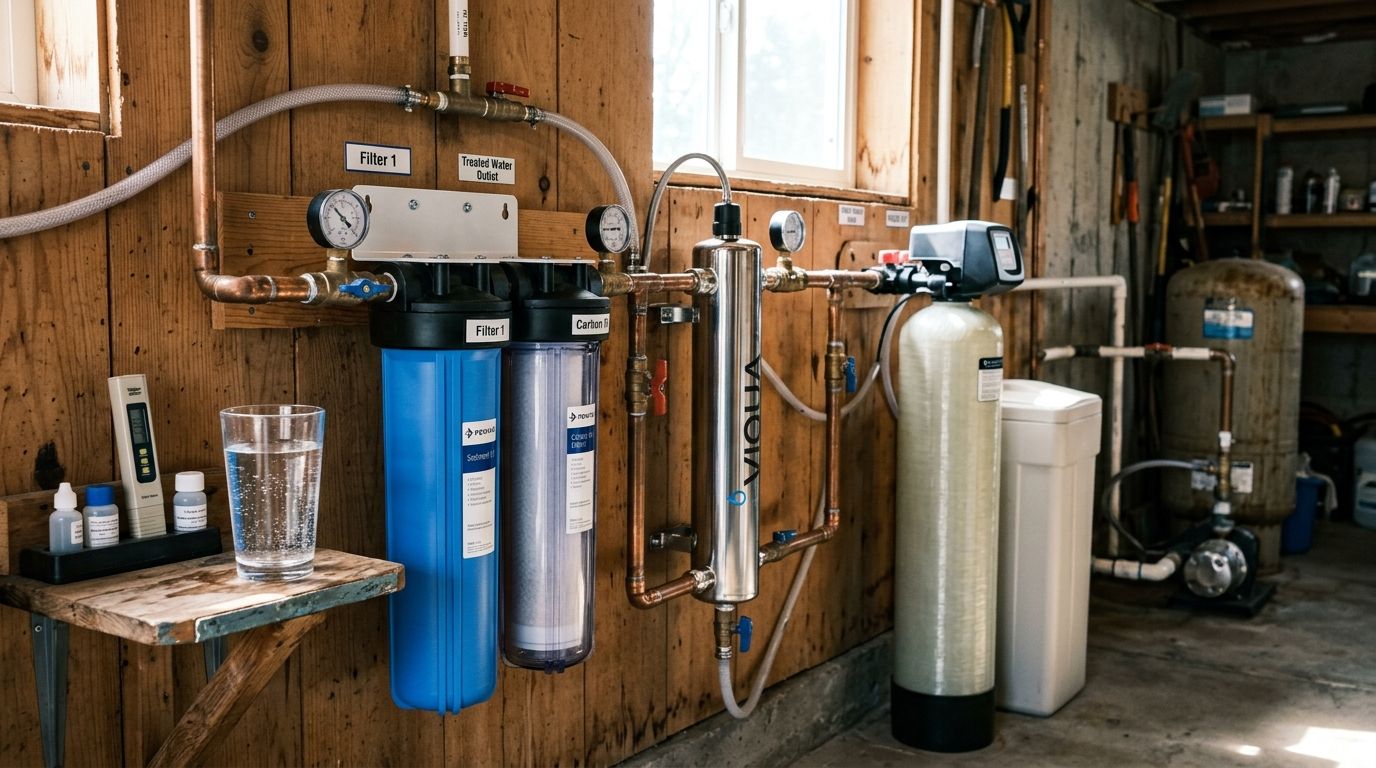
An oxidizing whole-house filter injects air or chlorine ahead of a filtration tank to convert dissolved iron into solid particles, then traps them in a media bed before water reaches any fixture. This is the most common fix Expert Services installs across Northern Utah wells because iron staining on sinks, tubs, and laundry is the single most reported complaint from well owners.
The iron and sediment filtration for Utah well water guide covers sizing by household gallons-per-day and how backwash cycles work.
Iron and sediment filter pros:
- Treats water at every fixture, not just one tap
- Handles both dissolved iron and physical grit in one pass
- Media typically lasts several years before replacement
Iron and sediment filter cons:
- Requires a drain line for backwash cycles
- Doesn't remove hardness minerals or bacteria on its own
- Undersized units lose pressure during high-demand hours
Best for: homes with visible rust staining or a lab test showing iron above 0.3 mg/L.
Verdict: Buy if your test confirms iron or heavy sediment — this is the foundation system almost every other treatment stacks on top of.
2. Water softener + iron filter combo: best water filtration system for hard water with staining
A softener swaps calcium and magnesium ions for sodium or potassium through resin beads, stopping the scale that clogs pipes and shortens water heater life. Paired with an iron filter, it handles the two most common well water complaints in one setup.
The best water softeners for large Utah households breakdown compares tank sizing for families using more water per day.
Softener combo pros:
- Eliminates scale buildup in pipes, fixtures, and appliances
- Extends water heater and washing machine lifespan
- Softer water reduces soap and detergent use
Softener combo cons:
- Adds sodium to treated water — a concern for sodium-restricted diets
- Two systems to maintain instead of one
- Doesn't address bacteria, arsenic, or nitrates
Best for: households with hardness readings above 10.5 grains per gallon plus iron staining.
Verdict: Buy for hardness above the USGS "very hard" threshold — untreated hard water shortens the life of every water-using appliance in the house.
3. Reverse osmosis under-sink system: best water filtration system for drinking water purity
Reverse osmosis pushes water through a semi-permeable membrane under pressure, stripping dissolved solids, some heavy metals, and many organic compounds down to near-distilled purity at the tap. It's point-of-use, typically installed under the kitchen sink, and doesn't touch water used for laundry, bathing, or irrigation.
Reverse osmosis pros:
- Produces the cleanest-tasting drinking and cooking water available
- Reduces dissolved solids, some pesticides, and certain heavy metals
- Compact enough for a single under-sink installation
Reverse osmosis cons:
- Wastes several gallons of water for every gallon produced
- Only treats the fixture it's installed on
- Membranes need periodic replacement to keep performance up
Best for: homeowners who've already treated iron and hardness whole-house and want the cleanest possible drinking water.
Verdict: Buy as a supplement to whole-house treatment, never as a standalone fix for the rest of the house's water.
4. UV disinfection system: best water filtration system for bacteria and pathogens
A UV system passes water past an ultraviolet lamp that disrupts the DNA of bacteria, viruses, and cysts without adding any chemicals to the water. Private wells aren't regulated or tested by a municipality, so any lab result showing coliform bacteria or E. coli makes UV treatment a safety requirement, not an upgrade.
UV disinfection pros:
- Kills pathogens instantly with no chemical residue
- Low ongoing cost — mainly an annual bulb replacement
- Works alongside any other filtration already installed
UV disinfection cons:
- Does nothing for iron, sediment, hardness, or taste
- Requires clear water upstream — sediment blocks UV light penetration
- Needs continuous electrical power to function
Best for: any well testing positive for bacteria, regardless of what other systems are installed.
Verdict: Buy immediately if a test shows any bacterial presence — this isn't optional once contamination is confirmed.
5. Whole-house carbon filtration: best water filtration system for odor and taste issues
Activated carbon media adsorbs sulfur compounds, chlorine-like tastes, and some organic contaminants as water passes through the tank. It's the go-to fix for the "rotten egg" smell that hydrogen sulfide gas causes in many Northern Utah wells.
Carbon filtration pros:
- Removes sulfur odor and musty or chemical tastes
- Improves overall water clarity and smell throughout the house
- Simple installation with no electrical or drain requirements in most setups
Carbon filtration cons:
- Limited effect on iron, hardness, or bacteria
- Media needs replacement on a set schedule to stay effective
- Heavy sediment shortens carbon media life
Best for: wells with sulfur smell or off-tastes but otherwise acceptable iron and hardness levels.
Verdict: Hold — install only after a test confirms odor is the primary issue and iron/hardness are already handled or absent.
6. Sediment pre-filter only: best water filtration system for budget-conscious basic treatment
A standalone sediment filter is a single cartridge housing that catches sand, silt, and rust particles before they reach fixtures and appliances. It's the cheapest entry point into well water treatment and often the first stage ahead of every other system on this list.
Sediment pre-filter pros:
- Lowest-cost way to stop grit reaching fixtures and water heaters
- Simple cartridge swap, no electrical or drain hookup
- Protects downstream equipment like softeners and RO membranes
Sediment pre-filter cons:
- No effect on dissolved iron, hardness, bacteria, or odor
- Cartridges need frequent replacement in high-sediment wells
- Gives a false sense of "treated" water when other contaminants are present
Best for: wells with clear test results aside from visible grit or particulate.
Verdict: Skip as a standalone system if your test shows iron, hardness, or bacteria — it only handles the physical particles, not what's dissolved.
How this list was ranked
Each system was scored against the six criteria above: contaminant match, whole-house coverage, flow rate impact, maintenance frequency, well pump compatibility, and drain requirements. Systems that only solved one narrow problem — sediment-only, carbon-only — rank lower for overall use, but keep their spot as the correct best for answer when the test results point to that specific issue.
Get your well water tested first
A lab panel determines which system on this list actually fits your water.
Which well water filtration system should you choose?
For most Northern Utah wells tested in 2026, the answer starts with a whole-house iron and sediment filter — it's the foundation almost every other treatment builds on. Add a softener if hardness tests above 10.5 grains per gallon, add UV the moment bacteria shows up on a lab result, and add reverse osmosis under the kitchen sink if drinking water taste still isn't where you want it after whole-house treatment is in place.
Don't buy a system before you test. Every recommendation on this page assumes you know your iron, hardness, and bacteria numbers — guessing wastes money on the wrong equipment twice.
FAQ
What’s the best water filtration system for well water in Utah?
A whole-house iron and sediment filter is the best starting point for most Northern Utah wells in 2026, since iron and grit are the most common issues. Add a softener, UV system, or reverse osmosis depending on what a lab test shows.
Is reverse osmosis better than a whole-house filter for well water?
Reverse osmosis produces the cleanest drinking water at a single tap but doesn’t treat the rest of the house. A whole-house filter protects every fixture; RO is a supplement, not a replacement.
How much iron is too much in well water?
The EPA secondary standard for iron is 0.3 mg/L — above that, staining and metallic taste typically become noticeable. A whole-house iron filter is the standard fix once a test confirms levels above this threshold.
Do I need both a water softener and a filtration system?
Most Northern Utah wells with both iron and hardness need both — a softener alone won’t remove iron, and an iron filter alone won’t stop scale buildup. A combo setup handles both problems in one installation.
How often should Utah well water be tested?
Private wells should be tested annually for bacteria and every few years for a full mineral panel, since well water isn’t monitored by a municipal utility. Testing after any noticeable change in taste, smell, or color is also recommended.
Can a whole-house filter remove bacteria from well water?
No — standard whole-house iron and sediment filters don’t kill bacteria. A UV disinfection system is required once a test confirms coliform bacteria or E. coli.
What does a sediment filter not remove?
A sediment filter only catches physical particles like sand, silt, and rust flakes. It does nothing for dissolved iron, hardness minerals, bacteria, or dissolved gases causing odor.
Does hard water damage pipes if left untreated?
Yes — water above the USGS "very hard" threshold of 10.5 grains per gallon builds mineral scale inside pipes and water heaters over time, restricting flow and shortening equipment life.
One last thing
The system homeowners regret buying first is almost always reverse osmosis — it's the most marketed option, but it only treats drinking water at one tap while iron and hardness keep damaging pipes and appliances throughout the rest of the house. Whole-house treatment first, point-of-use polish second, is the order that actually protects a home's plumbing in 2026.
Related guides
- How to prevent hard water damage to pipes and appliances
- Water softener installation for Utah's hard water