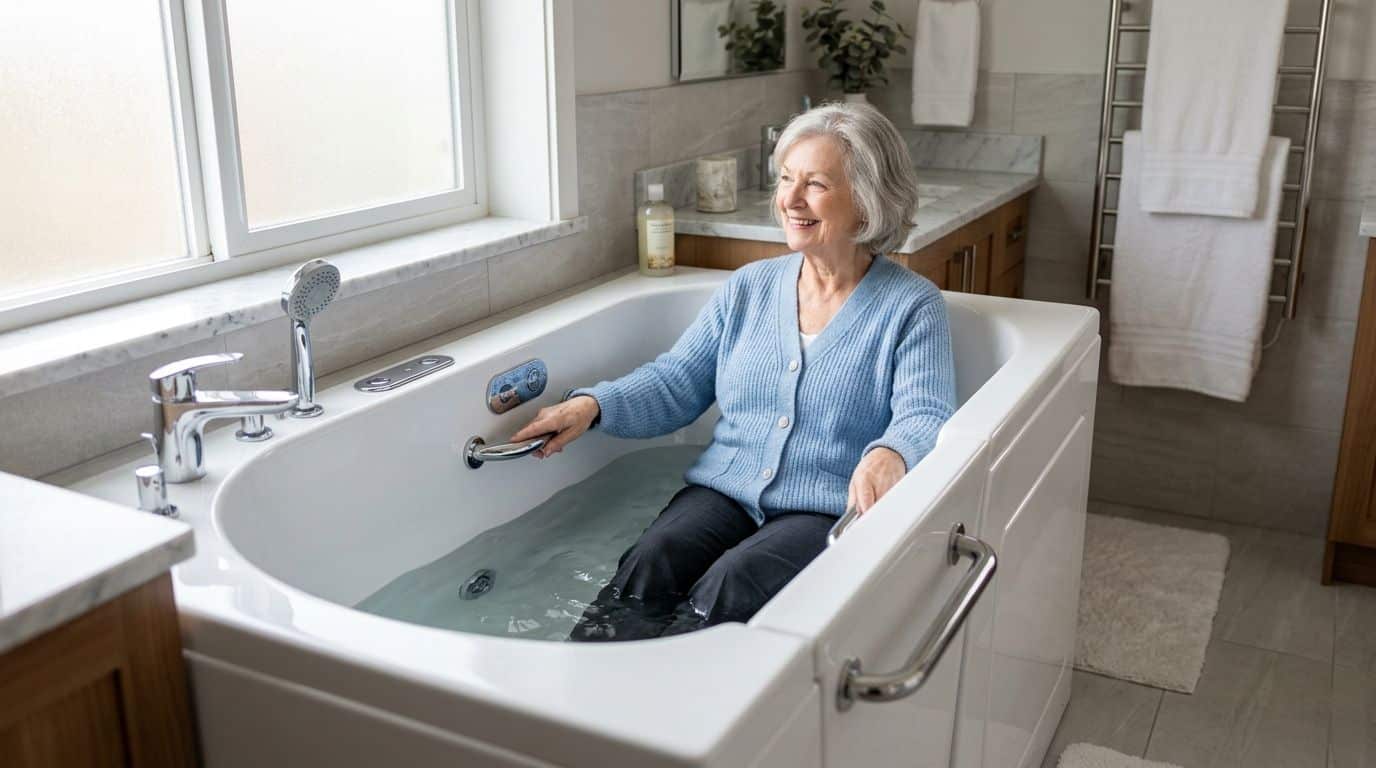
Best Walk-In Tubs for Aging in Place 2026: Ranked
September 10th, 2026
Choosing the right tub matters less than choosing the right installer, but the tub still sets the ceiling on how safe and comfortable your bathroom becomes. Best overall: Safe Step Walk-In Tub. Best for hydrotherapy: Jacuzzi Walk-In Tub. Best for compact bathrooms: Ella's Bubbles. Best for design integration: Kohler. Best for warranty-backed reliability: American Standard.
- Safe Step wins the best walk-in tubs for aging in place category overall on low-threshold entry and ADA-style seat height.
- Jacuzzi is the pick for anyone prioritizing hydrotherapy jets over soaking depth.
- Ella’s Bubbles fits bathrooms under 30 square feet where a standard tub footprint won’t work.
- Every walk-in tub on this list needs a licensed installer for the plumbing and electrical hookup — DIY installs void most manufacturer warranties.
Why this matters
Falls in the bathroom send more older adults to the emergency room than any other room in the house, and a standard tub with an 18-inch step-over is a bigger risk factor than most homeowners realize. A walk-in tub swaps that step-over for a door that opens at floor level, combined with a seat height and grab bar placement built around actual mobility limitations rather than bathtub aesthetics.
The tub itself is only half the job. Walk-in tub installation for aging in place also touches your plumbing rough-in, your water heater capacity, and in most cases your electrical circuit if the model has a pump or in-line heater. Get any of those wrong and you end up with a tub that fills slowly, drains slower, or trips a breaker the first time someone runs the jets. If you're planning this project in 2026, treat the tub and the install as one decision, not two.
What makes the best walk-in tub for aging in place
- Low-threshold door — entry height low enough for a walker or transfer bench, ideally with an inward or outward swing that doesn't block a caregiver
- ADA-appropriate seat height — a built-in seat around 17-19 inches keeps hip and knee angles safe for standing and sitting
- Fast fill and drain — a tub that takes 15+ minutes to fill defeats the purpose; look for models built around quick-fill plumbing
- Textured, non-slip flooring — smooth acrylic looks nice and is dangerous when wet
- Grab bar placement — bars sized and positioned for actual reach, not just code minimums
- Heater or hydrotherapy options — a nice-to-have for arthritis and circulation issues, not a requirement for basic safety
Walk-in tubs at a glance
| Tub | Best for | Standout feature | Key limitation |
|---|---|---|---|
| Safe Step | Full accessibility package | Low-threshold door with built-in grab bars | Larger footprint than compact models |
| Jacuzzi | Hydrotherapy and pain relief | Dual jet systems for water and air therapy | Jets add plumbing and electrical complexity |
| Ella's Bubbles | Small or narrow bathrooms | Slim-profile models built for tight footprints | Fewer hydrotherapy options at the compact size |
| Kohler | Bathroom design integration | Matches existing Kohler fixtures and finishes | Walk-in line is smaller than its standard tub catalog |
| American Standard | Long-term reliability | Backed by a national plumbing fixture manufacturer | Fewer specialty accessibility add-ons than dedicated brands |
1. Safe Step: best walk-in tub for full accessibility
Safe Step builds specifically for the aging-in-place market rather than treating accessibility as an add-on line. The door sits at floor level, the seat height targets ADA range, and the grab bar layout is designed around actual transfer motion rather than a single bar bolted to the wall.
Safe Step pros:
- Low-threshold door works with walkers and transfer benches
- Built-in grab bars placed at multiple heights
- Textured flooring reduces slip risk when wet
Safe Step cons:
- Larger footprint than the compact models on this list
- Jet packages add to the installation scope
Best for: homeowners prioritizing full accessibility over hydrotherapy extras. Verdict: Buy for anyone whose main concern is safe, independent bathing.
2. Jacuzzi: best walk-in tub for hydrotherapy
Jacuzzi is the brand that put hydrotherapy jets on the map, and its walk-in line carries that reputation into the accessibility category. Dual water-and-air jet systems target circulation and joint pain in a way a plain soaking tub can't.
Jacuzzi pros:
- Dual jet systems for water and air therapy
- Recognized brand with a long history in jetted tubs
- Available with in-line heaters to keep water temperature steady during longer soaks
Jacuzzi cons:
- Jet motors mean more electrical work during install
- More moving parts than a non-jetted model, which means more to maintain
Best for: homeowners managing arthritis, circulation issues, or chronic joint pain. Verdict: Buy if hydrotherapy is the primary goal, not just an accessible bathing space.
3. Ella's Bubbles: best walk-in tub for compact bathrooms
Ella's Bubbles built its reputation on narrow-profile tubs that fit bathrooms where a standard walk-in footprint simply won't clear the door frame or the existing plumbing stack. This is the pick when square footage is the constraint, not budget or features.
Ella's Bubbles pros:
- Slim-profile models fit narrow bathroom layouts
- Multiple door configurations for tight room geometry
- Still includes core safety features despite the smaller footprint
Ella's Bubbles cons:
- Compact sizing limits hydrotherapy jet placement
- Fewer finish options than the larger brands
Best for: older homes with small original bathroom footprints, common across older Northern Utah neighborhoods. Verdict: Buy for space-constrained remodels, Skip if you have room for a full-size accessible tub instead.
4. Kohler: best walk-in tub for design integration
Kohler's walk-in line matters most to homeowners who already have Kohler fixtures elsewhere in the house and want the bathroom to look cohesive rather than clinical. It's a smaller catalog than Kohler's standard tub lineup, but the finish options line up with the brand's broader fixture family.
Kohler pros:
- Finishes and hardware match existing Kohler fixtures
- Established manufacturer with a broad dealer and parts network
- Clean, non-institutional aesthetic
Kohler cons:
- Smaller accessibility-specific catalog than dedicated brands like Safe Step
- Fewer hydrotherapy configurations
Best for: remodels where matching existing fixtures matters as much as accessibility. Verdict: Hold if you're comparing purely on accessibility features against Safe Step or Jacuzzi.
5. American Standard: best walk-in tub for long-term reliability
American Standard is a major national plumbing fixture manufacturer, and that scale shows up in parts availability and dealer support years after installation — a real consideration when a tub needs a seal or valve replaced down the line.
American Standard pros:
- Backed by a large, established manufacturer
- Broad dealer and service network
- Straightforward, no-frills accessibility design
American Standard cons:
- Fewer specialty accessibility add-ons than Safe Step or Ella's Bubbles
- Less hydrotherapy focus than Jacuzzi
Best for: homeowners who want a dependable tub without chasing every feature. Verdict: Buy for a straightforward, low-drama install.
How this list was ranked
Each tub was weighed against the six criteria above — door threshold, seat height, fill/drain speed, flooring, grab bar layout, and heater or jet options — then slotted into the use case where it wins outright rather than competing head-to-head with every other tub on every feature. That's why five tubs made the list instead of one "winner": the right tub depends on your bathroom footprint and your reason for going walk-in in the first place.
Which walk-in tub should you choose?
If you're not sure where to start, default to Safe Step for the broadest accessibility feature set, then move to Jacuzzi if pain management is the driving reason for the remodel, or Ella's Bubbles if your bathroom footprint is the limiting factor. Kohler and American Standard both make sense when you're weighing brand consistency or long-term parts support over specialty features.
Whatever tub you land on, the installation determines whether it performs the way the spec sheet promises. A tub with the right seat height and a botched plumbing rough-in is still a fall risk waiting to happen.
Get your walk-in tub installed correctly
Licensed plumbing and electrical hookup for aging-in-place bathrooms across Northern Utah.
One last thing
Most walk-in tub jet systems and in-line heaters draw enough current that they need a dedicated, GFCI-protected circuit under the National Electrical Code — not the same outlet already running the bathroom vanity light or a space heater. If your bathroom's outlets are original to a home built before the 2000s, that circuit almost never exists yet, which is the single most common reason a walk-in tub install stalls mid-project. Checking your GFCI outlet installation requirements before the tub arrives saves a second trip and a second invoice.
FAQ
What is the best walk-in tub for aging in place in 2026?
Safe Step is the best overall walk-in tub for aging in place in 2026 because of its low-threshold door and ADA-range seat height. Jacuzzi is the better pick if hydrotherapy is the priority, and Ella’s Bubbles fits bathrooms with limited floor space.
How much does a walk-in tub cost?
Walk-in tub cost depends heavily on jet packages, door configuration, and how much plumbing or electrical work the bathroom needs. A licensed installer can give an accurate quote once they’ve seen the bathroom’s existing rough-in.
Does Medicare cover walk-in tubs?
Original Medicare generally does not cover walk-in tubs, since they’re classified as a home modification rather than durable medical equipment. Some Medicare Advantage plans and long-term care insurance policies offer partial coverage, so it’s worth checking your specific plan.
Is a walk-in tub better than a walk-in shower for aging in place?
Walk-in tubs work better for people who want to soak or use hydrotherapy jets, while walk-in showers work better for people who primarily need speed and simplicity. Mobility level and bathroom footprint usually decide which one makes sense.
Do walk-in tubs need special electrical work?
Yes, most walk-in tubs with jet pumps or in-line heaters require a dedicated, GFCI-protected circuit under current electrical code. Older homes frequently need a new circuit run before the tub can be installed safely.
Can a walk-in tub be installed in an existing bathroom without a full remodel?
In most cases yes, as long as the existing plumbing stack and floor structure can support the new tub’s water weight and drain location. A licensed plumber should confirm the rough-in before ordering a specific model.
What safety features matter most in a walk-in tub?
A low-threshold door, an ADA-range seat height around 17-19 inches, textured non-slip flooring, and well-placed grab bars matter more than jet count or brand name. These four features determine whether the tub actually reduces fall risk.
Related guides
- walk-in tub installation
- bathroom exhaust fan
- bidet installation for bathroom upgrades
- toilet installation for bathroom remodels