HVAC Repair Provo Utah 2026: Fix or Replace First
August 11th, 2026
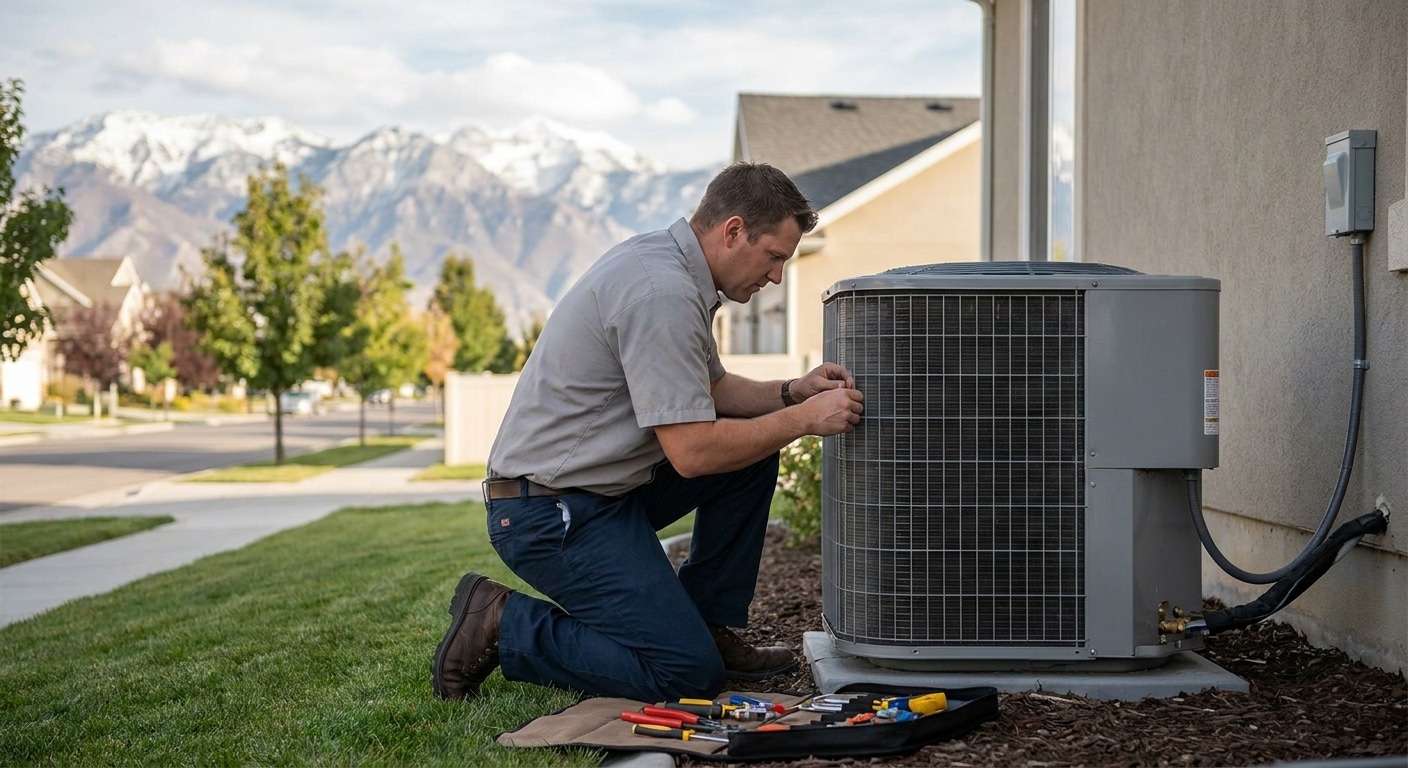
HVAC repair in Provo, Utah means dealing with furnaces working through winters that regularly drop below 20°F and AC units strained by July highs past 95°F — and choosing the wrong repair fix costs more than the second visit.
- Furnace repair in Provo peaks November through February; delaying it past a cracked heat exchanger risks carbon monoxide exposure — Buy the repair now.
- Systems installed before 2010 in Provo homes usually cost more to patch twice than to replace once — Consider a system evaluation in 2026.
- AC repair before summer avoids the June backlog that hits every Provo HVAC company — Buy the tune-up in spring, not July.
- Landlords managing multiple Provo units cut emergency calls by putting furnaces on a maintenance plan instead of reactive repair.
Why this matters
Provo sits at roughly 4,549 feet, and that elevation changes how gas furnaces burn fuel — manifold pressure that works fine in Salt Lake City can run rich at Provo's altitude, which shortens heat exchanger life if nobody adjusts it. Pair that with Wasatch Front winters and a housing stock where a large share of furnaces are 12-20 years old, and HVAC repair in Provo, Utah isn't optional maintenance. It's the difference between a $200 service call and a mid-January no-heat emergency.
Expert Services handles licensed HVAC repair, plumbing, and electrical work across Northern Utah, and the calls that come out of Provo follow a predictable pattern: furnace failures in winter, AC failures in summer, and a smaller but steady stream of thermostat and ductwork complaints year-round.
Who this is for
This guide is for Provo homeowners with a furnace or AC unit acting up right now, and for landlords and property managers running multiple rental units along the Wasatch Front who need to decide between a one-off repair and a standing maintenance contract. If your system just quit and you're deciding whether to call someone today or wait it out, keep reading.
What to look for in HVAC repair for Provo homeowners
Licensing and local code knowledge
Utah requires HVAC contractors to carry a state license, and Provo's permitting office enforces its own inspection schedule for gas line and furnace work. A tech unfamiliar with local code can pass a repair that fails inspection later — ask for the license number before scheduling.
Same-day or next-day availability
A furnace that dies on a 15°F night in January isn't a problem you schedule for next week. Confirm response windows before you need them, not during the emergency.
Diagnostic transparency
A legitimate repair quote separates the diagnostic fee from the fix. If a company quotes a flat "repair" price before opening the unit, that's a red flag — Provo's older housing stock has enough variation in ductwork and furnace age that blind quotes are guesswork.
Parts availability for older systems
Homes built before 2005 often run furnace models whose parts are harder to source. A tech who stocks common Provo-area furnace components (igniters, flame sensors, blower motors) fixes the problem same-visit instead of ordering and waiting three days.
Altitude-adjusted setup
Any repair that touches gas pressure or combustion should account for Provo's elevation. Skipping this step is common among crews trained at lower elevations and it shortens the life of the fix.
Warranty on the repair itself
A repair with no warranty on labor is a bet that the fix holds. Ask what's covered if the same part fails again within 30-90 days.
Top picks: what to book and when
The highest-volume call: furnace repair for older systems. Furnaces installed before roughly 2010 account for the bulk of winter emergency calls in Provo. A cracked heat exchanger, a failed igniter, or a blower motor on its way out shows up as short-cycling or a system that runs but never warms the house past 65°F. If your furnace is over 15 years old, furnace repair for older homes with outdated systems covers what typically fails first and what a fix runs before you commit to replacement. Verdict: Buy — repair now, evaluate replacement separately.
The wildcard: repair now, replace within 12 months. If your furnace has already needed two repairs in one season, the math flips. A second repair on a system already past 15 years old usually costs more cumulatively than financing a new unit. Best home HVAC systems for Utah homes breaks down which systems handle Provo's temperature swings without oversizing the equipment for the house. Verdict: Consider — get the repair done, then start the replacement conversation in 2026 before next winter.
The one most homeowners skip: AC repair before summer, not during it. Provo AC repair calls spike hard in the first heat wave of the year, which means longer wait times exactly when you need cooling fastest. A refrigerant check and coil clean in April or May catches a failing capacitor before it strands you at 92°F in July. Verdict: Buy — schedule the spring tune-up, don't wait for the failure.
The safe pick for landlords and property managers: a standing maintenance plan. If you're managing more than one rental unit in the Provo area, reactive repair calls are the expensive option — every emergency visit costs more than a scheduled tune-up, and tenants without heat in January generate complaints fast. Furnace maintenance plans for landlords and property managers lays out what a standing plan actually covers versus a one-time repair. Verdict: Buy — the cost of one emergency call usually exceeds a year of scheduled visits.
If your crank on scheduling repairs takes more than one winter storm to act on, you're already paying the emergency-call premium instead of the planned-maintenance price.
“If a furnace has already needed two repairs in one season, replacing it costs less over time than fixing it a third time.”
What to avoid
- A flat-rate quote before diagnosis. Real repair quotes follow inspection, not precede it — a pre-diagnosis flat price on an unfamiliar furnace usually means upselling later.
- DIY refrigerant recharge on an AC unit. Utah regulates refrigerant handling, and a mismatched charge can damage the compressor outright, turning a $300 repair into a $2,000+ replacement.
- Ignoring a furnace that short-cycles "a little." Intermittent shutoff is often a cracked heat exchanger triggering a safety switch — that's a carbon monoxide risk, not a nuisance to tolerate through winter.
Book HVAC repair in Provo today
Licensed techs cover furnace, AC, and system evaluations across Northern Utah.
Verdict comparison
| Scenario | Best time to book | Typical sign | Verdict |
|---|---|---|---|
| Furnace repair, older system | Immediately (winter) | Short-cycling, weak heat output | Buy |
| Full system evaluation | Off-season, spring/fall | Two+ repairs in one season | Consider |
| AC repair | Spring, before first heat wave | Weak cooling, loud compressor start | Buy |
| Maintenance plan (landlords) | Anytime, ongoing | Multiple rental units, recurring calls | Buy |
FAQ
How much does HVAC repair cost in Provo, Utah?
Most furnace and AC repairs in Provo run from a basic diagnostic fee up through a few hundred dollars for parts like igniters, capacitors, or blower motors. Major component failures like a heat exchanger or compressor cost significantly more and often tip the math toward replacement instead.
Is it better to repair or replace an old furnace in Provo?
Repair a furnace under 12-15 years old with a single failed part; consider replacement once a system needs a second repair in the same season. Age plus repeat failures is the signal, not age alone.
How fast can I get emergency HVAC repair in Provo in winter?
Response times vary by company and season, with January and February being the busiest window for no-heat calls in Provo. Confirming same-day or next-day availability before an emergency happens avoids the worst of the winter backlog.
Does Provo’s elevation affect furnace performance?
Yes, Provo sits around 4,549 feet, and gas furnaces need manifold pressure adjusted for altitude. A furnace set up for sea-level combustion at Provo’s elevation burns inefficiently and wears out components faster.
What’s the best time of year to schedule AC repair in Provo?
Spring, before the first heat wave, is best. Provo AC repair requests spike the week temperatures first cross 90°F, which pushes wait times out for anyone who didn’t book ahead.
Should landlords in Provo use a maintenance plan instead of one-off repairs?
Yes, for anyone managing more than one rental unit. Scheduled maintenance catches failing parts before they become emergency no-heat calls, which cost more per visit and generate tenant complaints.
What are signs a Provo furnace needs repair, not just a filter change?
Short-cycling, weak heat output relative to the thermostat setting, unusual burning smells, or a pilot light that won’t stay lit all point to a repair need beyond routine filter maintenance.
Can I get same-day HVAC repair in Provo, Utah?
Same-day service is common for straightforward diagnostics like a failed igniter or capacitor, but availability tightens during peak winter and early summer demand periods in 2026.
One last thing
Most Provo homeowners never ask whether their furnace's gas pressure was adjusted for the city's 4,549-foot elevation — and most installers, especially crews used to lower-elevation jobs, never check it either. That single adjustment is often the difference between a furnace that lasts 20 years and one that needs its third heat exchanger repair by year 14.
Related guides