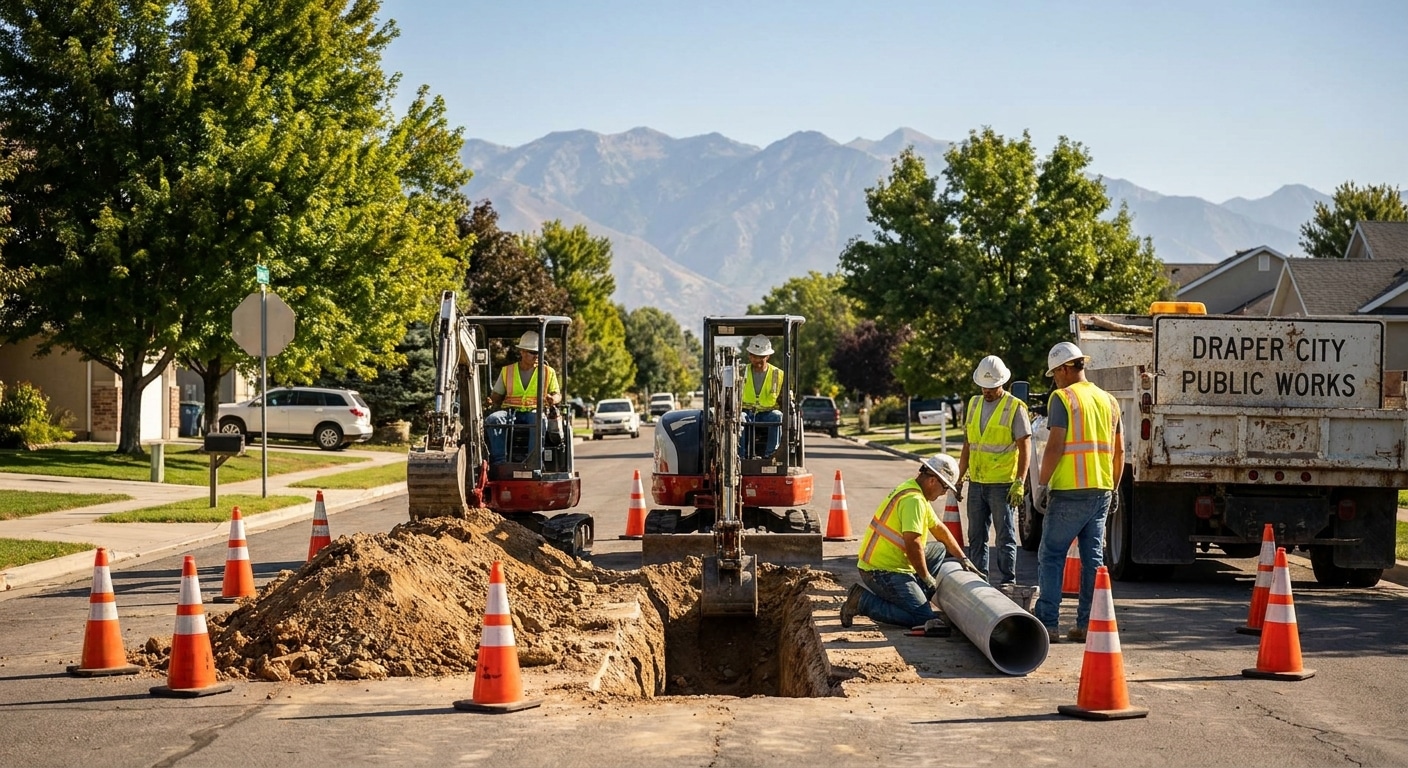
Sewer Line Repair Draper Utah: 2026 Method Guide
August 16th, 2026
Sewer line repair in Draper, Utah comes down to one decision: line it, burst it, or dig it up — and picking wrong costs thousands in unnecessary excavation. This guide breaks down what actually matters for Draper's mix of older bench-area homes and newer subdivisions built on clay-heavy soil.
- Trenchless pipe lining is the default fix for cast iron and clay lines under Draper’s mature landscaping — Buy.
- Camera inspection before any dig is non-negotiable for sewer line repair Draper Utah homeowners request in 2026.
- Pipe bursting handles full-line failures without tearing up mature yards — Consider it over open-cut excavation.
- Chemical root treatments are a stall tactic, not a repair — Skip them for anything past a hairline crack.
- Spot repair works only when a camera has localized a single break — otherwise it’s a temporary patch on a bigger problem.
Why this matters
Draper sits on a mix of bench-area clay soil and rockier foothill ground, and both move with seasonal freeze-thaw cycles. Homes built before the mid-1990s in the older sections near Historic Draper still run cast iron or clay sewer laterals, and both materials crack and separate at the joints after 40-plus years underground. Newer PVC lines in the south and east subdivisions fail less often from age, but tree roots from established landscaping still find every hairline gap.
A sewer backup doesn't wait for a convenient day. Getting the repair method right the first time — instead of paying for a dig-and-guess job — is the difference between a four-figure fix and a five-figure one. Expert Services handles both diagnosis and repair for Northern Utah homeowners, and the method chosen up front decides most of the final cost.
Who this is for
This guide is built for Draper homeowners dealing with a slow drain that won't clear, a sewage backup in a basement, or a pre-listing camera inspection that flagged a cracked line. It applies whether your home dates to the 1980s ranch-style builds near Corner Canyon or a 2015-era build in SunCrest — the diagnostic questions are the same even when the pipe material isn't.
What to look for in sewer line repair for Draper homeowners
Licensed, insured work on a permitted line
Draper City requires permits for sewer lateral work that connects to the municipal main, and an unlicensed crew cutting corners here leaves you liable if the repair fails inspection. Ask for a Utah contractor license number and proof of insurance before any excavation starts — this single check eliminates most of the bad actors in this trade.
A camera inspection before any digging happens
No contractor should quote a full sewer line replacement without first running a camera down the line to confirm where the damage actually sits. A camera inspection often turns a planned full-line replacement into a $1,500 spot repair once the crew sees the break is 12 feet from the cleanout, not 80.
Trenchless capability, not just trenchless marketing
Many companies advertise trenchless but subcontract the actual lining work. Confirm the crew doing your Draper job owns the equipment and has run cured-in-place pipe (CIPP) jobs on the same clay or cast iron material your home has — technique matters more than the brand name on the truck.
Handling for Draper's slope and soil
Bench-area lots in Draper often have 8 to 15 degrees of slope between the house and the street connection, which changes how a line drains and how excavation equipment accesses the yard. A contractor who hasn't worked hillside lots in Draper before will underestimate both time and cost.
Response time for active backups
A sewage backup inside a finished basement is a different emergency than a slow shower drain. Confirm same-day or next-day availability for active backups — a company that books a week out for an active backup isn't the right call regardless of price.
Warranty length on the completed repair
A trenchless lining job should carry a warranty well past the one-year mark since CIPP liner material is rated for decades of service. If a quote doesn't mention warranty terms at all, ask before signing.
Top picks: repair methods that actually apply in Draper
Trenchless pipe lining (CIPP) — the safe pick
A resin-saturated liner is pulled through the existing damaged pipe and cured in place, creating a new pipe inside the old one without digging a trench across the yard. Cure time runs as little as 4 hours for standard residential diameters, and the finished liner is rated for 50-plus years of service.
This is the right call for cracked or root-infiltrated cast iron and clay lines where the pipe's original path is still structurally sound enough to hold a liner. Skip it if the line has fully collapsed — a liner needs a host pipe to cure inside. Verdict: Buy for cracked, root-intruded, or offset-joint lines under intact landscaping.
Learn the cost breakdown in the sewer line replacement cost guide for Utah homeowners before comparing quotes.
Pipe bursting — the wildcard
A bursting head fractures the old pipe outward while pulling a new HDPE pipe through in the same path, handling lines up to roughly 8 inches in diameter without a continuous open trench. It's faster than open-cut excavation on a full-line failure and spares mature trees and hardscaping that a trench would tear through.
It still requires two access pits, so it's not zero-disruption, and it won't work if the line has shifted off its original path. Verdict: Consider it for full-length replacements on lots where landscaping or a driveway sits directly over the line.
Traditional open-cut excavation — the fallback
Digging a trench and replacing the pipe section by section is the oldest method and still the right one when a line has collapsed, shifted grade, or sits under a structure that trenchless methods can't navigate. Expect the yard, and possibly a section of driveway or walkway, to be disturbed and restored afterward.
Cost runs higher than trenchless methods once restoration is factored in, and the job typically takes 2 to 3 days versus a single day for lining. Verdict: Consider only when trenchless options are ruled out by the camera inspection.
Hydro jetting — the maintenance pick, not the repair
High-pressure water clears root masses, grease buildup, and scale from the inside of a pipe without touching the pipe's structure. It's the right tool for recurring slow drains where the camera shows buildup rather than a structural break.
Jetting a structurally cracked line just delays the inevitable failure by a few months. Verdict: Buy for maintenance on lines the camera confirms are structurally sound; Skip it as a fix for an actual break.
Spot repair — the targeted fix
When a camera localizes a single break or offset joint, digging a small pit at that exact location and replacing just that section costs a fraction of a full-line job. This only works when the rest of the line inspects clean.
Verdict: Buy when the camera confirms one isolated defect; otherwise the savings disappear once a second break shows up six months later.
Get your sewer line inspected
Schedule a camera inspection before committing to a repair method.
What to avoid
- Chemical root-kill treatments as a standalone fix. They slow root regrowth for a few months but do nothing for a cracked or offset pipe underneath.
- A quote with no camera inspection attached. Any bid for full-line replacement that skips the camera step is a guess, and guesses in sewer work run expensive.
- DIY cable snaking on brittle cast iron. A snake can punch through an already-thinned cast iron wall that a professional camera would have flagged as needing lining, not clearing.
Verdict comparison
| Method | Disruption | Typical timeline | Best for | Verdict |
|---|---|---|---|---|
| Trenchless lining (CIPP) | Minimal — access pit only | 1 day | Cracked, root-intruded lines with intact path | Buy |
| Pipe bursting | Two access pits | 1 day | Full-line replacement under landscaping | Consider |
| Open-cut excavation | Full trench | 2-3 days | Collapsed or shifted lines | Consider |
| Hydro jetting | None | Hours | Buildup and root mass, no structural damage | Buy (maintenance) |
| Spot repair | Single small pit | Half day | One isolated, camera-confirmed defect | Buy |
FAQ
How much does sewer line repair cost in Draper, Utah?
Sewer line repair in Draper runs from roughly $1,500 for a localized spot repair to well over $10,000 for a full-line trenchless replacement, depending on length and pipe material. The full cost breakdown by method is covered in the sewer line replacement cost guide for Utah homeowners.
Is trenchless sewer repair better than digging up the yard?
Trenchless repair is better for most Draper homes because it avoids tearing up mature landscaping and driveways, and it cures in as little as 4 hours. Open-cut excavation is still necessary when a line has fully collapsed or shifted off its original grade.
How do I know if I need a full sewer line replacement or just a repair?
A camera inspection answers this directly by showing whether damage is isolated to one section or spread across the line. One confirmed break usually means a spot repair; multiple cracks or widespread root intrusion usually mean a full-line reline or replacement.
What causes sewer line damage in Draper homes?
Root intrusion from mature trees and clay-heavy bench soil shifting with seasonal freeze-thaw cycles are the two most common causes in Draper. Homes with cast iron or clay laterals built before the mid-1990s see this most often as the pipe material ages past 40 years.
Can I use chemical root killer instead of a repair?
Chemical root killer slows regrowth temporarily but does not fix the crack or joint separation that let roots in to begin with. It’s a stopgap at best and should not replace a camera inspection and proper repair.
How long does trenchless sewer line lining take?
A standard residential trenchless lining job cures in as little as 4 hours once the liner is in place, with the full appointment typically wrapped up in a single day. Full open-cut replacement takes 2 to 3 days by comparison.
Does homeowners insurance cover sewer line repair?
Standard homeowners insurance in Utah usually excludes sewer line failure from age or root intrusion, though some policies offer a separate service line endorsement. Check your specific policy before assuming coverage applies.
What’s the warranty on a trenchless sewer liner?
CIPP liner material is rated for decades of service, and reputable installers back the completed repair with a multi-year warranty well past the standard one-year term seen on smaller plumbing jobs. Confirm the exact warranty length in writing before signing a quote.
One last thing
The camera inspection itself often costs less than the deductible on a homeowner's insurance claim, and it's the one step that turns a blind $8,000 excavation quote into a $1,500 spot repair once the crew sees exactly where the damage sits. Skipping it to save an hour is the most expensive shortcut in this entire process.
Related guides
- Sewer camera inspection before buying a home
- Hydro jetting for stubborn drain clogs
- Trenchless sewer repair for older homes