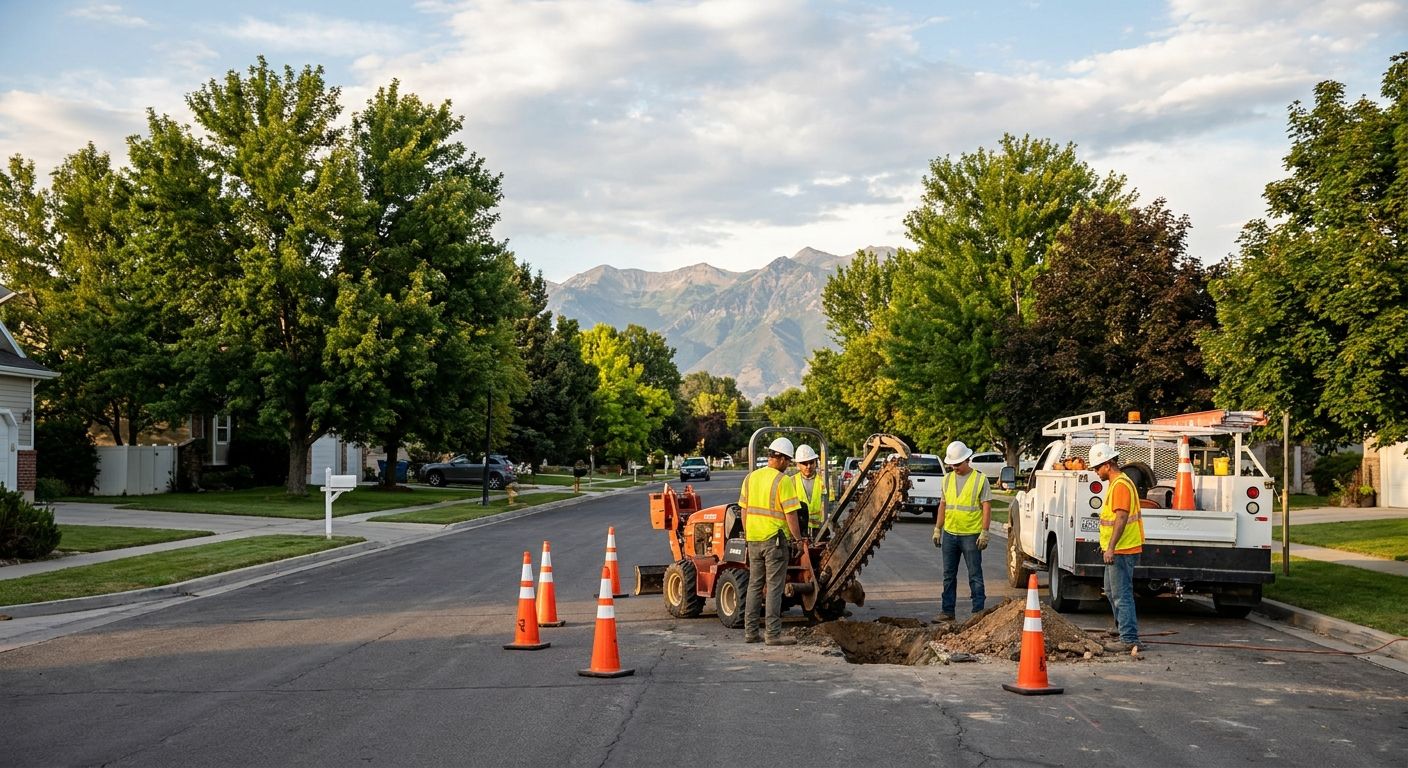
Sewer Line Repair Kaysville Utah: What to Pick in 2026
August 19th, 2026
Kaysville sits on a mix of clay, sandy loam, and heavy Davis County soil that shifts more than most homeowners realize, and that shifting is exactly what cracks aging sewer laterals under lawns built in the 1960s through the 1980s.
- Trenchless pipe lining is the right call for most Kaysville homes with intact but cracked clay or cast iron lines — buy it.
- Full excavation replacement is worth it only when the line has collapsed or shifted out of grade — otherwise it’s overkill.
- A camera inspection before any quote is non-negotiable for sewer line repair in Kaysville, Utah — skip any contractor who won’t run one.
- Spot repair works for a single isolated break under 5 feet of pipe; past that, lining or bursting wins on cost per foot.
Why this matters
A sewer line backup in Kaysville rarely announces itself early. Slow drains on the lowest floor, gurgling in the tub when the washer drains, or a wet patch in the yard near the parkway strip are the usual first signs, and by the time sewage backs into a basement, the repair window has narrowed to "now."
Most repair mistakes happen because someone quotes a fix before anyone has actually looked inside the pipe. A sewer camera inspection before any bid tells you whether you're dealing with one bad joint or a line that's failing end to end — and that answer changes the entire repair plan, not just the price.
Who this is for
This guide is built for Kaysville homeowners in neighborhoods built before 1985, where original clay or Orangeburg pipe is still common, plus anyone who's had two or more sewer backups in the past 12 months. It's also for landlords managing rental property in Kaysville who need a repair that won't need redoing in three years. If your line was already replaced in the last decade with PVC, most of what follows won't apply to you.
What to look for in sewer line repair for Kaysville homeowners
Pipe age and material specific to your lot
Homes built before the mid-1980s in Kaysville commonly run clay or Orangeburg (tar-paper) pipe, both of which fail at the joints roughly every 3 to 4 feet. Cast iron shows up in some of the older infill lots too, and it corrodes from the inside out long before the exterior looks bad. Knowing which material you have changes whether lining, bursting, or replacement makes sense — a drain cleaning approach built for cast iron pipes is not the same as one for clay.
Tree root intrusion from mature parkway trees
Kaysville's older streets have decades-old trees, and roots chase the moisture leaking from even hairline cracks in clay pipe joints. A line that's been root-cut every year or two isn't being fixed — it's being managed. If you're cutting roots annually, that's the signal to move from maintenance to permanent repair.
City permit and connection point requirements
Any work touching the sewer lateral between your house and the city main in Kaysville needs a permit, and the city inspects the connection point before backfilling. A contractor who skips this step leaves you liable if the connection fails later. Confirm permit handling is included in the bid, not billed as a surprise line item.
Whether a camera inspection happened before the quote
A bid written without a camera run inside the pipe is a guess dressed up as a number. The inspection shows exact break location, pipe material, and whether root intrusion is isolated or spread across the run — details that separate a $1,200 spot repair from a $9,000 full replacement.
Warranty terms tied to the specific method used
Trenchless lining materials typically carry manufacturer-rated warranties into the multi-decade range, while spot repairs on old clay pipe next to unrepaired old clay pipe often carry shorter coverage because the untouched sections can still fail. Ask what's warrantied — the fix, or just the labor.
Repair methods ranked for Kaysville sewer lines
Trenchless pipe lining (CIPP) — the safe pick
Cured-in-place pipe (CIPP) lining pulls a resin-saturated liner through the existing pipe and cures it in place, usually finishing in a single day for a standard residential lateral. It works on clay, cast iron, and Orangeburg pipe as long as the pipe hasn't collapsed. For most Kaysville homes with intermittent backups and root intrusion but no collapse, this is the Buy. See how it applies to older housing stock specifically in the guide on trenchless sewer repair for older homes.
Pipe bursting — the wildcard
Pipe bursting fractures the old pipe outward while pulling a new HDPE pipe through the same path, and it can upsize the diameter in the same pass. It needs two access pits instead of a full trench, so yard disruption is limited to roughly two 4-foot-square holes rather than a 40-foot trench. It's a strong Consider when the old line is too collapsed for lining but full excavation isn't necessary.
Spot repair — the budget pick
Spot repair digs down to one failed section, cuts it out, and replaces just that segment, typically 3 to 8 feet of pipe. It's the cheapest fix per job but only makes sense when the rest of the line tested clean on camera. Use it on a single break in an otherwise sound line; use it on a line with multiple weak joints and you'll be back in six months. Consider for isolated damage, Skip for a line with root intrusion at multiple points.
Full excavation replacement — the last resort
Full replacement digs the entire run out and installs new PVC end to end. It's disruptive — landscaping, driveways, and sometimes sidewalk sections get torn up — but it resets the pipe's service life completely and sidesteps the question of whether old sections nearby will fail next year. For a collapsed line or one that's shifted out of grade from soil movement, this is the Buy; for anything less severe, it's overkill. The full cost breakdown by scope is in the sewer line replacement cost guide for Utah homeowners.
Hydro jetting alone — maintenance, not repair
Hydro jetting blasts roots and buildup out of the pipe at high pressure, and it's genuinely useful for keeping a line clear between repairs. But it does nothing for a cracked joint or a collapsed section — it just clears what's currently blocking flow. Skip it as a standalone fix for anything you'd call a repair; use it as maintenance after the real repair is done.
Get a camera inspection scheduled
See the exact break location before you commit to a repair method.
What to avoid
- Chemical root killers as a long-term fix. They slow root growth for a few months at best and do nothing for the crack the roots are exploiting.
- Unlicensed bids that skip the permit. Kaysville requires a permit and inspection at the city connection point — a bid that doesn't mention it is a bid that isn't accounting for the full job.
- Repeated snaking without a camera. If a snake keeps hitting the same spot every few months, that's not a clog problem — that's a pipe problem.
“If a snake keeps hitting the same spot every few months, that’s not a clog problem — that’s a pipe problem.”
Verdict comparison
| Method | Yard disruption | Best for | Verdict |
|---|---|---|---|
| Trenchless lining (CIPP) | Minimal — access pits only | Intact pipe with cracks or root intrusion | Buy |
| Pipe bursting | Two small pits | Collapsed sections needing full replacement path | Consider |
| Spot repair | One dig site, 3-8 ft | Single isolated break | Consider |
| Full excavation | Full trench along the run | Collapsed or out-of-grade line | Buy (severe cases only) |
| Hydro jetting alone | None | Clearing roots/buildup, not structural failure | Skip as sole repair |
FAQ
What’s the best sewer line repair method for older Kaysville homes?
Trenchless pipe lining (CIPP) is the best fit for most older Kaysville homes with clay, cast iron, or Orangeburg pipe as long as the line hasn’t collapsed. It fixes cracked joints and root intrusion in about a day without a full trench.
Is trenchless sewer repair better than digging up the yard in 2026?
For pipe that’s cracked but still round and intact, trenchless lining beats full excavation on cost, time, and yard damage. Full excavation is still the right call in 2026 when the pipe has collapsed or shifted out of grade.
How do I know if I need sewer line repair or just drain cleaning?
If a snake or hydro jetting clears the blockage but it returns within weeks, the issue is structural and needs a camera inspection, not repeated cleaning. Recurring backups at the same spot point to a pipe problem, not a clog problem.
Does Kaysville require a permit for sewer line repair?
Yes, any work on the lateral between the house and the city main requires a permit and inspection at the connection point. A licensed contractor handles this as part of the job, not as an add-on.
How long does trenchless sewer line repair take?
A standard residential CIPP lining job typically finishes in a single day once the camera inspection and access pits are done. Full excavation replacement takes longer because of trenching and backfill.
Can tree roots cause sewer line damage in Kaysville?
Yes, mature parkway trees common on older Kaysville streets send roots into hairline cracks at pipe joints, and that intrusion worsens every year it goes unrepaired. Annual root cutting on the same section is a sign the pipe itself needs repair.
What’s the difference between spot repair and full sewer line replacement?
Spot repair replaces one failed 3 to 8 foot section while leaving the rest of the line in place, and it only works when the rest of the pipe tested clean on camera. Full replacement swaps the entire run and makes sense when multiple sections are failing or the line has collapsed.
One last thing
The single biggest cost driver in sewer line repair isn't the method — it's whether the repair happens before or after a full backup floods a basement. A camera inspection run at the first sign of slow drainage in 2026 costs a fraction of the cleanup and repair bill after a collapse, and it's the difference between scheduling a repair on your terms and dealing with one as an emergency.
Related guides