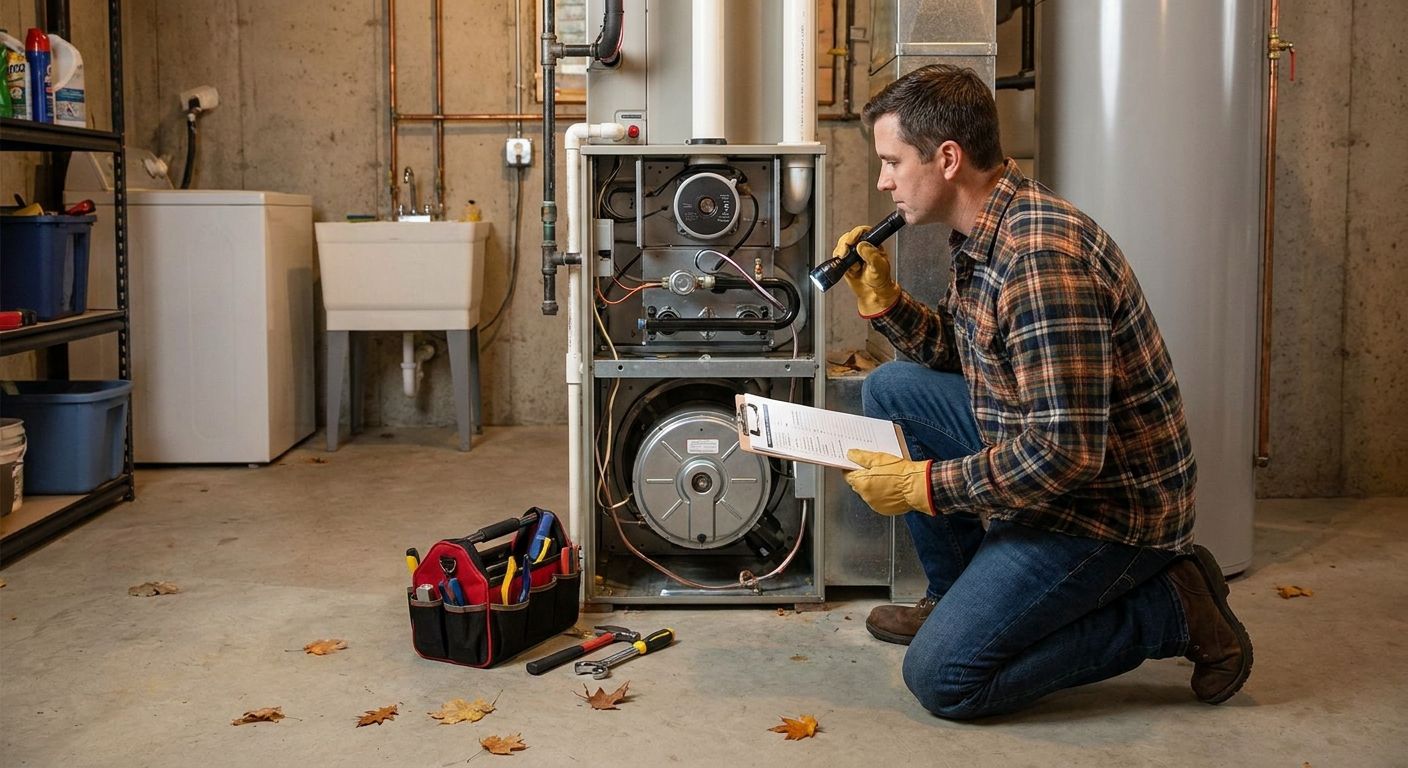
Fall Furnace Tune-Up Checklist for Winter 2026
September 1st, 2026
A fall furnace tune-up checklist covers filter replacement, burner and igniter inspection, thermostat calibration, blower motor lubrication, exhaust venting checks, and a carbon monoxide safety test — all done before the first hard freeze hits Northern Utah. Skip the checklist and the hidden cost shows up mid-winter: a clogged filter or a cracked heat exchanger that goes unnoticed until the furnace stops producing heat on a 10-degree night.
- A fall furnace tune-up checklist has 9 core steps, from filter swap to CO safety test, done before winter 2026 arrives.
- Furnaces skipped for tune-ups are the leading cause of no-heat emergency calls in Northern Utah every winter.
- Expert Services recommends scheduling the tune-up in September or October, before overnight lows drop below freezing.
- DIY covers filters and thermostat checks; burner, gas pressure, and heat exchanger inspection need a licensed technician.
Why this matters
A furnace that limped through last winter doesn't get better sitting idle all summer. Dust settles in the blower, the igniter wears down another notch, and the heat exchanger keeps aging whether anyone's watching or not.
Running a fall furnace tune-up checklist catches small problems — a dirty flame sensor, a loose electrical connection, a filter packed with a summer's worth of dust — before they turn into a no-heat call in January 2026. It also matters for safety: a cracked heat exchanger or blocked vent can leak carbon monoxide into a home, and that's not something you want to discover by accident.
What's on a fall furnace tune-up checklist?
A complete fall furnace tune-up checklist runs through the furnace system in order, from air intake to exhaust. Here's the sequence a technician follows, and what you can check yourself before winter 2026 sets in.
| Step | Task | Who does it |
|---|---|---|
| 1 | Replace or clean the air filter | Homeowner (DIY) |
| 2 | Inspect and clean burners and igniter | Licensed technician |
| 3 | Test thermostat calibration and wiring | Homeowner or technician |
| 4 | Check blower motor and lubricate moving parts | Licensed technician |
| 5 | Inspect heat exchanger for cracks or corrosion | Licensed technician |
| 6 | Verify exhaust venting is clear and properly sealed | Licensed technician |
| 7 | Test gas pressure and connections for leaks | Licensed technician |
| 8 | Run a carbon monoxide safety test | Licensed technician |
| 9 | Clear vents and returns of furniture and debris | Homeowner (DIY) |
The filter swap and vent-clearing are the two steps most homeowners already know to do. The burner, heat exchanger, gas pressure, and CO checks are the ones that actually prevent a mid-winter breakdown or a safety hazard, and they need a technician's tools to do properly.
DIY portion: filters, thermostat, and airflow
You can knock out three of the nine steps yourself in under 30 minutes:
- Swap the filter. A filter clogged with summer dust chokes airflow and forces the blower motor to work harder all winter. Check the best furnace filters for Utah air quality before you buy — Utah's dust and wildfire smoke seasons call for a different filter rating than a coastal climate.
- Test the thermostat. Set it to heat mode and confirm the furnace responds within a minute or two. If it doesn't fire, or the display is blank, you're likely looking at thermostat wiring problems rather than a furnace fault.
- Clear the vents. Walk the house and make sure no furniture, rugs, or boxes are blocking supply and return vents. Blocked airflow strains the whole system and can trip a high-limit safety switch.
Professional portion: burners, heat exchanger, and gas safety
The remaining six steps require a licensed technician because they involve gas connections, electrical components, and combustion safety — not something to troubleshoot with a flashlight and a Saturday afternoon. A technician pulls the burner assembly, checks for scorching or uneven flame patterns, tests gas pressure against manufacturer spec, and runs a combustion analysis to confirm the heat exchanger isn't cracked.
That last check matters more than any other item on the list. A cracked heat exchanger can let carbon monoxide leak into the ductwork, and it's invisible without the right equipment.
Why a fall furnace tune-up matters more in Utah
Northern Utah winters bring extended stretches below freezing, and furnaces here run longer hours per day than in milder climates. A few factors make the fall tune-up worth the time:
- Altitude and dry air put extra wear on igniters and can throw off gas combustion ratios if not checked annually.
- Wildfire smoke season in late summer leaves filters dirtier heading into fall than in most other regions.
- Hard freezes arrive fast along the Wasatch Front, often with little warning between a mild September and a sub-freezing October night.
- Older housing stock in cities like Ogden, Provo, and Salt Lake City still runs original ductwork and furnaces that need more frequent inspection.
- Emergency no-heat calls spike every year in the first cold snap, and technicians are booked solid — a scheduled fall tune-up avoids that wait entirely.
If your furnace is already showing signs of age going into this checklist — short-cycling, rising utility bills, or uneven heat between rooms — it's worth reading how to know if your furnace needs replacing before you sink more into repairs.
A fall furnace tune-up checklist done in September or October, by a licensed technician, is the single cheapest way to avoid a no-heat emergency call in January.
Book your fall furnace tune-up
Get on the schedule before the first cold snap hits Northern Utah.
When should you schedule a fall furnace tune-up?
Schedule the tune-up in September or early October, well before nighttime lows in Northern Utah drop below freezing. Booking early also beats the seasonal rush — technicians fill their calendars fast once the first cold snap hits, and a no-heat emergency call in December costs more time and stress than a planned fall appointment.
Should you add a humidifier during the fall tune-up?
A whole-home humidifier is worth adding during the fall tune-up if your home's air gets noticeably dry once the furnace starts running daily. Utah's low humidity gets worse indoors once heating season starts, and a whole-home humidifier installation integrates directly with the furnace's ductwork rather than running a standalone unit room to room.
Do landlords need a different furnace maintenance schedule?
Landlords and property managers should run the fall furnace tune-up checklist across every unit before lease renewals in fall, not on a per-tenant complaint basis. A structured furnace maintenance plan catches issues across a whole portfolio before a tenant reports no heat on a weekend.
FAQ
What’s included in a fall furnace tune-up checklist?
A fall furnace tune-up checklist includes filter replacement, burner and igniter inspection, thermostat calibration, blower motor lubrication, heat exchanger inspection, gas pressure testing, exhaust venting checks, and a carbon monoxide safety test. Three of the nine steps can be done by a homeowner; the rest need a licensed technician.
How often should a furnace get a professional tune-up?
A furnace should get a professional tune-up once a year, ideally in fall before winter 2026 heating season starts. Furnaces used heavily in commercial or rental settings sometimes need a mid-season check as well.
Can I do a furnace tune-up myself?
You can handle the filter swap, thermostat test, and vent clearing yourself, but the burner inspection, heat exchanger check, and gas pressure test need a licensed technician. Those steps involve combustion safety and gas connections that require specialized tools.
What happens if you skip a fall furnace tune-up?
Skipping a fall furnace tune-up raises the risk of a mid-winter breakdown from a dirty burner, worn igniter, or clogged filter. It also means safety issues like a cracked heat exchanger or blocked vent can go undetected through an entire heating season.
Is a furnace tune-up the same as a furnace inspection?
A furnace tune-up includes cleaning and adjusting components, while an inspection is a diagnostic check without hands-on maintenance. Most fall tune-ups combine both: a technician inspects for problems and performs the cleaning and calibration in the same visit.
What time of year is best for a furnace tune-up?
September or early October is the best time for a furnace tune-up in Northern Utah, before overnight temperatures drop below freezing. Scheduling early also avoids the wait that comes with the first cold snap of the season.
Does a dirty filter really affect furnace performance?
Yes, a dirty filter restricts airflow, forces the blower motor to work harder, and can trigger a high-limit safety switch that shuts the furnace down. Replacing the filter is the single easiest DIY step on the fall furnace tune-up checklist.
How do I know if my furnace has a cracked heat exchanger?
A cracked heat exchanger usually isn’t visible without a combustion analysis or camera inspection during a professional tune-up. Warning signs include a strange odor when the furnace runs, soot around the unit, or a carbon monoxide detector triggering near the furnace.
One last thing
The carbon monoxide test is the step homeowners skip most often on a self-guided fall furnace tune-up checklist, and it's the one that matters most for safety, not comfort. A furnace can heat a house just fine while still leaking small amounts of CO through a hairline crack in the heat exchanger — the only way to catch that before winter 2026 is a combustion analysis during a professional visit, not a visual check.
Related guides
- Best furnace filters for Utah air quality
- How to know if your furnace needs replacing
- How to fix thermostat wiring problems that stop your HVAC
- Humidifier installation for dry Utah winters
- Furnace maintenance plans for landlords and property managers