Sewer Line Repair Methods Ranked by Cost (2026)
September 8th, 2026
Sewer line repair costs range from a modest point fix to a full yard excavation, and choosing the wrong method for the damage in front of you either overpays for a problem that didn't need it or underfixes a line that's about to fail again. This guide ranks the four sewer repair methods licensed crews in Northern Utah use most often, ordered from lowest relative cost to highest, so you know what to ask for before anyone breaks ground.
- Ranking sewer line repair methods by cost: spot repair first, then trenchless lining, pipe bursting, then open trench excavation last.
- Spot repair costs the least and fixes one isolated crack or offset joint without digging up the yard.
- Trenchless pipe lining wins overall for full-line rehab on old cast iron or clay pipe with minimal excavation.
- Pipe bursting replaces the entire line and can upsize the diameter, priced above lining but below full excavation.
- Open trench excavation costs the most but is the only real fix for a collapsed or heavily bellied line.
Why this matters
Homeowners in older Utah neighborhoods deal with clay, Orangeburg, and cast iron sewer lines that were never built to last past 2026. A camera inspection tells you exactly what's wrong before anyone quotes a method, and skipping that step is the single most common reason a repair gets picked wrong. Check sewer camera inspection before buying a home if you're weighing a purchase or a repair decision on a line you haven't seen yet.
The method dictates the cost, and the cost swings hard depending on pipe material, depth, and how much of the line is actually bad. A full breakdown of what drives sewer line pricing in 2026 lives in the sewer line replacement cost guide for Utah homeowners, which pairs well with the ranking below.
Best overall: trenchless pipe lining. Best for isolated defects: spot repair. Best for undersized or badly degraded lines: pipe bursting. Best for collapsed or severely bellied pipe: open trench excavation.
What makes the best sewer line repair method
- Extent of damage — a single crack ranks differently than a line that's collapsed in three spots
- Pipe material and age — clay, Orangeburg, and cast iron behave differently than PVC
- Access and yard disruption — driveways, mature trees, and foundations in the pipe's path change the math
- Diameter and grade needs — undersized lines sometimes need upsizing, not just patching
- Permit and inspection requirements — trenchless methods still require municipal sign-off in most Utah cities
- Long-term durability versus upfront cost — the cheapest fix today isn't always the cheapest fix over ten years
Sewer line repair methods at a glance
| Method | Best for | Standout feature | Relative cost | Key limitation |
|---|---|---|---|---|
| Spot repair | An isolated crack or joint | Repairs a short section without full-line disruption | Lowest | Doesn't address other weak spots in an aging line |
| Trenchless pipe lining (CIPP) | Full-line rehab on old cast iron or clay | Cures a resin liner in place through one or two access pits | Moderate | Reduces interior pipe diameter slightly |
| Pipe bursting | Undersized or badly degraded lines | Pulls a new pipe through while fracturing the old one outward | Higher | Needs enough yard clearance to pull the new line through |
| Open trench excavation | Collapsed or heavily bellied pipe | Full physical access to regrade, replace, or reroute | Highest | Digs up landscaping, driveways, or hardscape along the route |
1. Spot repair: best sewer line repair method for an isolated pipe defect
Spot repair targets one bad section of pipe — a cracked joint, a root intrusion point, an offset — and fixes just that stretch instead of the whole line. A crew digs a small access point over the defect, cuts out the damaged section, and replaces or relines it before backfilling. It's the fastest of the four methods and the least disruptive to a yard.
Spot repair pros:
- Lowest relative cost of the four methods
- Minimal yard disruption — one dig site instead of a full trench
- Fast turnaround, often completed same-day
Spot repair cons:
- Only works when the rest of the line is sound
- A camera inspection has to confirm the damage is truly isolated
- Doesn't add any protection against future root intrusion elsewhere on the line
Best for: a single defect confirmed by camera inspection on an otherwise healthy line.
Verdict: the right default choice when damage is contained — skip it if the camera shows multiple problem spots.
2. Trenchless pipe lining: best sewer line repair method for whole-pipe rehab without digging
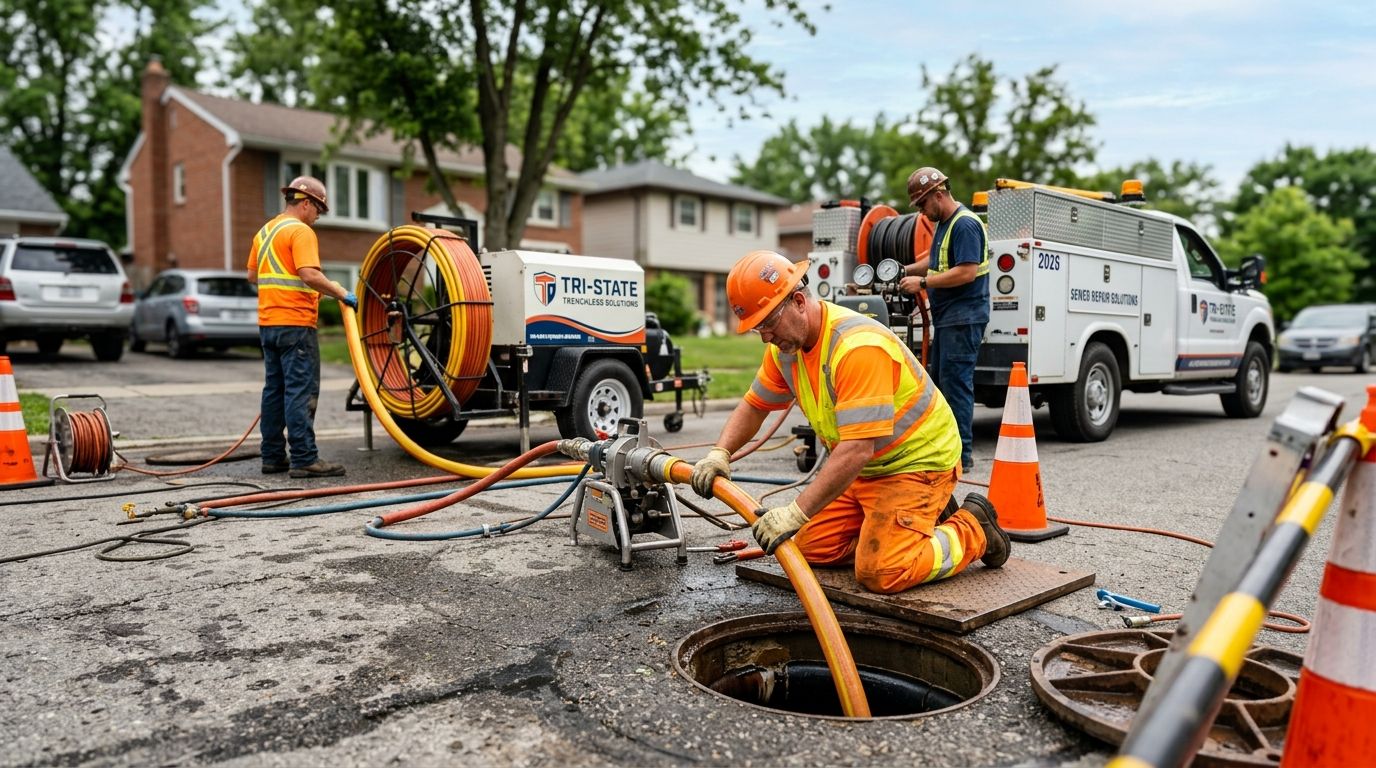
Trenchless pipe lining, often called CIPP (cured-in-place pipe), threads a resin-saturated liner through the existing sewer line and cures it in place, creating a new pipe-within-a-pipe. It works through one or two small access pits rather than a full trench, which is why it's become the go-to fix for old cast iron and clay pipe under mature landscaping in Northern Utah. Manufacturers typically rate a properly cured CIPP liner for decades of service life.
Expert Services runs this method on homes across Northern Utah where digging up a driveway or a finished yard isn't an option. Full-line coverage and minimal excavation make it the strongest all-around pick on this list, which is why it's the best overall verdict. Homes with clay pipe are a common candidate for this method — see sewer line repair for homes with clay pipe for how the material affects the decision. More on the trenchless approach specifically is covered in trenchless sewer repair for older homes.
Trenchless pipe lining pros:
- Covers the entire line, not just one section
- Access pits instead of a full trench preserve landscaping and hardscape
- Strong option for cast iron and clay lines with widespread deterioration
Trenchless pipe lining cons:
- Costs more upfront than a single spot repair
- Slightly reduces the interior diameter of the pipe
- Won't work on a line that's already collapsed or crushed
Best for: an aging line with distributed cracking or root intrusion that isn't structurally collapsed.
Verdict: the best overall sewer line repair method for older Utah homes — proceed once a camera inspection confirms the pipe hasn't collapsed.
3. Pipe bursting: best sewer line repair method for undersized or severely degraded lines
Pipe bursting pulls a new pipe through the old one while a bursting head fractures the original pipe outward into the surrounding soil. Unlike lining, it lets a crew upsize the diameter of the new line, which matters for homes that added bathrooms or fixtures after the original sewer line was sized. It still needs access pits at each end rather than a continuous trench, so disruption sits between lining and full excavation.
Pipe bursting pros:
- Replaces the whole line, not just a rehabilitated version of the old one
- Can increase pipe diameter to handle added plumbing load
- Less yard disruption than a full open trench
Pipe bursting cons:
- Costs more than lining in most cases
- Requires enough straight-line clearance to pull the new pipe through
- Not viable if nearby utility lines sit too close to the burst path
Best for: a line that's too small for current fixture count or too degraded for lining to hold.
Verdict: worth the added cost when the line needs to be bigger, not just newer — hold off if a smaller trenchless lining fix still solves the problem.
4. Open trench excavation: best sewer line repair method for collapsed or heavily bellied pipe
Open trench excavation digs up the ground along the entire pipe route, exposes the line, and replaces it section by section or in one continuous run. It's the oldest method and still the only one that gives a crew full physical access to fix grade problems, correct a bellied section, or reroute a line entirely. It's also the most disruptive to landscaping, driveways, and any hardscape sitting over the pipe's path.
Open trench excavation pros:
- Full visual and physical access to every section of the line
- The only method that corrects a bellied or misgraded pipe
- Works regardless of pipe material or collapse severity
Open trench excavation cons:
- Highest relative cost of the four methods
- Tears up landscaping, driveways, or patios along the route
- Longer job timeline than any trenchless option
Best for: a collapsed line, a severe belly, or a pipe that needs to be rerouted around a tree or foundation.
Verdict: the necessary fix when a camera inspection shows structural collapse — skip it if any trenchless method still applies.
How we ranked these sewer line repair methods
The order above follows the criteria listed earlier: extent of damage first, then pipe material, access, and long-term durability. Spot repair sits at the bottom of the cost scale because it touches the smallest amount of pipe. Open trench excavation sits at the top because it touches the most ground and the most labor hours. Trenchless lining and pipe bursting fall in between based on how much of the line each one actually replaces.
“The method should match what the camera shows, not the other way around.”
Which sewer line repair method should you choose?
Start with a camera inspection every time — guessing at the method before seeing the pipe is how homeowners end up paying for excavation they didn't need or a spot repair that fails again in six months. If the damage is isolated, spot repair is the right call. If the line is old and widely deteriorated but structurally intact, trenchless pipe lining is the strongest default for 2026 repairs. If the line needs to be bigger or is too far gone for lining, pipe bursting earns its higher cost. Reserve open trench excavation for a genuinely collapsed or misgraded line — it's the most expensive option on this list for a reason.
Get a sewer line diagnosis first
A camera inspection tells you which repair method actually fits your line.
FAQ
What’s the cheapest sewer line repair method?
Spot repair is the cheapest option when damage is limited to one section of pipe. It only works once a camera inspection confirms the rest of the line is sound.
Is trenchless pipe lining better than open trench excavation?
Trenchless pipe lining is better for lines with widespread deterioration that haven’t collapsed, since it avoids digging up the yard. Open trench excavation is still required when the pipe has actually collapsed or bellied.
How much does sewer line repair cost in 2026?
Cost depends heavily on the method, pipe material, and depth — spot repair costs the least and open trench excavation costs the most. A full cost breakdown is available in the sewer line replacement cost guide for Utah homeowners.
Can pipe bursting increase the size of my sewer line?
Yes, pipe bursting can upsize the diameter of the new pipe as it’s pulled through the old one. That makes it a common choice for homes that added fixtures after the original line was sized.
Do I need a permit for trenchless sewer repair?
Most Utah cities still require a permit and inspection for trenchless pipe lining and pipe bursting, even though there’s no open trench. A licensed plumber handles the permitting as part of the job.
How do I know which sewer repair method I need?
A camera inspection is the only reliable way to know. It shows exactly where the damage is, what the pipe material is, and whether the line has collapsed, which determines which method applies.
Does homeowners insurance cover sewer line repair?
Coverage varies by policy and cause of damage, so check your specific policy before assuming any method is covered. Sudden collapse is treated differently than gradual deterioration by most insurers.
Is clay pipe always a candidate for trenchless lining?
Clay pipe is a common candidate for lining as long as it hasn’t collapsed, since the material tends to crack and shift rather than crush flat. A camera inspection confirms whether lining is still viable.
One last thing
Most homeowners assume trenchless methods cost more than they actually do compared to open trench work, because the yard damage from excavation adds its own cost in landscaping and hardscape repair that never shows up on the sewer invoice. Factor that total cost, not just the repair line item, into the comparison before picking a method.
Related guides
- Trenchless sewer repair for older homes
- Sewer line repair for homes with clay pipe
- Sewer camera inspection before buying a home
- Sewer line replacement cost guide for Utah homeowners
- Sewer line repair in Kaysville, Utah