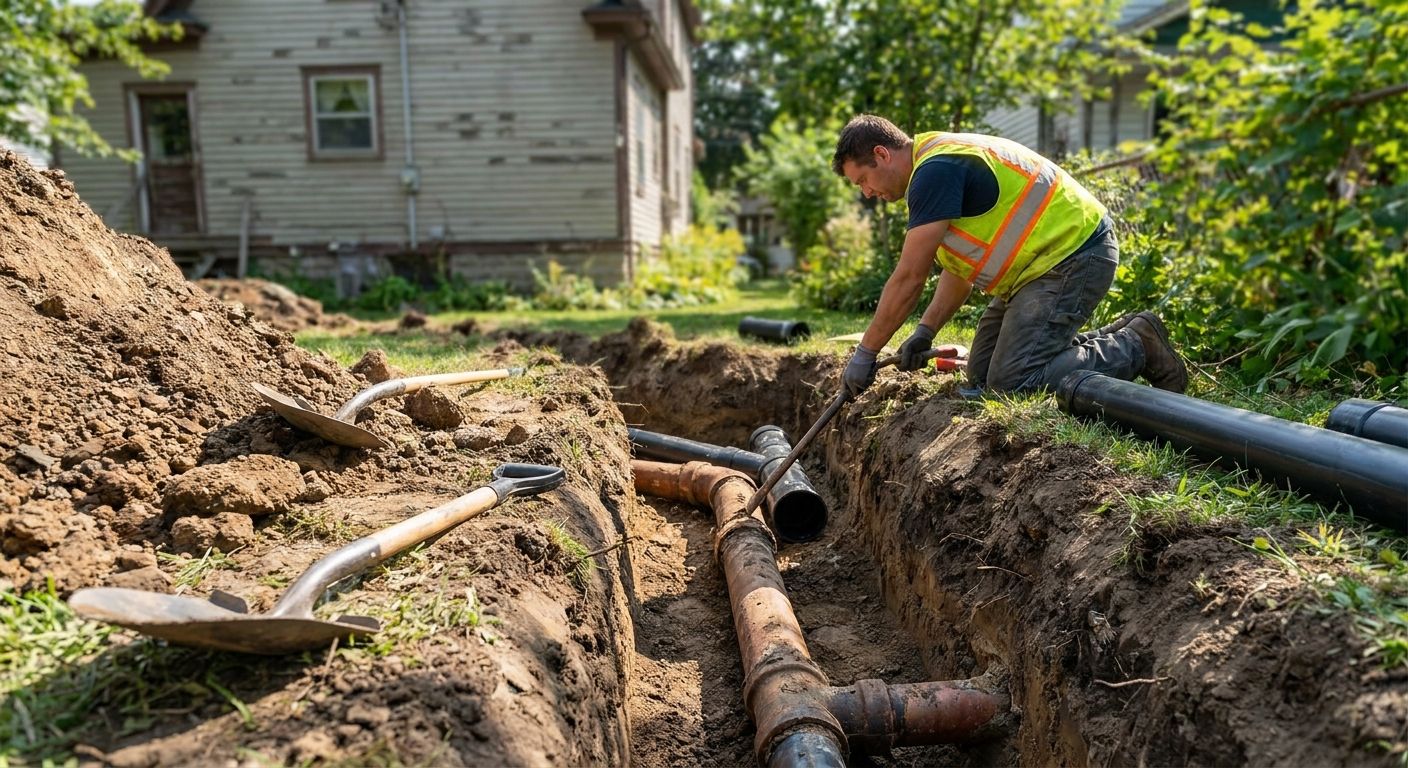
Sewer Line Repair for Clay Pipe: 2026 Buyer’s Guide
August 27th, 2026
Clay pipe sewer lines are common under Northern Utah homes built before the 1970s, and most of them are still doing their job — until roots or shifting soil find a joint to exploit. This guide breaks down what actually fixes a failing clay sewer line in 2026, what to skip, and which repair method fits which kind of damage.
- Sewer line repair for clay pipe in 2026 usually means trenchless lining or pipe bursting, not full excavation.
- Clay pipe sewer lines installed before 1980 fail mostly at the joints, where roots enter easiest.
- Cabling and chemical root killers are maintenance, not repair — they buy months, not years.
- A camera inspection before any repair decision is non-negotiable for clay pipe homes.
- Bellied or sagging clay pipe sections need excavation or bursting; lining will not fix a low spot.
Why this matters
Vitrified clay pipe was the standard sewer material in Utah through the 1960s and into the 1970s, and it's durable stuff — clay resists chemical corrosion better than cast iron and outlasts Orangeburg by decades. The failure point isn't the pipe body, it's the joints. Older clay runs were laid in 2-to-4-foot sections with mortar or oakum-and-tar joints, and each joint is a seam roots can wedge into over 40-60 years.
Get the diagnosis wrong and you pay twice: once for a repair that doesn't match the actual damage, and again a year or two later when the same section fails. That's the real cost of skipping a proper inspection on a clay pipe sewer line.
Who this is for
This guide is for homeowners in Salt Lake, Davis, Utah, and Weber counties with a house built before roughly 1975, showing signs like slow drains on the lowest fixtures, gurgling toilets, sewage odor in the yard, or a sewer backup after heavy rain or snowmelt. If a plumber or a home inspection report has already flagged clay pipe, or you've had root cabling done more than once in the last few years, you're the exact audience this covers.
What to look for in sewer line repair for clay pipe
Camera inspection before any repair quote
No contractor should recommend a repair method on a clay pipe line without running a camera through it first. A sewer camera inspection shows exactly where joints have separated, where roots have intruded, and whether any section has bellied — sagged into a low spot that traps waste and can't be fixed by lining alone.
Number and spacing of joint failures
One bad joint 15 feet from the cleanout is a different job than eight compromised joints spread across a 60-foot run. Clay pipe segments are short, so a 50-foot line can have 15-20 joints, and each one needs to be accounted for before you pick a repair method.
Whether the pipe has bellied
A belly is a low spot where the pipe has settled, usually from soil movement or a collapsed bedding area underneath. Trenchless lining follows the existing shape of the pipe, so it can't correct a belly — that section needs to be dug up and re-graded, no matter how clean the rest of the line looks on camera.
Depth and access to the line
Clay sewer lines in older Utah neighborhoods often run 3 to 6 feet deep, sometimes under a driveway, patio, or mature tree. Depth and access change which repair methods are even possible and how much yard disruption you're signing up for.
Remaining structural integrity of the clay itself
Root intrusion damages joints, but clay pipe can also develop hairline cracks along the barrel from ground shift or heavy equipment traffic overhead. A line with cracked barrels needs a structural fix — lining or bursting — not just root removal.
Warranty and permit requirements
Utah municipalities generally require a permit for sewer lateral repair or replacement, and any legitimate repair should carry a written warranty on the work. If a bid skips both, that's a red flag regardless of the method proposed.
Get your clay sewer line inspected
Camera diagnosis before any repair decision gets made.
Top picks for clay pipe sewer line repair
Cured-in-place pipe lining (CIPP) — the safe pick
One spec that matters: a resin-saturated liner cures inside the existing clay pipe to form a new pipe-within-a-pipe, typically rated for 50 years of service life once cured. It works when the clay barrel is intact and joints have separated or roots have entered but the line hasn't bellied. Trenchless sewer repair methods like this avoid tearing up a driveway or mature landscaping. Verdict: Buy when camera footage shows joint separation and root intrusion without sagging.
Pipe bursting — the wildcard
Pipe bursting pulls a new HDPE pipe through the old clay line while a bursting head fractures the clay outward, replacing the entire run in one pass. It handles more severe joint failure and even some crushed sections that lining can't reach, and it's still trenchless — access pits are usually limited to two small dig points instead of a full trench. Verdict: Consider for clay lines with widespread joint failure but no belly, especially where the run crosses a shared property line.
Spot repair — the budget option
When camera inspection shows a single failed joint or a short cracked section in an otherwise sound clay line, a spot repair digs up just that stretch and replaces it with PVC, tied back into the existing clay on both ends. It's the cheapest fix per foot, but every additional bad joint the camera finds is another dig. Verdict: Consider only when the damage is truly isolated to one short section.
Full excavation replacement — for the worst cases
When a clay line has multiple bellied sections, widespread cracking, or has already collapsed in a spot, digging the full trench and replacing the run start to finish is the only method that actually fixes the grade. Full replacement resets the pipe on properly compacted bedding, which lining and bursting can't do for a sagging line. Check the sewer line replacement cost guide for what factors drive the price on a full dig. Verdict: Buy when a belly or collapse shows up on camera — there's no trenchless shortcut around a bad grade.
Root cabling alone — not a repair
Mechanical cabling clears roots out of the pipe so water flows again, and it's a legitimate short-term step before a camera inspection or between scheduled maintenance visits. But cabling doesn't touch the open joint the roots are growing through, so they grow back — often within a year on a clay line with an active leak point. Verdict: Skip as a stand-alone fix; use it as a diagnostic clearing step, not the final answer.
What to avoid
- Chemical root killer sold as a permanent fix. Foaming or copper sulfate treatments slow root growth temporarily but do nothing for the separated joint that let the roots in — the problem returns.
- A repair bid with no camera footage attached. If a contractor quotes a method without showing you where the pipe actually fails, you're paying for a guess.
- Lining quoted on a line with a known belly. Ask specifically whether the camera survey showed sagging. A liner installed over a belly still traps waste in that low spot — the smell and slow drains come back.
Verdict comparison
| Method | Best for | Digging required | Life added | Verdict |
|---|---|---|---|---|
| CIPP lining | Intact barrel, joint separation, roots | Minimal (access pits) | ~50 years | Buy |
| Pipe bursting | Widespread joint failure, no belly | Two small pits | ~50 years | Consider |
| Spot repair | One isolated failed section | Small trench at that spot | Matches new PVC section | Consider |
| Full excavation | Bellied, collapsed, or multi-fail line | Full trench | Full new line | Buy |
| Cabling alone | Temporary flow restoration | None | Weeks to months | Skip |
A line that's had roots cabled out twice in one year on the same clay run is telling you the joint needs a permanent fix, not a third cabling appointment. If the last camera inspection is more than two years old, get a fresh one before signing any repair contract — clay pipe conditions change, especially after a wet spring or a hard freeze-thaw cycle.
FAQ
Can clay pipe sewer lines be repaired without digging up the yard?
Yes — trenchless methods like cured-in-place lining and pipe bursting repair clay sewer lines through small access points instead of a full trench, as long as the pipe hasn’t bellied or collapsed. A camera inspection determines which trenchless option fits.
How long does clay pipe sewer line last before it needs replacement?
Clay pipe itself can last 50-60 years or more, but joint failures from root intrusion often show up well before the pipe body degrades. Age alone isn’t the deciding factor — camera condition is.
Is trenchless sewer repair better than full replacement for clay pipe?
Trenchless repair works when the clay barrel is structurally sound and the line hasn’t sagged, but a bellied or collapsed section needs full excavation to correct the grade. The right method depends entirely on what the camera inspection shows.
How much does sewer line repair for clay pipe cost in 2026?
Cost depends on pipe depth, length, access, and which repair method the damage requires — spot repairs cost less than a full trenchless reline or excavation. A cost guide breaks down the specific factors that move the price up or down.
Will root cabling fix a clay pipe sewer line for good?
No — cabling clears the roots currently in the pipe but leaves the open joint they grew through, so roots typically return within months to a year. It’s a short-term clearing step, not a repair.
How do I know if my sewer line is clay pipe?
Homes built before the mid-1970s in Northern Utah commonly have clay sewer laterals, and a camera inspection identifies the material along with joint and root conditions in one visit. A home inspection report before closing often flags it too.
Does homeowners insurance cover clay pipe sewer line repair?
Most standard homeowners policies exclude gradual wear and root damage, which covers the majority of clay pipe joint failures. Check your specific policy for a sewer line or service line endorsement before assuming coverage.
What’s the difference between pipe bursting and pipe lining for clay sewer lines?
Lining installs a resin liner inside the existing clay pipe without removing it, while bursting fractures the old clay outward and pulls a new pipe through in its place. Bursting handles more severe damage; lining is less invasive for moderate joint failure.
One last thing
The detail most homeowners miss: a clay pipe sewer line that backs up right after a heavy rain or fast snowmelt, but flows fine the rest of the year, almost always points to a joint below the water table rather than a clog. That pattern means groundwater is getting in through a separated joint, and it's worth flagging specifically to whoever runs your camera inspection — it narrows the search before the camera even goes in.
Related guides