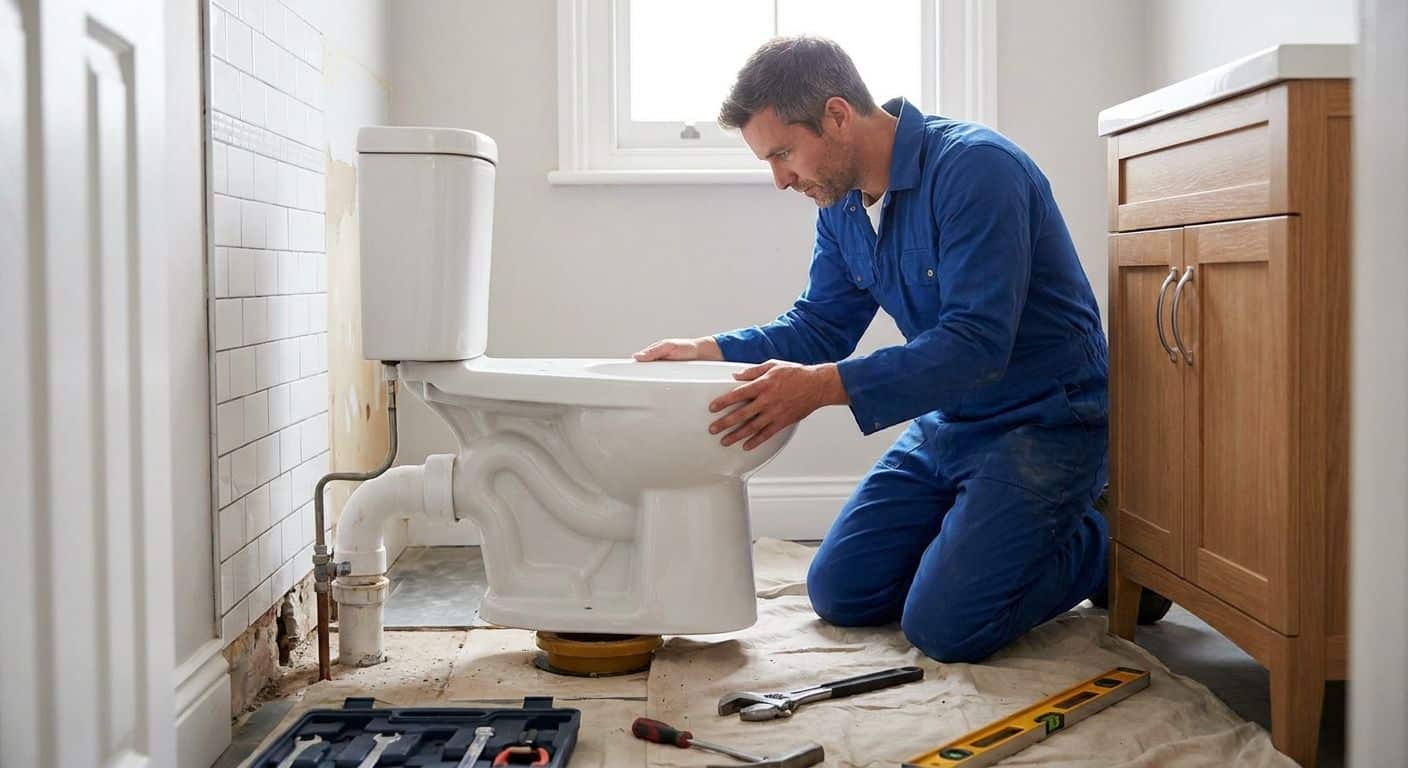
Toilet Installation for Bathroom Remodels (2026 Guide)
August 19th, 2026
Swapping a toilet during a full bathroom remodel isn't the same job as a same-day replacement — the drain line, rough-in, and even the wall behind the tank are often exposed and changeable, which means mistakes get baked into the wall for the next 20 years. This guide breaks down what actually matters for toilet installation for a bathroom remodel in Northern Utah, from rough-in sizing to hard-water flush performance.
- One-piece comfort-height toilets fit most Northern Utah remodels and are the safe buy for 2026 projects.
- Confirm the rough-in measurement (usually 12 inches) before ordering — wrong sizing is the most common remodel mistake.
- Dual-flush models with a 1.28 GPF WaterSense rating handle Utah’s hard water without clogging as often as older 1.6 GPF units.
- Skip pressure-assist toilets on homes with cast iron or galvanized drain lines — they push sediment further into an already narrow pipe.
- Wall-hung toilets save floor space but require in-wall carrier tanks planned before drywall goes up, not after.
Why this matters
A toilet installation for bathroom remodel projects gets scheduled last on most punch lists, right behind tile and vanity work, which is exactly when corners get cut. The wax ring, the shutoff valve, the flange height relative to new tile — all of it either gets set correctly during the remodel or turns into a callback in 2026 or 2027. Get the rough-in and drain compatibility right during demo, and the toilet itself becomes the easy part.
Who this guide is for
This is written for homeowners in Salt Lake City, Layton, Sandy, and the rest of Northern Utah who are mid-remodel or planning one, plus general contractors who need a plumbing-literate answer for a client asking "which toilet should we buy." If you're doing a full gut remodel with new subfloor and moved plumbing, the criteria below matter even more, because you have a one-time window to correct rough-in position and drain slope before it's covered.
What to look for in toilet installation for a bathroom remodel
Rough-in measurement
Rough-in is the distance from the finished wall to the center of the drain flange, and it decides which toilets fit your space, full stop. Most homes built after 1950 use a 12-inch rough-in, but older Northern Utah homes and some 1970s-era builds run 10 or 14 inches, and guessing wrong means a toilet that either sits too close to the wall or leaves a gap you can't hide with a bigger tile trim. Measure before you shop for tile, not after, because moving a flange after the subfloor is set adds a full extra trade visit.
WaterSense rating and flush performance
WaterSense-certified toilets use 1.28 gallons per flush or less, compared to the 1.6 GPF standard from older units, and the good ones don't sacrifice flush power to get there. Look for a MaP (Maximum Performance) test score of 500 grams or higher — that's the industry benchmark for a toilet that clears solid waste in one flush instead of two. In hard-water areas, weak flush toilets clog faster because mineral buildup narrows the trapway over time, so this criterion carries more weight here than in a soft-water market.
Comfort height vs. standard height
Comfort height (sometimes labeled "chair height") toilets sit around 17 to 19 inches from floor to seat, close to standard chair height, versus 14 to 15 inches on older standard-height models. For a remodel that's meant to serve a household for the next decade, comfort height is the default choice unless small children are the primary users. It also happens to match ADA guidelines, which matters if resale or aging-in-place is on your mind.
Drain line and vent compatibility
A brand-new toilet on a corroded or partially blocked drain line just moves the problem downstream. If your home still has cast iron drain pipe, get it inspected before finalizing the toilet — reduced pipe diameter from decades of scale buildup changes how much flush volume you actually need. A cast iron drain cleaning pass before the new toilet goes in avoids a callback three months into 2026.
Permit and code requirements
Most Utah municipalities require a permit when a toilet installation is part of a larger remodel that touches plumbing lines, even if the fixture swap itself is simple. Bathroom remodels almost always also trigger electrical code review near wet areas — any outlet within reach of the sink or tub needs GFCI protection. If your remodel scope includes new outlets, pair the plumbing work with a GFCI outlet installation for bathrooms so the inspection passes on the first visit.
Shutoff valve and supply line condition
An old shutoff valve that hasn't been turned in 15 years frequently fails the moment you try to close it, which turns a two-hour toilet swap into an emergency water shutoff. Replace the angle stop and supply line as part of the remodel rather than reusing a valve you can't verify closes cleanly.
Top picks for bathroom remodel toilets
The safe pick: one-piece comfort-height toilet
One-piece toilets have no seam between tank and bowl, which means no hidden leak point and an easier wipe-down — a real factor over years of use. Most models run a 1.28 GPF WaterSense rating with MaP scores at or above 600 grams, comfortably ahead of the 500-gram benchmark. Verdict: Buy. This is the default recommendation for the majority of Northern Utah remodels in 2026.
The hard-water workhorse: dual-flush toilet
Dual-flush models let you choose a 0.9 GPF flush for liquid waste or a 1.6 GPF flush for solid waste, which cuts average water use without giving up power when it counts. In homes running a water softener installation already, dual-flush units hold their flush performance longer because there's less mineral scale accumulating in the trapway. Verdict: Buy for households focused on water bills over the toilet's 10-plus-year life.
The space saver: wall-hung toilet
Wall-hung toilets mount to an in-wall carrier system, leaving the floor completely open beneath the bowl — a real win in a small remodel where every square foot of visible floor matters. The carrier tank has to be framed in before drywall closes, which means this pick only works if it's decided during demo, not after tile is set. Verdict: Consider, but only if it's locked in during the framing stage.
The wildcard: smart bidet toilet
Integrated bidet-toilets with heated seats and remote controls have moved from luxury novelty to a real request in 2026 remodels, especially in primary bathroom suites. They need a nearby GFCI-protected outlet, which is one more reason to scope electrical work alongside the plumbing during the same remodel. Verdict: Consider for primary bathrooms; skip it for a secondary or basement bath where the added cost doesn't match the use case.
Skip: bargain pressure-assist toilet on old drain lines
Pressure-assist toilets use a compressed-air tank to force a stronger flush, which sounds like a fix for a weak drain line but actually makes things worse — the added force pushes sediment further into an already narrow cast iron or galvanized pipe instead of clearing it. They're also louder and harder to repair than gravity-flush models. Verdict: Skip unless the drain line has already been fully replaced or lined.
Get your toilet installation scoped right
Book a licensed plumber to check rough-in, drain line, and flange before you buy the fixture.
What to avoid when installing a toilet during a remodel
- Skipping a drain camera check on older homes. A toilet that flushes fine in the showroom can still back up if the drain line downstream is already partially blocked; a sewer camera inspection before the remodel starts catches this before tile goes down.
- Reusing the old wax ring. Wax rings are a single-use seal — reusing one after moving or leveling a toilet almost guarantees a slow leak into the subfloor within a year.
- Buying on flush volume alone. A 0.8 GPF toilet with a weak MaP score just means more double-flushing, which erases any water savings and adds wear on a fixture rated for one flush cycle per use, not two.
Verdict comparison across criteria
| Toilet type | Rough-in flexibility | Flush performance (MaP) | Best for | Verdict |
|---|---|---|---|---|
| One-piece comfort height | Standard 12-inch | 600g+ | Most remodels | Buy |
| Dual-flush | Standard 12-inch | 550-650g | Hard-water homes | Buy |
| Wall-hung | Requires framed carrier | 500-600g | Small footprint baths | Consider |
| Smart bidet | Standard 12-inch | 500-600g | Primary suites | Consider |
| Pressure-assist | Standard 12-inch | 800g+ | New/replaced drain lines only | Skip on old pipe |
FAQ
What’s the standard rough-in size for toilet installation in a bathroom remodel?
Most homes use a 12-inch rough-in, measured from the finished wall to the center of the drain flange. Homes built before 1950 or with older additions sometimes run 10 or 14 inches, so measure before ordering a toilet.
Is a permit required for toilet installation during a Utah bathroom remodel?
Most Utah municipalities require a permit when plumbing lines are altered as part of a larger remodel, even if the toilet swap itself is straightforward. Check with your local building department before work starts.
Does hard water affect toilet flush performance?
Yes. Mineral scale from hard water narrows the trapway over time, which reduces flush power on toilets that were already borderline on MaP score. A softener and a higher-MaP toilet both help offset this in Northern Utah.
Should I replace the shutoff valve when installing a new toilet?
Replace it if it hasn’t been turned in years or you can’t confirm it closes fully. An old angle stop that fails mid-installation turns a routine swap into an emergency water shutoff.
Are wall-hung toilets a good choice for a small bathroom remodel?
Wall-hung toilets free up visible floor space, which helps in small baths, but the in-wall carrier tank must be framed in before drywall closes. Decide on this early in the remodel, not after tile is set.
How do I know if my drain line can handle a low-flow toilet?
A camera inspection of the drain line before the remodel shows whether scale or root intrusion has already narrowed the pipe. If it has, a low-flow toilet without strong MaP performance will clog more often.
What MaP score should I look for in a new toilet?
Look for 500 grams or higher, which is the general industry benchmark for a toilet that clears solid waste in a single flush. Many one-piece and dual-flush models in 2026 score 600 grams or above.
Can I install a smart bidet toilet without an electrician?
No. Smart bidet toilets need a nearby GFCI-protected outlet, and most bathroom remodels need that outlet added or upgraded to meet current code before the toilet is installed.
One last thing
The detail most remodels miss isn't the toilet at all — it's the flange height relative to new tile. Every layer of tile and mortar you add raises the finished floor, and a flange left too low forces a shim under the toilet base that eventually fails and leaks. Confirm final flange height after tile is set, before the toilet ever gets set in place.
Related guides
- GFCI outlet installation for bathrooms
- Water softener installation for Utah's hard water
- Sewer camera inspection before buying a home
- Cast iron drain cleaning
- Hydro jetting for stubborn drain clogs